Begin with Orion’s easy-to-spot shape
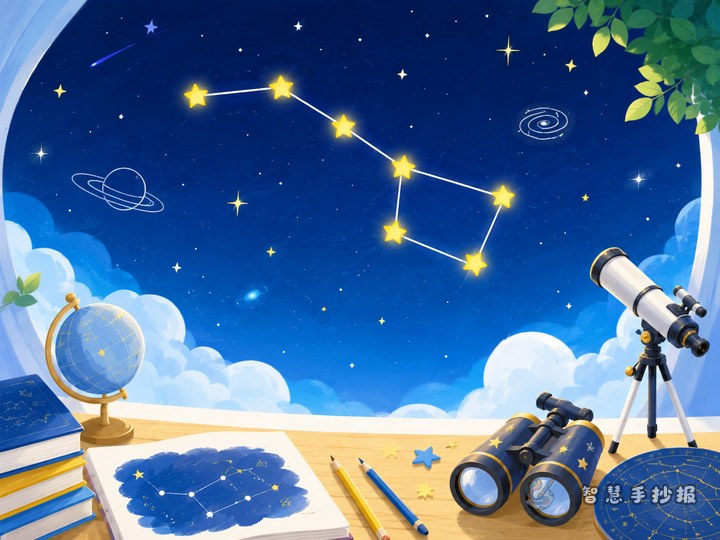
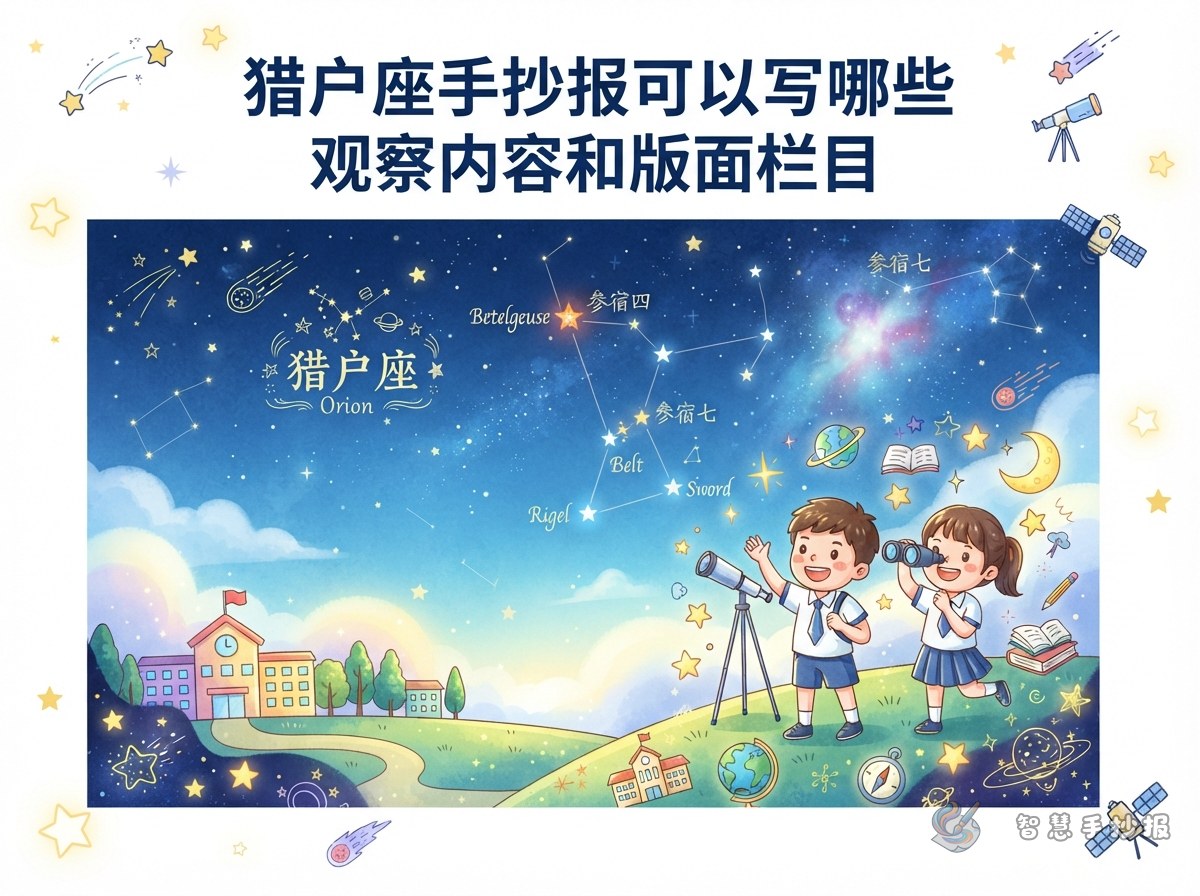
Orion is a great subject for a handwritten newspaper because its shape is simple to recognize. Start with the three bright stars in a row that form Orion’s Belt. Then add the shoulders above and the knees below, and draw the sword hanging from the belt. Once the outline is clear, readers can see the constellation at a glance.
A strong Orion poster should not be just a block of text. Combine constellation shape, star facts, observation notes, and a short myth so the page feels like a real sky journal.
Star facts worth adding
Bright stars and features
- Betelgeuse: a red supergiant at Orion’s shoulder, often described as a reddish light.
- Rigel: a blue-white star at Orion’s foot, forming a strong contrast with Betelgeuse.
- Orion’s Belt: three bright stars in a short line, the key to finding the constellation.
- Orion’s Sword: a few fainter stars below the belt, with the Orion Nebula in the middle.
Simple observing notes
Orion is easy to see in the evening during winter and early spring. Find a place away from bright lights, face south, and look for the three belt stars first. Then trace outward to the shoulders and feet. On your poster, you can draw a small direction map with the note “find the belt first.”
Keep the myth short
In Greek myth, Orion is often linked to a hunter. You can write one or two lines about the hunter and the scorpion, then add a small drawing. A long story can crowd out the astronomy content.
Make the observation record feel real
- Time: for example, “8:30 to 9:00 p.m.”
- Place and weather: for example, “school yard, clear sky” or “park, a few clouds.”
- What you saw: first the three belt stars, then the reddish Betelgeuse, then a faint patch near the sword.
- A simple star map: use dots for stars and lines for the outline.
- A small discovery: “Orion looked bigger than I expected” or “the belt stars were very even.”
Layout columns that work well
Divide the page into four main areas: a title and main drawing at the top, a constellation profile on the left, an observation diary on the right, and myth plus sky tips at the bottom. Column names can be “Orion File,” “My Sky Diary,” “Secrets of the Belt,” and “How to Find Orion.”
- Title area: use a large title such as “Orion Observation Newspaper” and add a few stars around it.
- Fact area: list the main stars, the belt, and the Orion Nebula.
- Record area: use a table or lined box for time, place, weather, and discoveries.
- Decoration area: draw a dark blue sky, silver stars, binoculars, or a moon without covering the text.
Color and drawing tips
Use dark blue, navy, or purple for the night sky. Write text in white or light yellow boxes, and add stars in silver, white, and pale yellow. A cross-shaped star or a small dot works well. Sketch the constellation lightly in pencil first, write the column text, and add color last.
To make the poster feel complete, draw “Orion as I saw it” as the main image and leave a small space for “what I want to observe next.” For more layouts and text ideas, open the Smart Handwritten Newspaper mini program in WeChat and keep creating.