Start with a clear main idea
The best part of this kind of poster is not using too many difficult terms, but explaining in simple words why the sky gets dark, why lightning comes before thunder, and why thunder and rain often happen together. A short opening paragraph can help readers understand the topic at once.
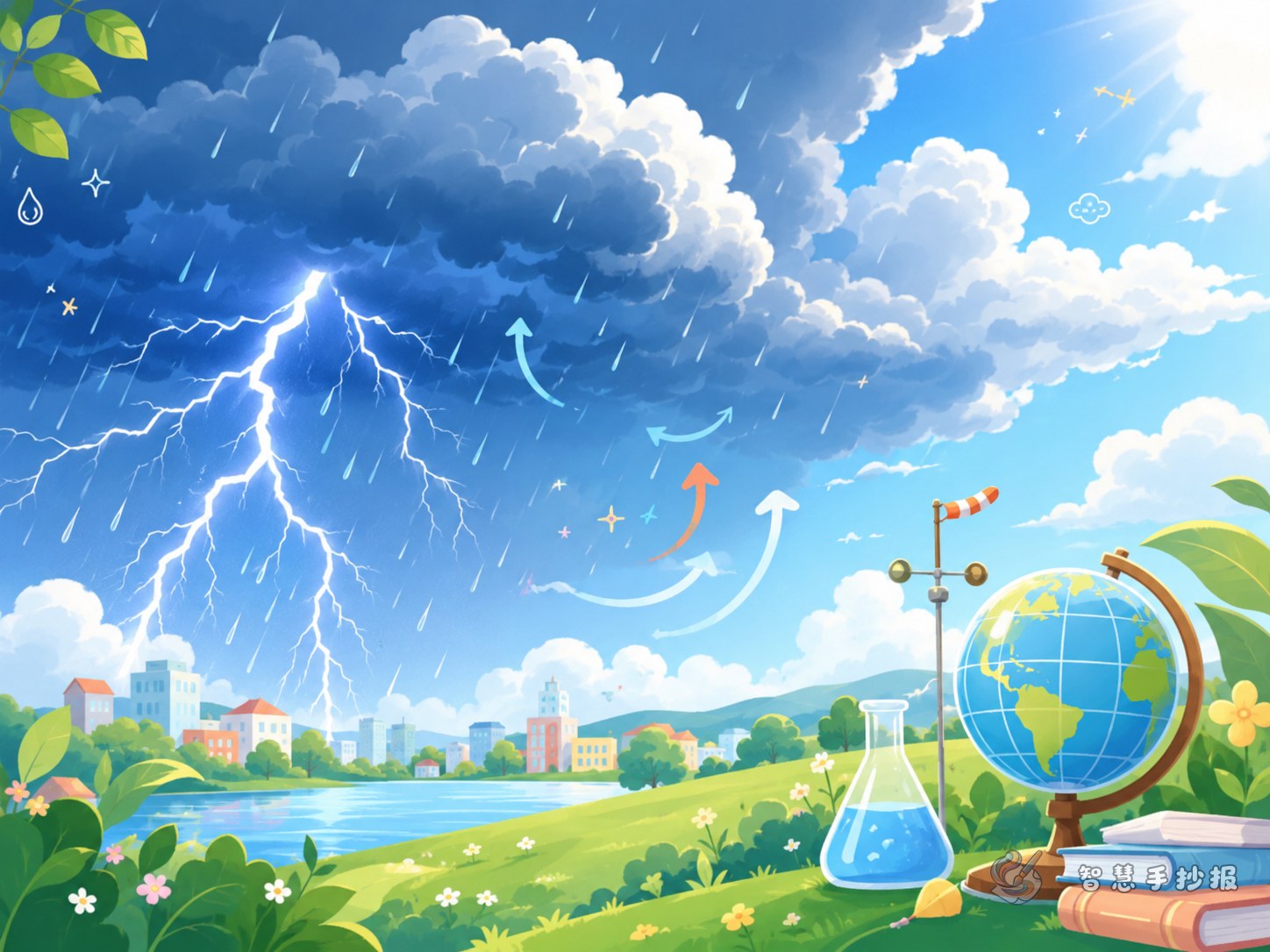
You can write something like this: In warm and humid weather, water vapor in the air increases. Warm air rises and forms thick clouds. When electric charges build up inside the clouds, lightning appears. The air around the lightning heats up very quickly and makes a loud sound, which is thunder. At the same time, water droplets in the cloud grow larger and fall as rain.
Useful sections students can copy into the poster
Section 1: How does a thunderstorm form?
Thunderstorms often happen when the air is warm and moist. Heated air near the ground rises upward. High in the sky, it cools and forms tall storm clouds. Different parts of the cloud carry different charges. When the difference becomes strong enough, electricity is released as lightning. The nearby air expands rapidly from the heat, and that creates thunder. As the water droplets in the cloud become heavier, rain begins to fall.
Section 2: Why do we see lightning before we hear thunder?
Light travels much faster than sound. That is why we can see lightning almost immediately, while thunder reaches our ears a little later. This time gap is one of the most interesting things to observe during a storm.
Section 3: What should we do during a thunderstorm?
- Stay indoors as much as possible.
- Do not stand under trees, billboards, or power poles.
- Avoid open high places and put away metal umbrellas when possible.
- During thunder, be careful with electrical appliances and sockets.
Section 4: My weather observation corner
Students can add their own notes: What did the sky look like before the storm? Did the wind get stronger? Did the clouds become thicker? Did the air feel hot and stuffy? This makes the poster feel personal instead of copied.
Make the layout feel like a real storm scene
Try a diagonal layout: draw dark clouds and lightning in the upper left corner, and rain, puddles, or umbrellas in the lower right. Place the big title in the center and arrange the text sections around it. This gives the page movement and fits the weather theme well.
- Use blue, dark gray, and purple for the main title.
- Shape subheadings like clouds, raindrops, or lightning bolts.
- Keep the border simple with tiny raindrop decorations.
- Highlight key sentences with yellow or white outlines.
Extra details to make the poster richer
If there is still space on the page, add a few short facts to make the poster more complete.
- Thunderstorms are more common in spring and summer.
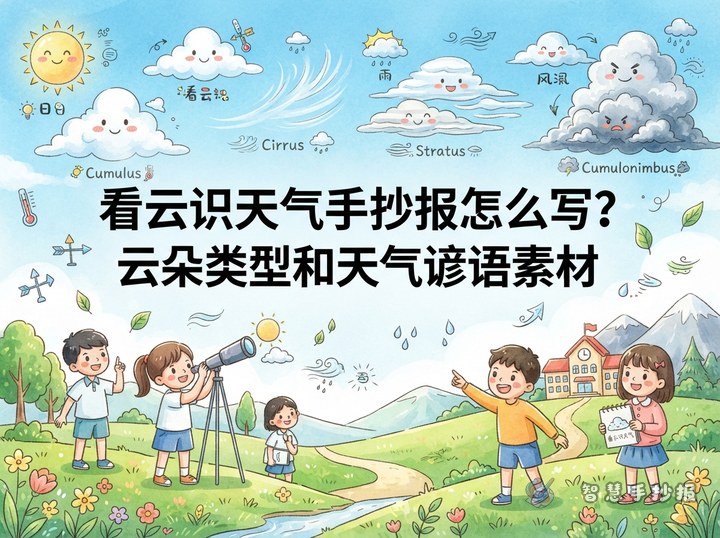
- Cumulonimbus clouds are the main storm clouds that bring thunder and rain.
- Check the weather before going out and seek shelter early during storms.
- A slogan idea: Watch the weather, learn science, and stay safe.
An easy way for younger students to finish it
If the poster feels too full, use a simple structure: one short introduction, three knowledge boxes, one safety box, and one observation box. This keeps the page neat and easier to complete. Write the title first, place the main sections next, and then add drawings and borders at the end.
If you want to keep improving the layout, change the colors, or quickly organize the content more neatly, you can continue in the Zhihui Shouchaobao WeChat mini program and make the poster together with parents or teachers.