Start with one clear idea for the whole page
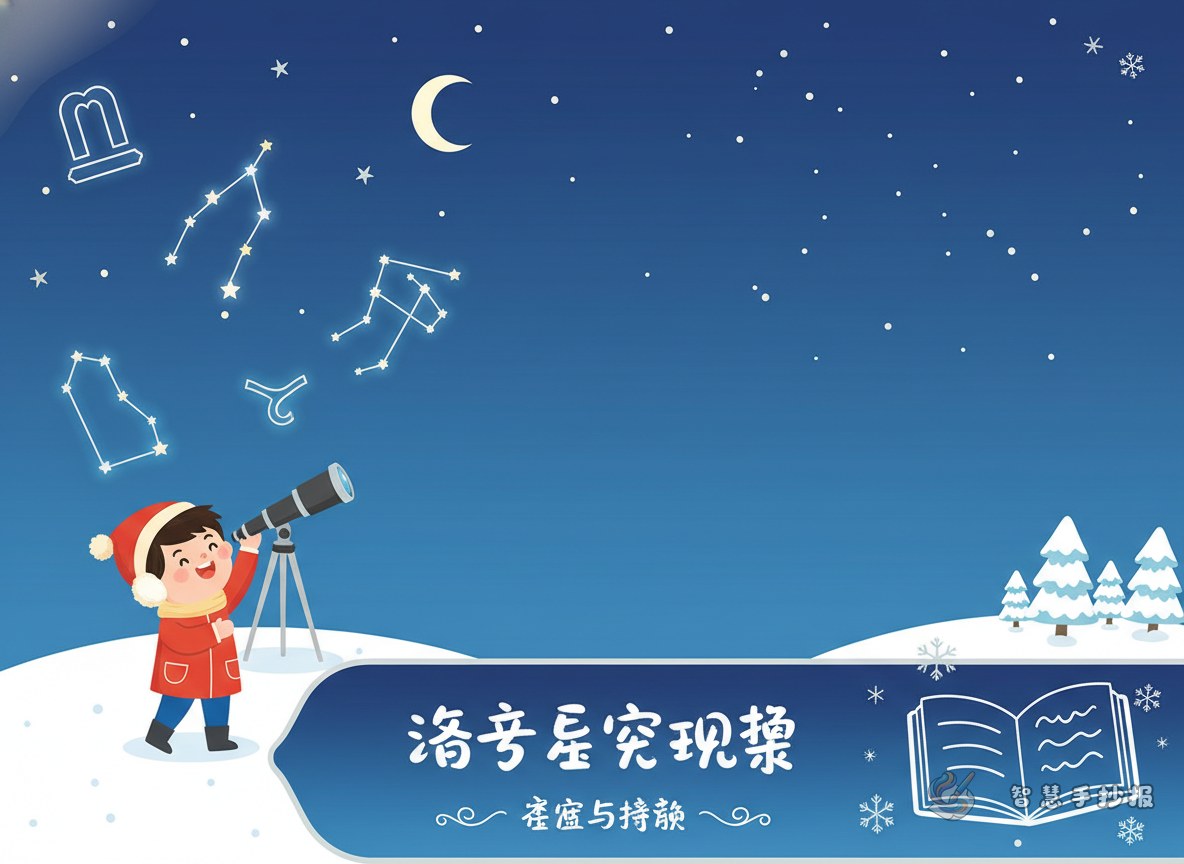
A strong handout does not need too much difficult astronomy information. The easiest approach is to build the page around one main idea: what makes the winter night sky special. Winter skies often have bright stars and several constellations that are easier for beginners to notice, which makes this theme especially suitable for students.
For children, a title direction like “My Winter Stargazing Notes” or “A Simple Guide to the Winter Night Sky” works well because it allows both science facts and personal observation.
Best constellations and stars to include
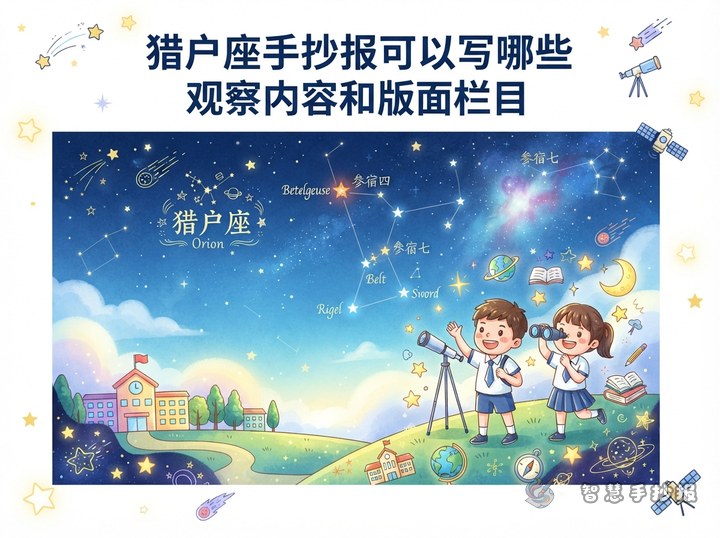
Orion
Orion is one of the easiest winter constellations to recognize. The three stars in a straight line at its center make it especially memorable. Students can describe it as a hunter-shaped constellation and use it as a starting point for finding other stars.
Taurus
Taurus is a good choice because it can be linked with Aldebaran, a bright reddish star. This gives students something simple and visual to mention in their writing.
Gemini
Gemini is useful for a handout because of its twin image. A short explanation about its paired stars can make this section easy to understand.
Canis Major
When writing about Canis Major, students can focus on Sirius, one of the brightest stars in the night sky. It fits perfectly into a “bright winter stars” section.
- Choose only three or four main constellations.
- Write one or two clear sentences for each one.
- Add simple star sketches if space allows.
Ready-to-use content blocks for the handout
Best time to observe
Clear winter evenings are often a good time for stargazing, especially from after sunset to around 9 p.m. Open areas with less artificial light are usually better.
Easy star-finding tips
Look for the brightest stars first, then find nearby shapes. Start with one familiar constellation and move outward step by step.
Observation safety notes
- Wear warm clothes in winter.
- Choose a safe and open place.
- Observe with parents or teachers when possible.
- Avoid staring at bright phone screens for too long.
Fun fact
Some starlight has traveled for a very long time before reaching our eyes, so looking at the sky is also a way of looking into the past of the universe.
Layout ideas that look neat and lively
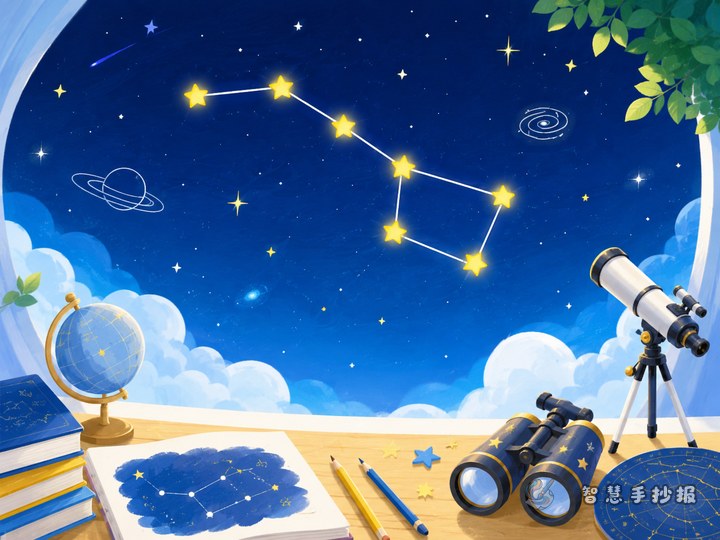
Instead of filling the whole page with decorations, divide it into clear sections. Put the title and introduction at the top, the featured constellations in the middle, and observation notes or fun facts at the bottom. This makes the handout easier to read.
- Use dark blue, light blue, white, and soft yellow as the main colors.
- Make the title slightly curved to resemble the night sky.
- Add small drawings like stars, a moon, or a telescope, but keep them limited.
- Use labels or dots to separate key ideas clearly.
If drawing the layout by hand feels difficult, users can first prepare the text and then continue improving the page design in the WeChat mini program.
Add a personal observation record for extra impact
The easiest way to make a handout stand out is to include a short real or imagined observation record. Students can write the date, weather, what they found, and how they felt while looking at the winter sky.
For example: On a clear winter evening, I first noticed three stars in a straight line. Later I learned that they were part of Orion. Then I followed the pattern and found bright Sirius nearby. The winter sky looked sharp and amazing.
A simple finished-page formula for students
A practical structure is: one short introduction, four constellation cards, one group of observation tips, and one personal record. This gives the page enough science content while still feeling friendly and manageable for children.
Parents and teachers can help by choosing the most important constellations first and keeping the writing short. If the content is accurate, the layout is clear, and the theme is obvious, the handout will already be successful.