Turn the topic into a page that tells a story
A handmade newspaper about hometown stories in stamps should not be only about stamps or only about hometown scenery. The best idea is to connect the two naturally. A stamp can be treated like a tiny window that shows the beauty, history, and feelings of a hometown, while letter etiquette adds a practical and cultural touch.
A useful center line for the page could be “A small stamp carries a big hometown story.” Once that idea is clear, the rest of the page becomes much easier to organize.
Four section ideas that work well together
1. Quick facts about stamps
This part can explain what a stamp is, why it is used on letters, and how stamps connect with communication. Keep it short and simple so it fits a school poster style.
- A stamp shows that postage has been paid
- Stamp designs often include people, places, and events
- Stamps are useful for mailing and also valued as cultural items
2. What from my hometown could appear on a stamp
This is the most colorful section. Students can choose local views, famous buildings, food, or festivals from their hometown and describe them in two or three short sentences each.
- Landmarks such as parks, bridges, old streets, or scenic areas
- Special foods or local products
- Festivals, traditions, or folk arts
3. A letter to my hometown
This section adds warmth to the page. Students can write a few lines in the form of a short letter, such as “Dear hometown, I want to place your four seasons inside a stamp.” It makes the poster feel personal and creative.
4. Polite letter-writing reminders
To match the letter etiquette theme, students can include simple rules like using polite greetings, writing clearly, adding a friendly closing, and filling in the envelope correctly.
Short text materials ready to use
These lines are suitable for subtitles, side notes, or decorative corners:
- A small stamp can hold both distance and hometown memories.
- A letter carries warmth, and a stamp carries a story.
- Good letter manners begin with polite greetings and careful writing.
- The beauty of a hometown can live in a poster and on a stamp.
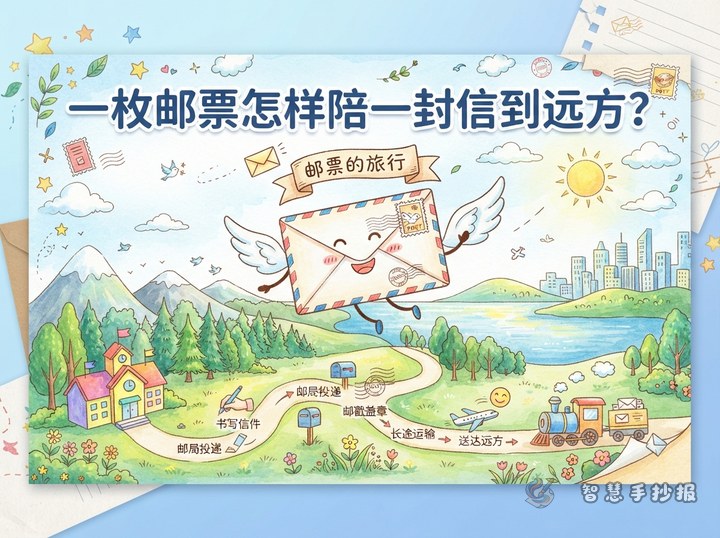
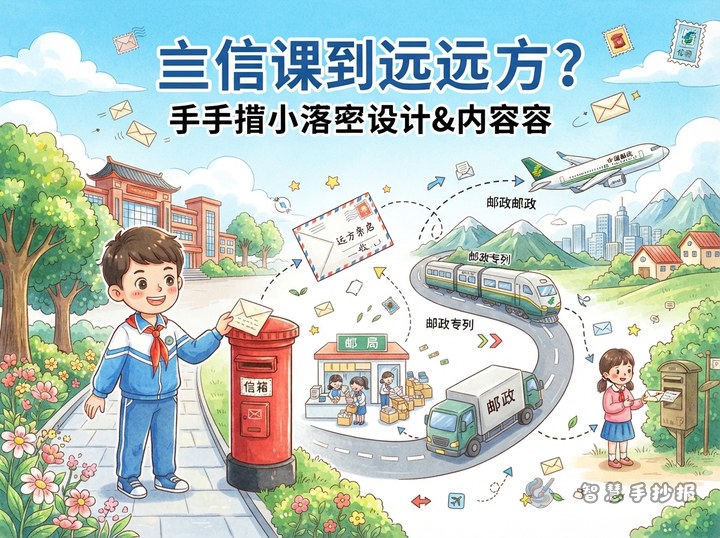
- Postal routes connect places, and letters connect hearts.
Students can also add a simple list:
- The role of stamps
- The most special place in my hometown
- Polite words to use in a letter
- A sentence I want to send to a faraway friend
Make the page feel like stamps and letters
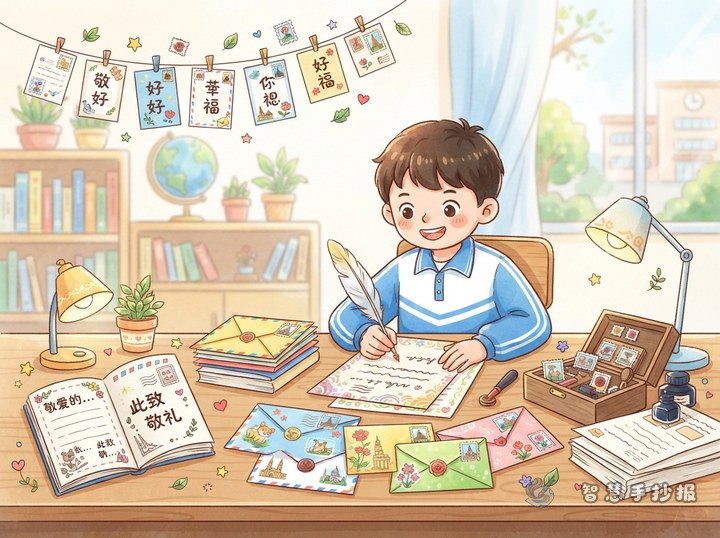
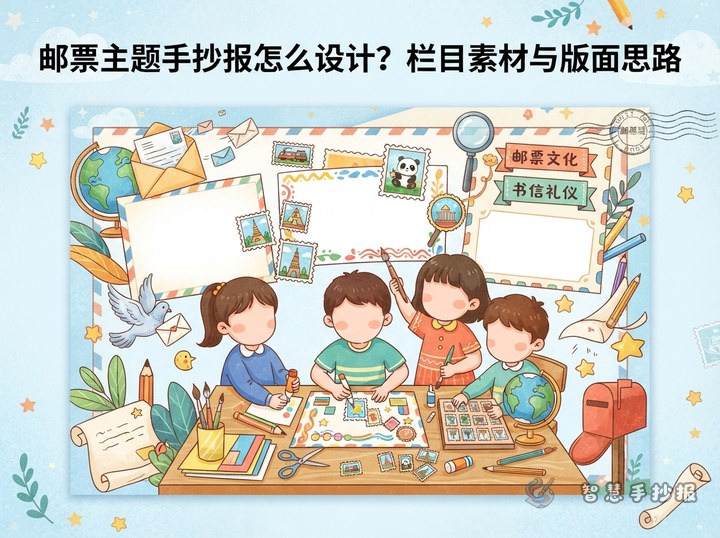
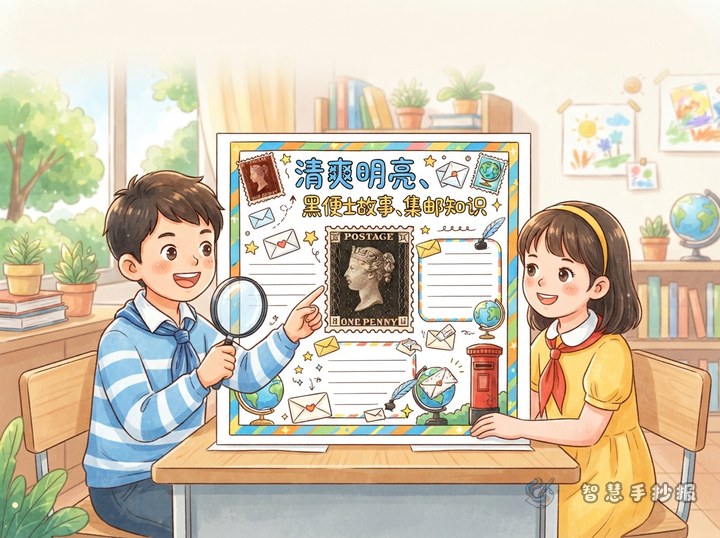
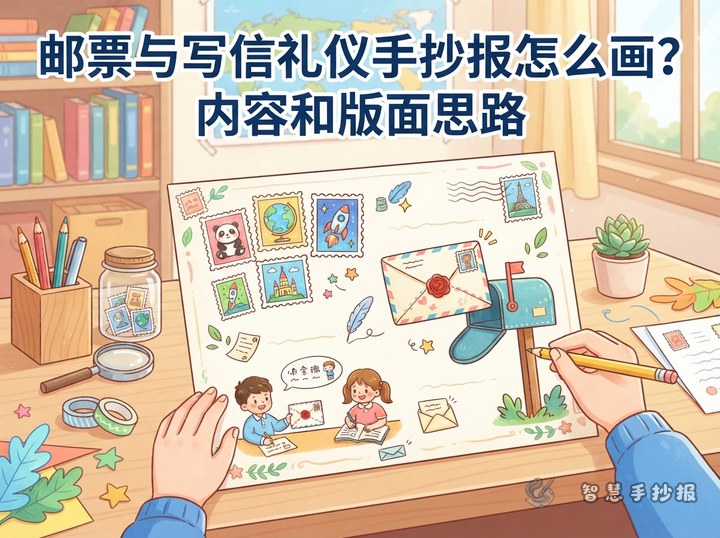
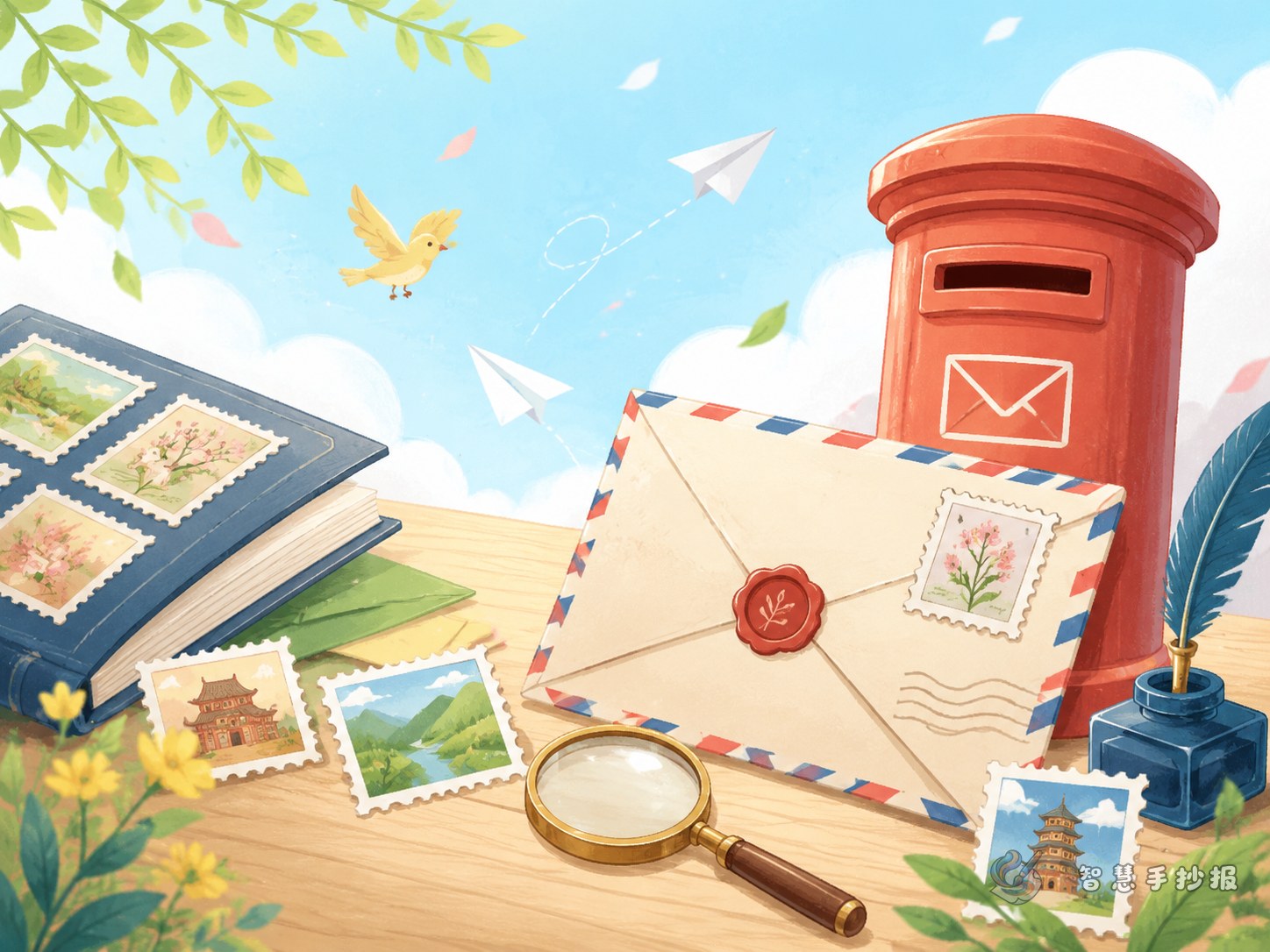
This topic looks especially good when the page has a stamp-and-letter style. Each text box can be drawn with stamp edges, and the title area can include a small envelope or postmark design.
- Place the main title at the top center
- Put stamp facts on one side and hometown stories on the other
- Arrange the etiquette section and personal message near the bottom
- Use simple decorations such as mailboxes, envelopes, postmarks, and route lines
For colors, soft blue, green, and light beige work well because they feel fresh, clean, and suitable for a school handmade newspaper.
Easy finishing tips for students
First sketch the sections lightly with a pencil, then write the title, then add the text, and finally complete the decorations. Short paragraphs and bullet points are usually better than long blocks of writing. A clear page is easier to read and looks more polished.
If the topic is ready but the layout still feels difficult, students and parents can continue refining title styles and section arrangement in the Zhihui Shouchaobao WeChat mini program to turn the idea into a complete handmade newspaper more smoothly.