Build the theme around the journey of water
This topic works well when the whole poster follows one clear idea: where water comes from, how people use it, and why every drop matters. It helps students avoid writing scattered facts and gives the page a natural flow from introduction to action.
A simple opening line can be: Water is essential to life, and saving water starts with small daily habits. This kind of sentence fits nicely under the main title and immediately explains the purpose of the poster.
Useful sections to include on the page
Section 1: Why water is important
Write briefly about drinking, cooking, cleaning, farming, plants, and the environment. Short, clear sentences are better than long paragraphs for a handwritten newspaper.
Section 2: Common ways water is wasted
- Leaving the tap running while brushing teeth
- Not turning off the faucet tightly after washing hands
- Using too much clean water for small tasks
- Ignoring leaks at home or at school
This section feels more vivid if paired with small drawings or simple icons.
Section 3: What students can do to save water
- Use only the amount of water needed
- Turn off taps right away after use
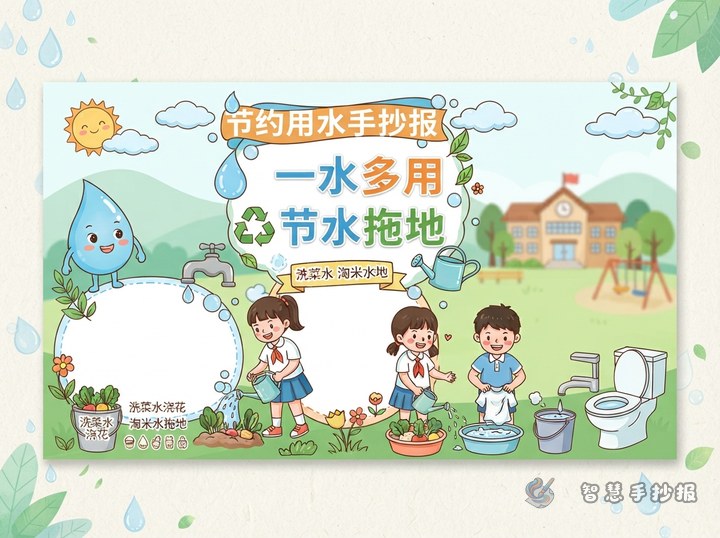
- Reuse water when possible, such as washing vegetables first and using the water for plants
- Remind family members to avoid waste
- Protect school water facilities
A numbered list makes the advice easy to read and easy to copy into a poster.
Short lines and slogans that fit the theme
If the poster still has empty space, add a few concise lines:
- Save every drop, protect our future.
- Water is precious, so use it wisely.
- Saving water begins with daily habits.
- Cherish water today for a better tomorrow.
You can also add a short ending paragraph about starting with simple actions, such as turning off taps and reducing waste at home and school.
Try a flowing layout instead of a plain box layout
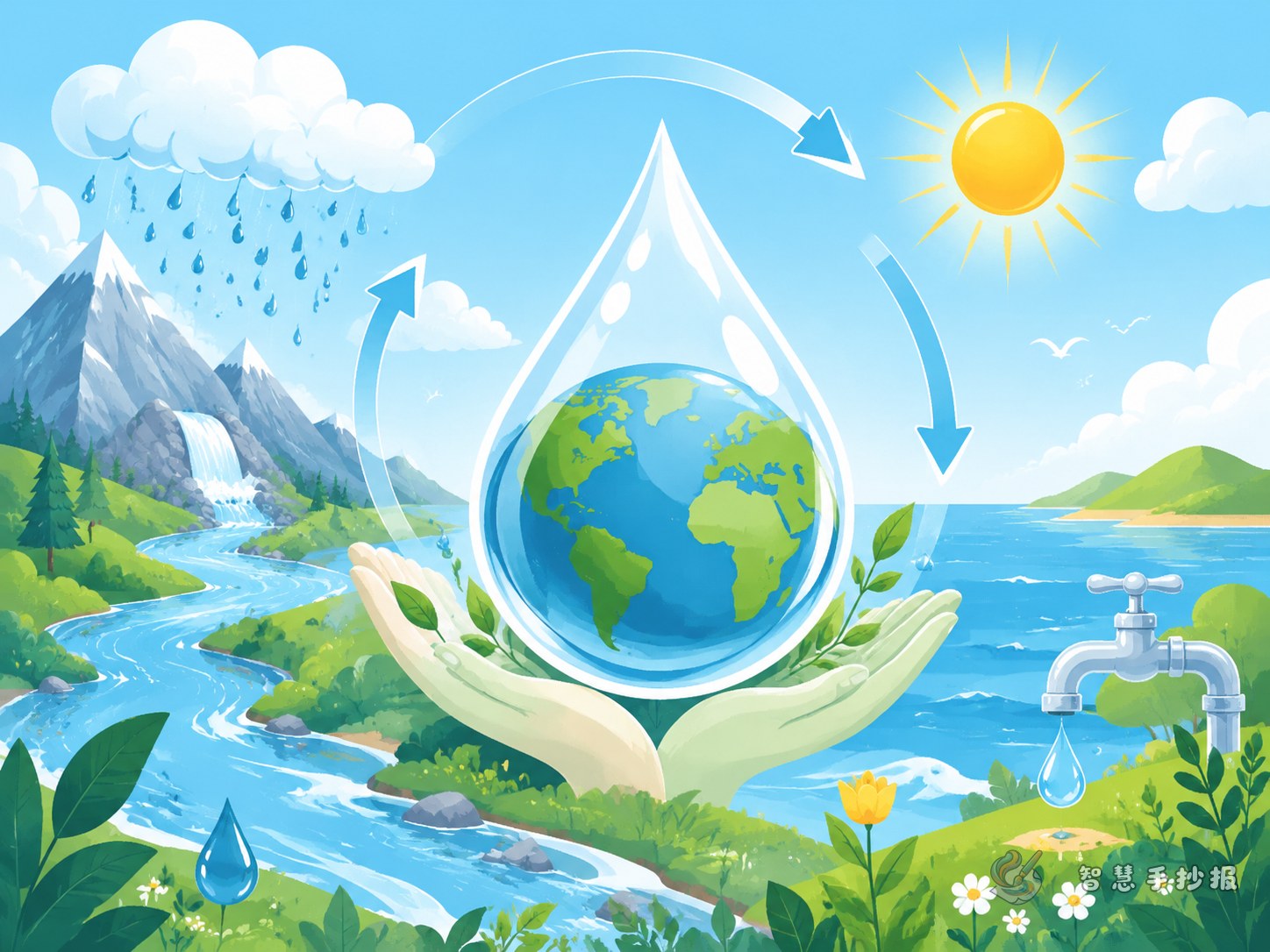
A water-themed poster looks better when the design matches the subject. You can place the title at the top center, use wave lines to divide sections, and arrange the content like a flowing route. Put the main ideas in the center and practical tips near the bottom.
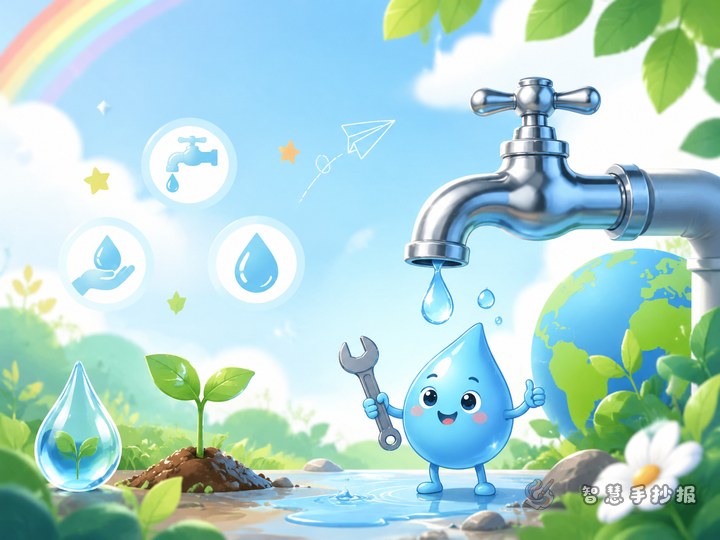
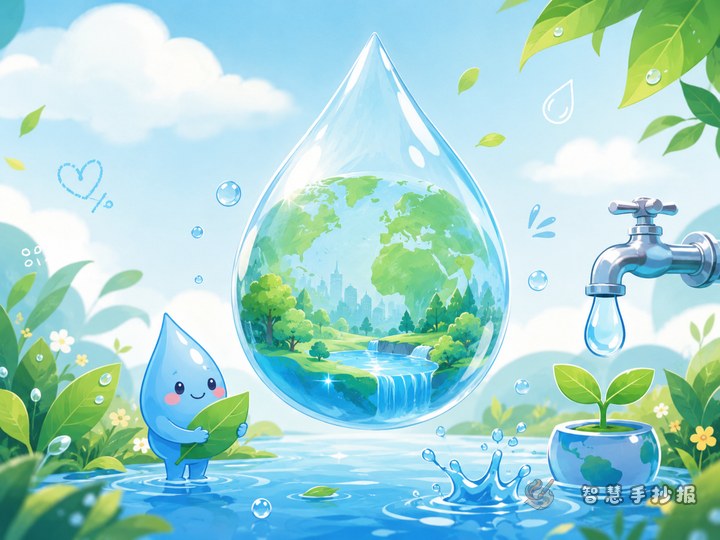
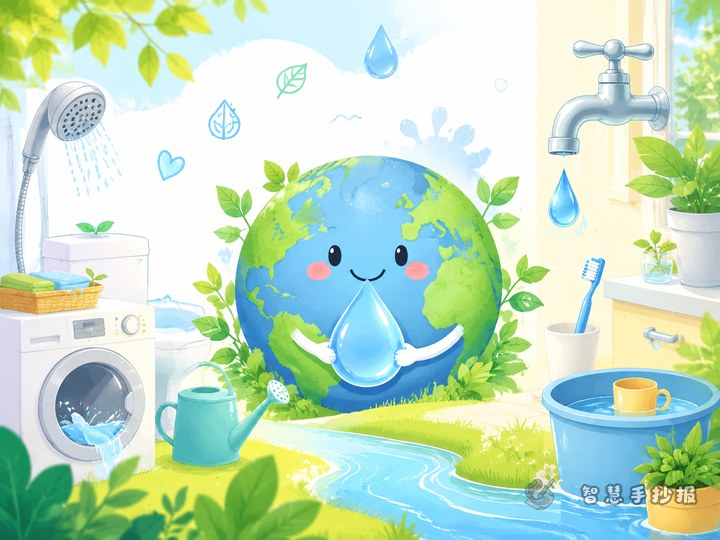
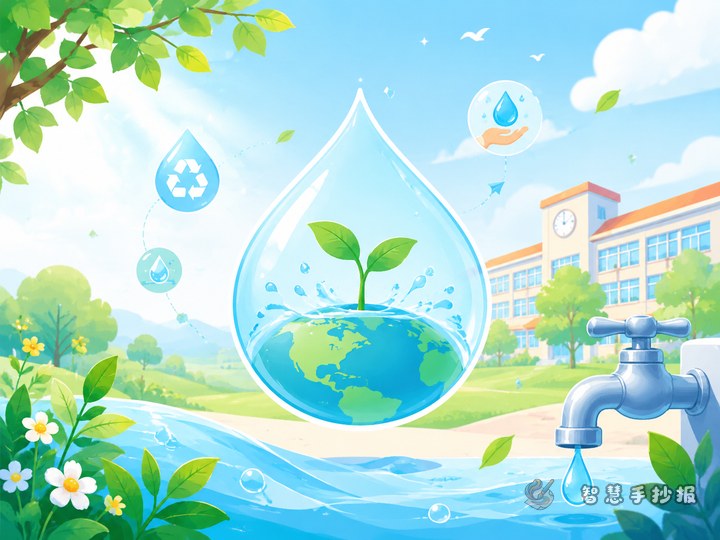
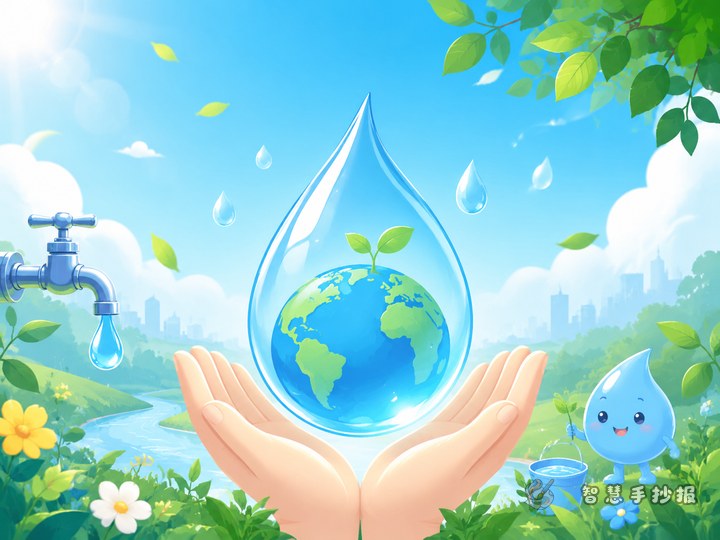
Blue, green, and white are the best color choices for this topic. Good decorations include water drops, faucets, rivers, leaves, cups, and the Earth. Keep the design clean so the text remains easy to read.
Add one personal section to make it more original
To make the poster feel less generic, add a small interactive box such as “Three water-saving actions I can do today” or “One wasteful habit I want to change at home.” This makes the work feel personal and more meaningful.
If you already have the topic but want help arranging sections, title styles, and neat poster content, you can continue creating in the Zhihui Shouchaobao WeChat mini program.