Turn One Stamp into a Memory of Communication
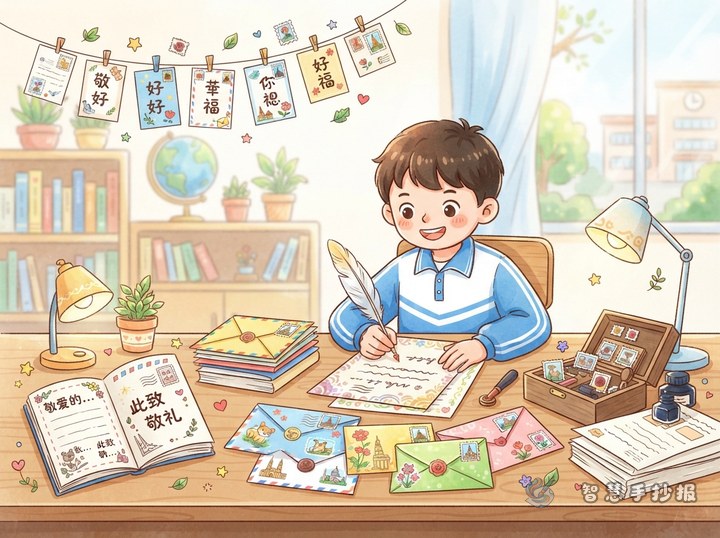
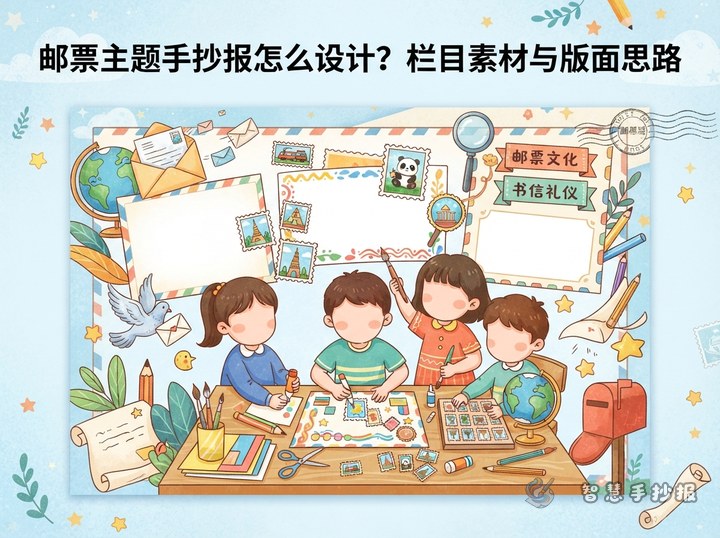
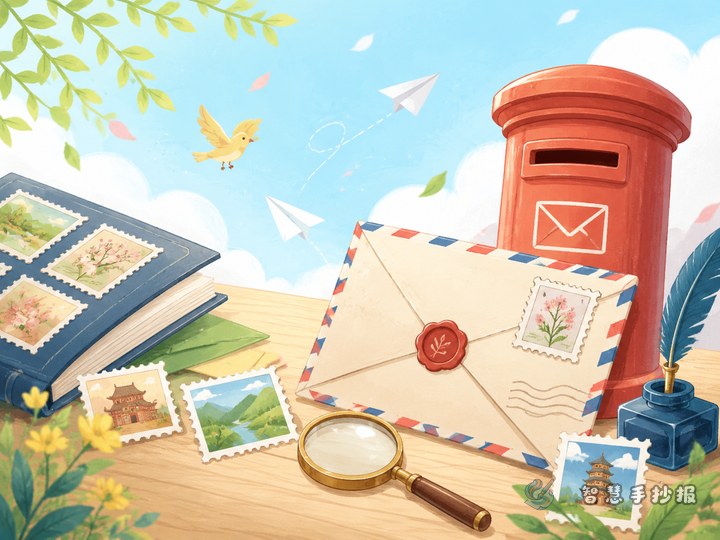
This handwritten newspaper can focus on how a stamp travels with a letter to a distant place. Connect the stamp, envelope, and the sender's feelings into one warm story. Draw an open letter in the center, then add small stamp sketches, postmarks, and a flying carrier pigeon around it to create a page that is both informative and lively.
Four Sections to Build a Clear Story
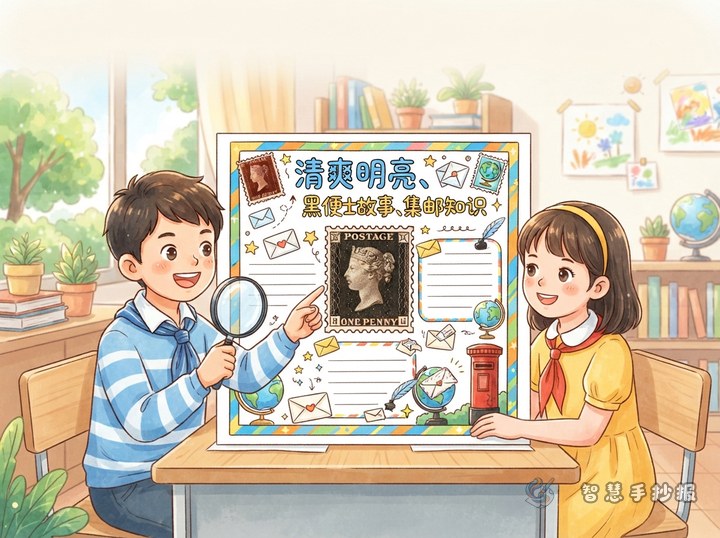
- Stamp Profile: Explain the stamp's usual position on an envelope, its value, and the purpose of its design. A stamp is an important proof of postage when sending a letter.
- Polite Letter Writing: Introduce the basic order of a letter: greeting, opening, main message, wishes, and signature. For example, a letter to a grandparent may begin with “Dear Grandpa” and end with “Wishing you good health.”
- What a Postmark Tells Us: Briefly explain that a postmark often includes a date and place. It works like a small seal recording when and where a letter was sent.
- My Rules for Courteous Communication: Write down reminders such as using clear handwriting, speaking sincerely, completing envelope details, and never writing on someone else's letter.
Ready-to-Use Writing Material
Theme sentence: A tiny stamp carries the sender's feelings and records a careful, gentle connection between people.
Etiquette reminder: Think about the main message before writing. Divide the body into paragraphs and use polite language. Check the greeting, date, and signature before sealing the envelope. Write the recipient's information accurately and neatly.
Mini question: Why is a stamp usually placed in the upper-right corner of an envelope? Because this is a standard postage-marking area on the front, making it easier to inspect and process.
Use an Envelope Route to Plan the Page
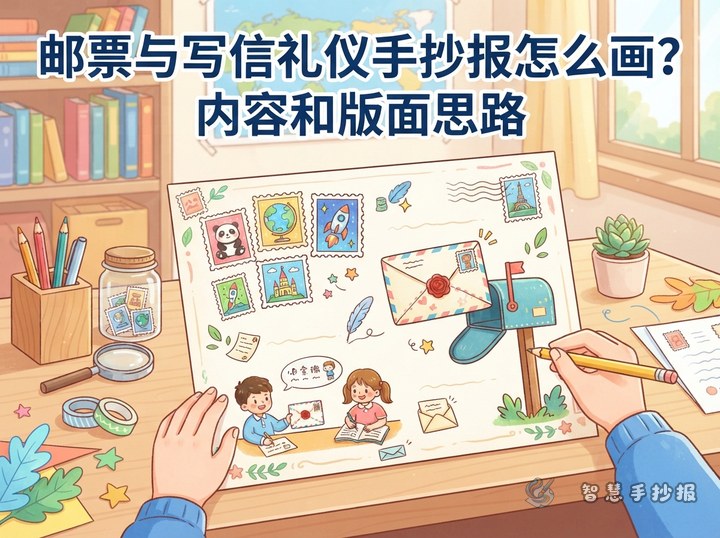
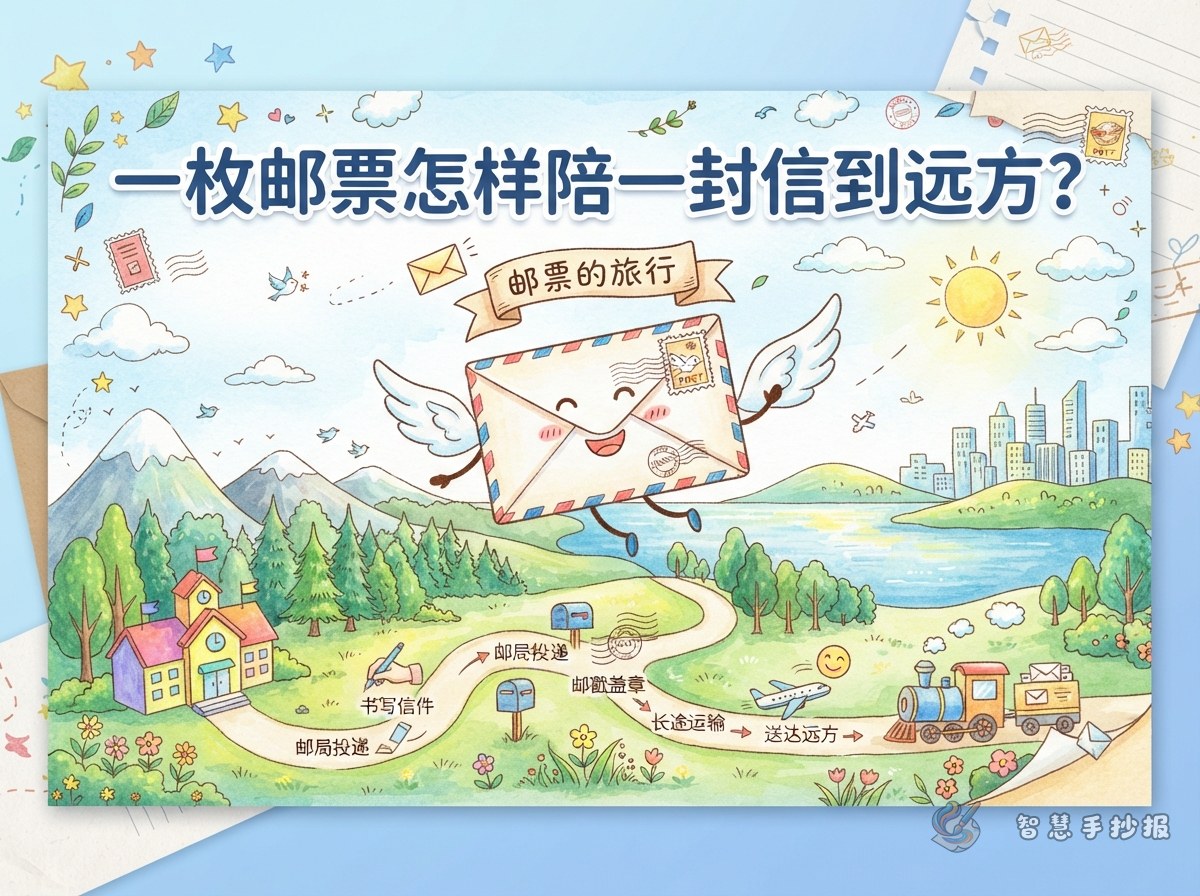
Try a horizontal or vertical route layout. Place the title and an enlarged stamp in the upper-left corner, draw an envelope as the central focus, and use a curved dotted line to connect four steps: “write,” “add the stamp,” “receive the postmark,” and “travel far away.” Put the letter etiquette section at the bottom and leave the right side for facts and decorations. Postal red, off-white, light blue, and dark green work well together. Make the title prominent and keep each paragraph short.
Small Details That Improve the Finished Work
- Lightly divide the page with a pencil before placing the title, illustrations, and text.
- Draw flowers, landscapes, animals, or traditional patterns inside the stamp design, while keeping the illustrations away from the main text.
- Use different type sizes for the main title, section headings, and body text so the page has a clear hierarchy.
- Check every sentence after writing, then add postmarks, postcode boxes, small letter paper, and other details with colored pencils.
For help arranging the wording and layout, open the “Zhihui Shouchaobao” WeChat mini program and continue creating the handwritten newspaper there.