Build the Project Around Following the Sound
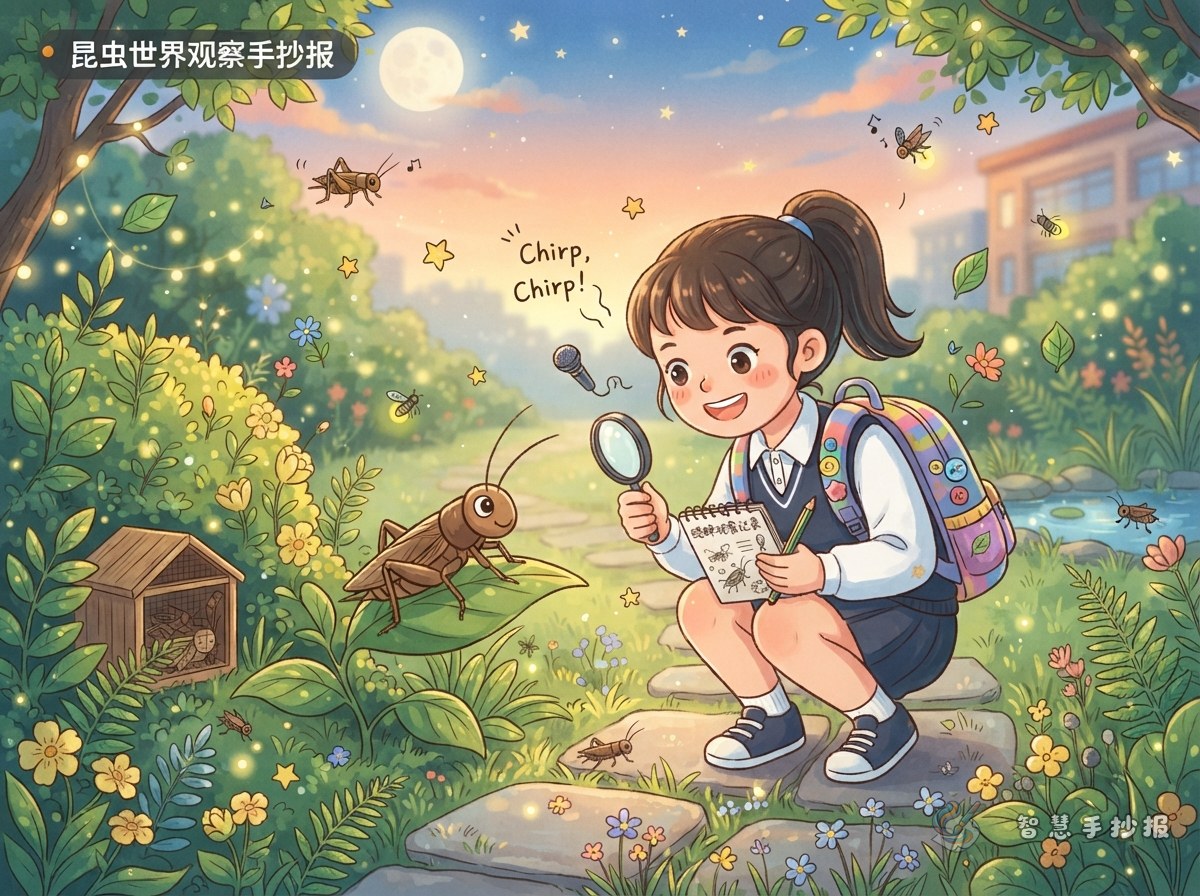
A cricket's call is its most recognizable feature, so the poster can focus on where the sound comes from, when it is easiest to hear, and what the observer discovers. Draw a cricket beside a blade of grass near the title and add a few short sound lines to establish the theme.
Turn One Observation into a Timeline
Choose an evening or nighttime visit near a grassy area. Stay quiet and avoid chasing or catching crickets. Organize the observation into four stages:
- Listen: Hear the call first and estimate its direction.
- Wait: Keep a suitable distance and reduce footsteps and conversation.
- Record: Note the time, place, weather, and whether the calls are continuous.
- Compare: Move to another safe position and notice changes in distance and direction.
If the cricket remains hidden, record that honestly. Hearing it without seeing it is still a useful observation.
Short Facts to Place on the Poster
Appearance File
Crickets are often brown or dark brown. Their strong hind legs help them jump, and their heads have a pair of long, slender antennae. A labeled drawing can identify the antennae, wings, and hind legs.
How the Call Is Made
The familiar chirping sound is mainly produced when a male cricket rubs parts of its wings together. The rhythm may change in different situations. Children can record the speed, duration, and pauses without touching the insect.
My Discovery
This section should contain a personal conclusion instead of copied facts. For example: “Even when the sound seemed close, the cricket was hard to locate because the grass helped conceal it.”
Let Sound Waves Guide the Layout
Divide the page into two areas. Place the labeled cricket and its physical features on the left, then arrange the timeline, chirping notes, and personal discovery on the right. A curved sound-wave path through the sections creates a clear reading order and reinforces the subject.
- Use grass green with small amounts of yellow and brown.
- Shape section borders like leaves, stones, or field-note cards.
- Keep paragraphs short and highlight only key terms.
- Reserve a space at the bottom for the observation date or added habitat details.
Check the Evidence Before Finishing
Make sure the poster includes the location, method, cricket features, and a personal finding. Check that drawings do not crowd the writing and that colors remain easy to read. To adjust the sections and title treatment, continue the project in the Smart Handwritten Poster WeChat Mini Program, choose a suitable layout, and then add the student's own field notes.