Choose a clear observation focus
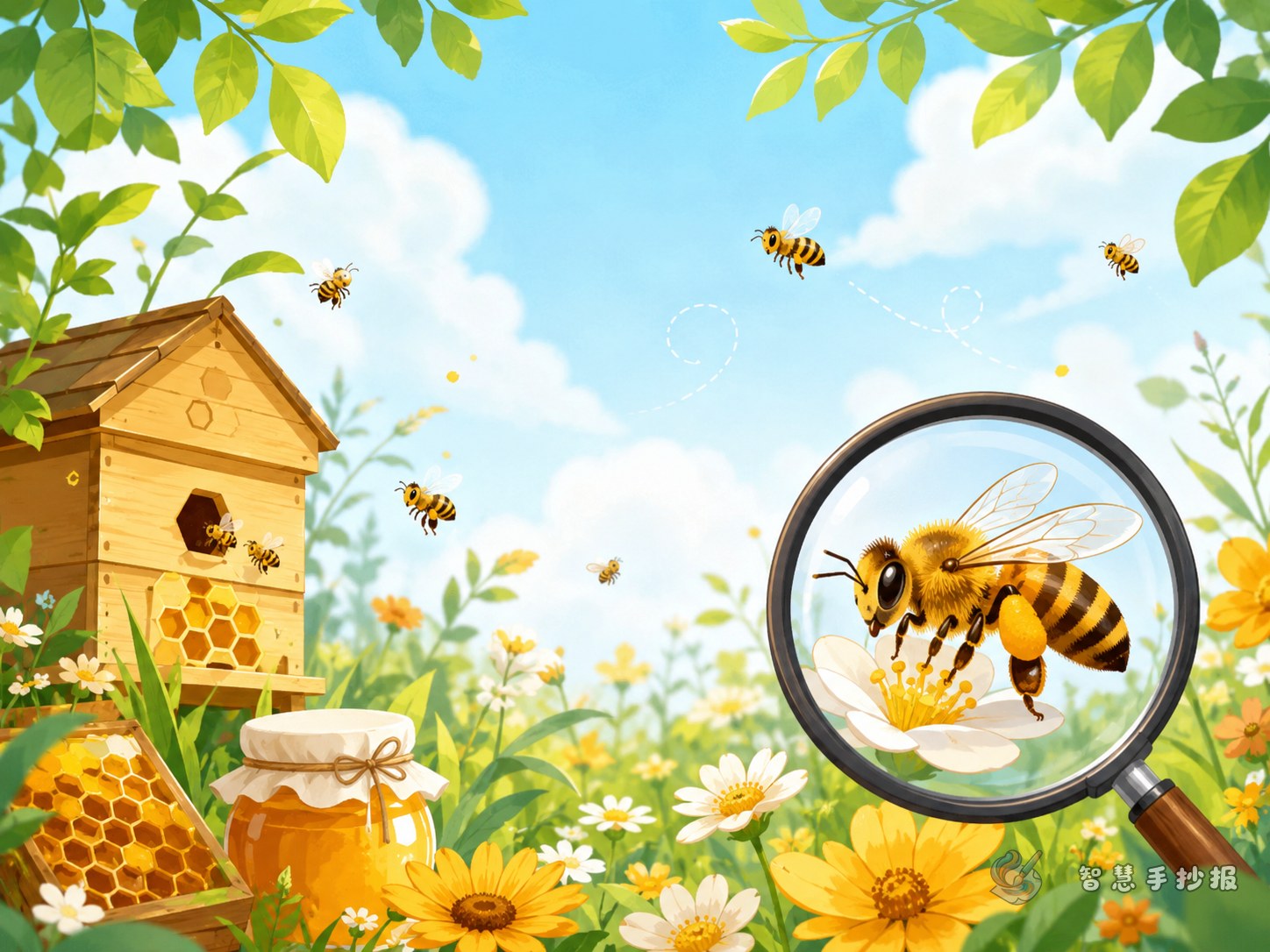
A honeybee is a great subject for an insect observation poster because children can often connect it with flowers, hives, honey collecting, and pollination. At the beginning of the poster, write a short introduction: a bee has three main body parts—head, thorax, and abdomen—and it has antennae, wings, and legs.
If you want the poster to feel more like a real observation project, add details from what you actually saw. For example, note what kind of flower the bee visited, whether it flew quickly, whether it stayed alone or moved with other bees, and what it did when landing on a flower. These details make the work feel more personal and vivid.
Four useful sections for the page
- Observation Notes: record the time, place, weather, and the bee’s behavior.
- Bee Profile: describe its appearance, habitat, and food source.
- Pollination Facts: explain why bees are important for plants.
- Safety Tips: remind readers not to chase bees, swat them, or touch a hive.
These sections balance science knowledge and real observation, which works especially well for elementary school posters. A garden-style layout is a good choice, with the title in the center and sections placed around it.
Ready-to-use writing ideas
Short introduction
Honeybees are hardworking insects. They fly from flower to flower to collect nectar and pollen. While gathering food, they also help carry pollen between flowers, so they are important helpers in nature.
What I observed
I watched bees near a sunny flower bed. A bee hovered in the air first, then landed on a flower. It moved close to the center of the flower, stayed for a few seconds, and then flew to another one. Its actions were quick but orderly, as if it were busy doing its job.
Protection reminder
Bees do not attack people for no reason. When we observe them, we should stay calm, keep a safe distance, and avoid touching or disturbing them. This protects both us and the insects.
Decor ideas beyond a simple hive
Many students only draw a honeycomb and yellow-black stripes, but the page can look much richer with extra nature elements. Add daisies, sunflowers, small leaves, or dotted flight lines around each section. These details can connect the content and make the whole poster feel lively.
Use a bright and friendly title style. Put the main heading at the top or center, with two small bees nearby as decoration. Keep each text block short so there is space for drawings and borders. A clean layout usually looks better than a crowded one.
Make the poster feel truly your own
To make your work stand out, add a small section called “My Question,” such as: Why are bees more active on sunny days? How do bees find flowers? Then write your own simple guess or observation-based answer. This shows careful thinking, not just copied facts.
If you already have your bee theme, sections, and color plan, you can continue organizing your design in the Zhihui Handwritten Newspaper WeChat mini program and turn your notes into a cleaner, more complete poster.