Start by narrowing the topic
An ant observation handwritten newspaper works best when it is built around a real observation. Instead of writing about all insects, focus on one place such as a school garden, a flower bed, or a corner of your neighborhood. This makes the page look more natural and student-made.
Good title ideas include “My Ant Observation,” “Why Do Ants Walk in a Line?” or “A Close Look at the Ant World.”
Easy sections you can use on the page
Section 1: What ants look like
Write that ants have a head, thorax, and abdomen, with antennae and six legs. Keep the wording short and simple for a handwritten layout.
Section 2: What I saw ants do
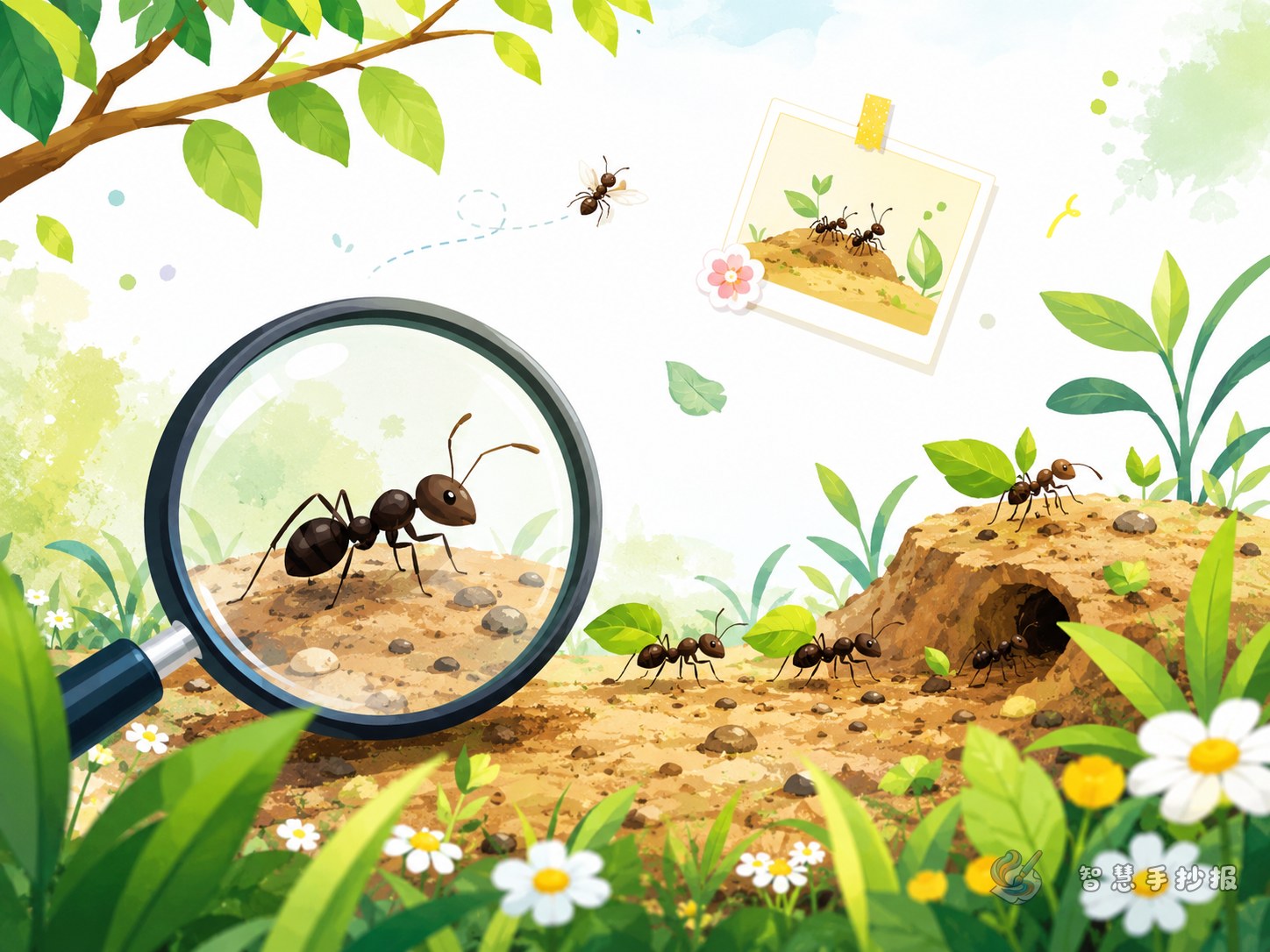
Describe ants lining up, carrying food, avoiding obstacles, or returning to their nest. This section is great for real observation sentences.
Section 3: Ants have different jobs
You can briefly mention the queen ant, worker ants, and soldier ants. The key point is that different ants do different tasks.
Section 4: Fun discoveries
- Ants often follow fixed paths
- More ants arrive after food is found
- They work together to move larger food pieces
- They quickly change direction when disturbed
Section 5: Protecting insects
Add reminders such as not stepping on insects, not destroying ant nests, and observing quietly in nature.
Short writing materials for students
These sentences can be used directly or adapted:
- Ants are tiny, but they are very hardworking.
- I noticed that ants often walk in a neat line.
- When one ant finds food, more ants soon arrive.
- Ants can carry food together through teamwork.
- When we observe insects, we should watch carefully without disturbing them.
How to make the page feel personal
If you want the work to look original, add a short observation note:
Time: After school in the afternoon
Place: Near the flower bed
Object observed: Small black ants
What happened: I saw several ants around a small crumb. Some moved back and forth, while others carried food. After a while, more ants came along the same route, forming a neat line.
My feeling: Ants are united and hardworking, and there is a lot we can learn from them.
Layout ideas that look clear and lively
This topic looks best with a bright nature style. Put the title at the top and decorate it with leaves, grass, magnifying glasses, or ant trail lines. Divide the content into three or four blocks so the page feels balanced.
- Top: Main title and a short opening sentence
- Center: Observation record or key findings
- Sides: Ant facts, fun discoveries, or reminders
- Bottom: A short conclusion or message about protecting insects
Green, yellow, and brown are good main colors because they match the outdoor observation theme.
A simple ending idea
You do not need a long ending. A sentence such as “Small insects can show us the wonders of nature” or “Even tiny ants have lessons to teach us” works well. After your text is ready, you can continue arranging the full page in the Zhihui Shouchaobao WeChat mini program.