Give an Old Object a Second Journey
An upcycling handwritten newspaper is more interesting when it tells the story of one object. Show what the item was used for, why it should not be discarded too quickly, and how it can serve a new purpose after a simple makeover. This approach gives the page a clear message about saving resources and reducing waste.
Choose a strong central picture
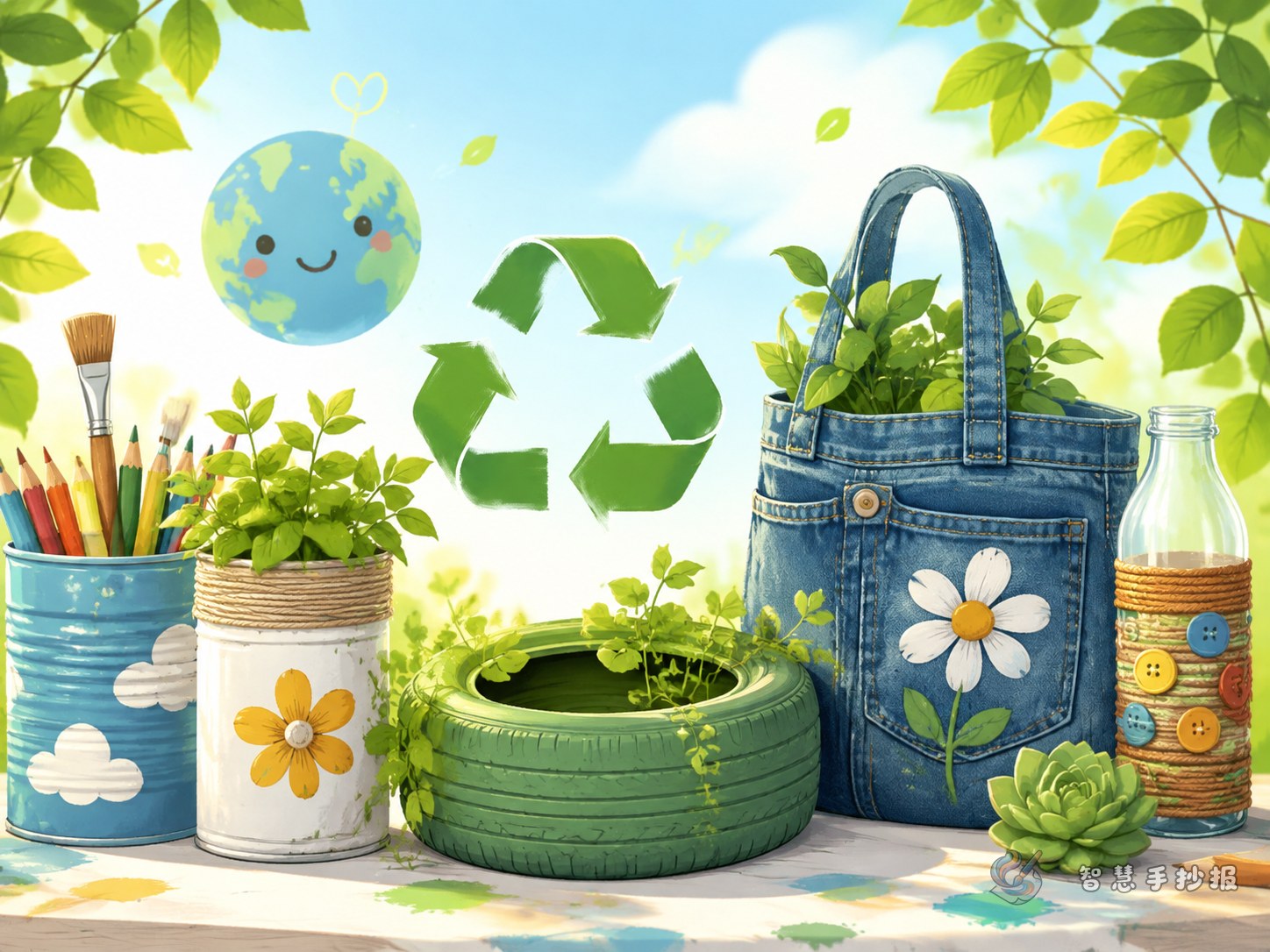
Use an old cardboard box, a drink bottle, a piece of clothing, or leftover wrapping paper as the main character. Draw a before-and-after comparison. For example, place an ordinary box on the left and a storage box on the right, connect them with a curved arrow, and add small leaves, stars, or labels to make the change easy to understand.
Build the page around four questions
- What was it? Describe the object’s original use and explain why it may still be useful.
- How can it change? Present short steps such as cleaning, cutting, joining, and decorating. Small icons can make the process clearer.
- Why does reuse matter? Explain that using an item again helps reduce waste. Choosing durable products also makes reuse easier.
- What can I do? List actions children can try today, such as repairing small items, reusing packaging, or passing on things they no longer need.
Short copy children can use
Main message: An old object is not always useless. A little creativity can give it a greener new role.
Short paragraph: Every item takes resources to make. Before throwing something away, think about whether it can be repaired or used in another way. One less wasteful choice and one more act of reuse can make green living part of everyday life.
- Give old objects a new life and let resources keep their value.
- Discard less and create more.
- Saving resources begins with caring for what we already have.
Make the layout look like a creative workshop
Try a horizontal layout. Place the title at the top, the before-and-after illustration in the center, the object notes and makeover steps on the left, and reuse tips with an action card on the right. Leave a green slogan strip along the bottom. Decorate the corners with tape, scissors, leaves, thread, or recycling symbols, but keep to one or two main colors in each section so the page stays neat.
Use color and lettering with purpose
Green can represent nature, while brown or orange can suggest cardboard and other reused materials. Use yellow to highlight action tips. Make the title large and clear, write the body text in short lines, and place key words inside colored frames so readers can scan the page easily.
Check the page before you finish
- Make sure the central picture clearly shows the change from old use to new use.
- Check that each section has its own space and that the lines of text are easy to read.
- Use scissors and glue with guidance from a parent or teacher, and handle materials that cannot be reused according to local requirements.
Sketch the title, illustration, and sections in pencil first. Then add the words and colors after the structure feels balanced. To try different layouts quickly, open the 智慧手抄报 WeChat Mini Program, choose a suitable handwritten newspaper template, and continue adjusting the content and decorations.