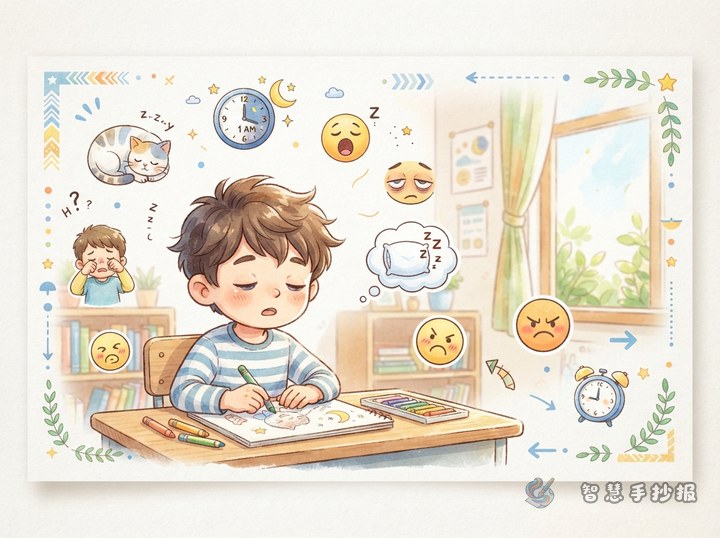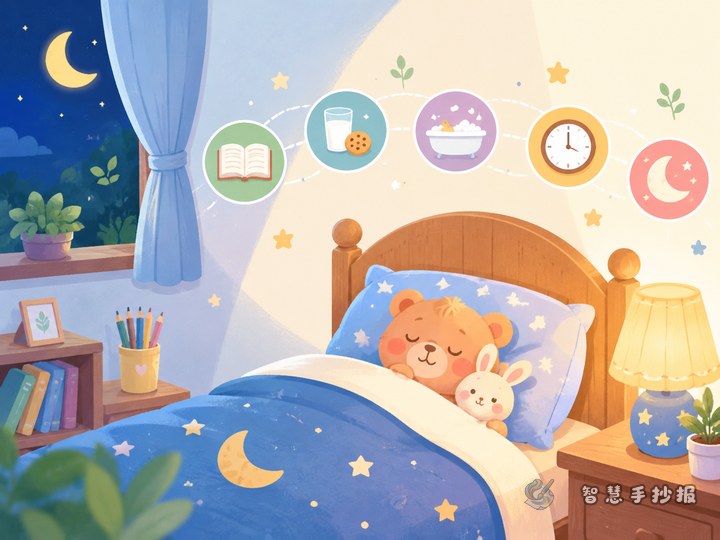
Sleep health and daily routine posters often fill the page with going to bed early and waking up early, leaving the nap area empty. A nap box is actually one of the easiest parts to design because it has a clear question, a number, and a small record chart. This guide builds a complete nap section around one question: how long should a nap be?
Pick One Question for the Nap Box
If a poster tries to say everything, nothing stands out. Let the nap box answer a single question: how long should a nap be?
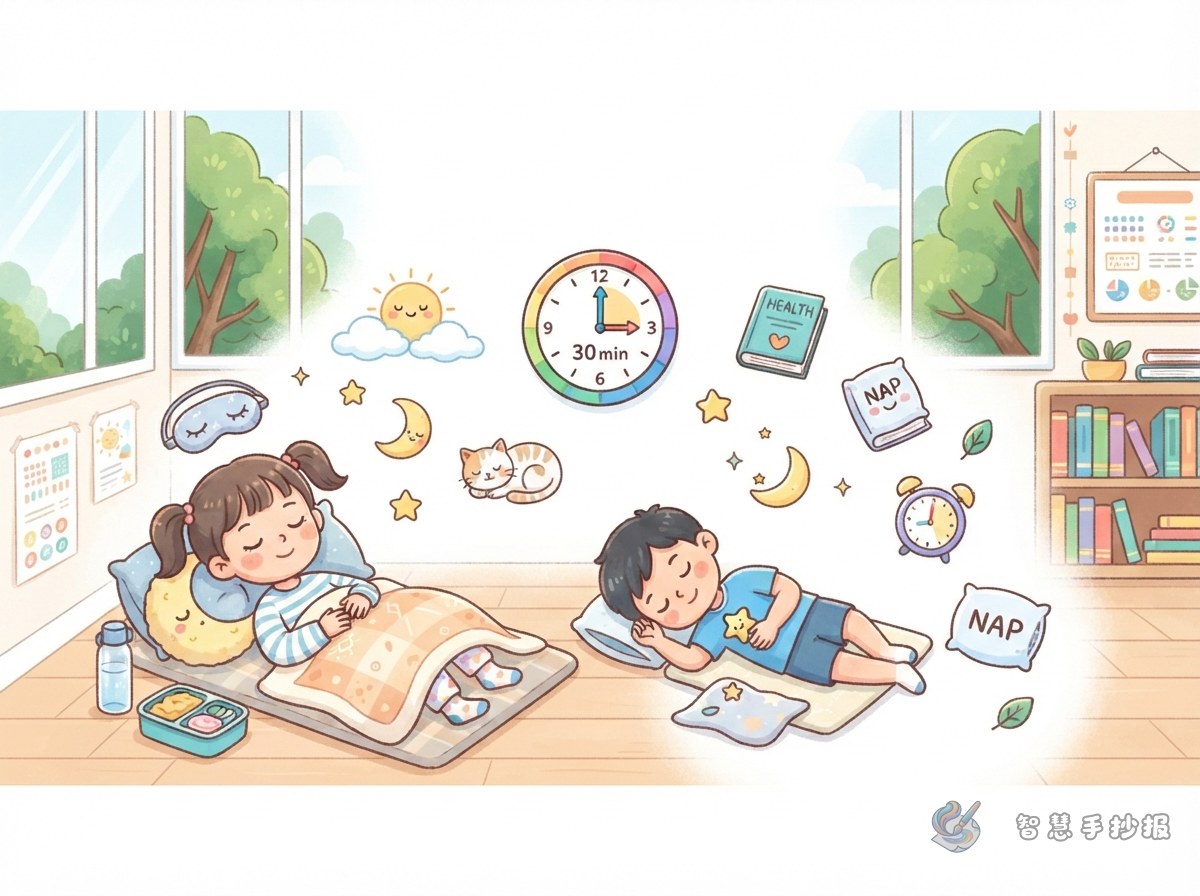
Write it like this: a nap is not better when it is longer. Many routine tips suggest keeping a nap to about 20 to 30 minutes, which is short enough to wake up clear-headed. Sleeping more than an hour can leave some people heavy and slow to get up. The best length also depends on your school schedule, how well you slept at night, and how you feel when you wake.
- About 10 minutes: eyes closed and relaxed, for days when time is short.
- 20 to 30 minutes: a comfortable length for many students.
- Longer than an hour: deep sleep may make waking up harder.
- After 3 p.m.: skip long naps so falling asleep at night stays easy.
Add one line under the box: choose your nap length by how you feel afterwards, not by comparing with others.
Turn Nap Length Into a Timeline
- Draw a long horizontal line. Write “short” on the left and “long” on the right.
- Mark four points: 10 minutes, 20 minutes, 30 minutes, and 1 hour.
- Draw a small alarm clock over the 20 to 30 minute part and label it “recommended”.
- After the 1 hour mark, add a yawning face and the words “may feel groggier”.
- Draw a dotted line after 3 p.m. and write “no long naps”.
This single drawing answers the main question and gives the page a clear center.
Four Small Columns That Cover the Topic
- Nap questions: “How long is a good nap?” “Why do I feel foggy after a nap?” Use a question as the column title.
- Why nap: “Stay sharper in afternoon class”, “Keep your mood steady”, “Give your eyes and body a rest”.
- Nap reminders: “Do not press your eyes on a hard desk”, “Use a small pillow or folded jacket”, “Put your alarm within reach”, “Drink some water before moving around”.
- My nap record: Draw a seven-box table for Monday to Sunday. In each box write the length and how you felt, using a smiley, a flat face, or a sleepy face.
Layout and Colors: Keep the Nap Corner Quiet
- Colors: soft blue, pale yellow, cream, and light grey-green. Save dark colors for titles and outlines.
- Shapes: clouds, a crescent moon, a pillow, an alarm clock, curtains, and a gentle sleep curve.
- Borders: a cloud or pillow shape for the main title, rounded rectangles for columns, and a neat grid for the record table.
- Order: place the title first, then the timeline, then the small columns. Sketch light pencil lines before writing, and leave a finger-width between lines.
- Focus: make “20–30 minutes” the largest number on the page so the answer is easy to find.
Copy-Ready Lines and a Quick Check
- A nap is not better when it is longer; the right length is what matters.
- A short rest at noon can keep the afternoon clear.
- No hard desk, no pressed eyes—bring a small pillow.
- No long naps after three, so bedtime stays on time.
- Record one week of naps and find your own best length.
Before you finish, check three things: the title shows the topic at a glance, the timeline clearly marks the recommended length, and the record table has all seven days. If you want to try another layout or add more sleep health columns, open the 智慧手抄报 WeChat mini program, choose a sleep health theme, and keep editing the text and column names.