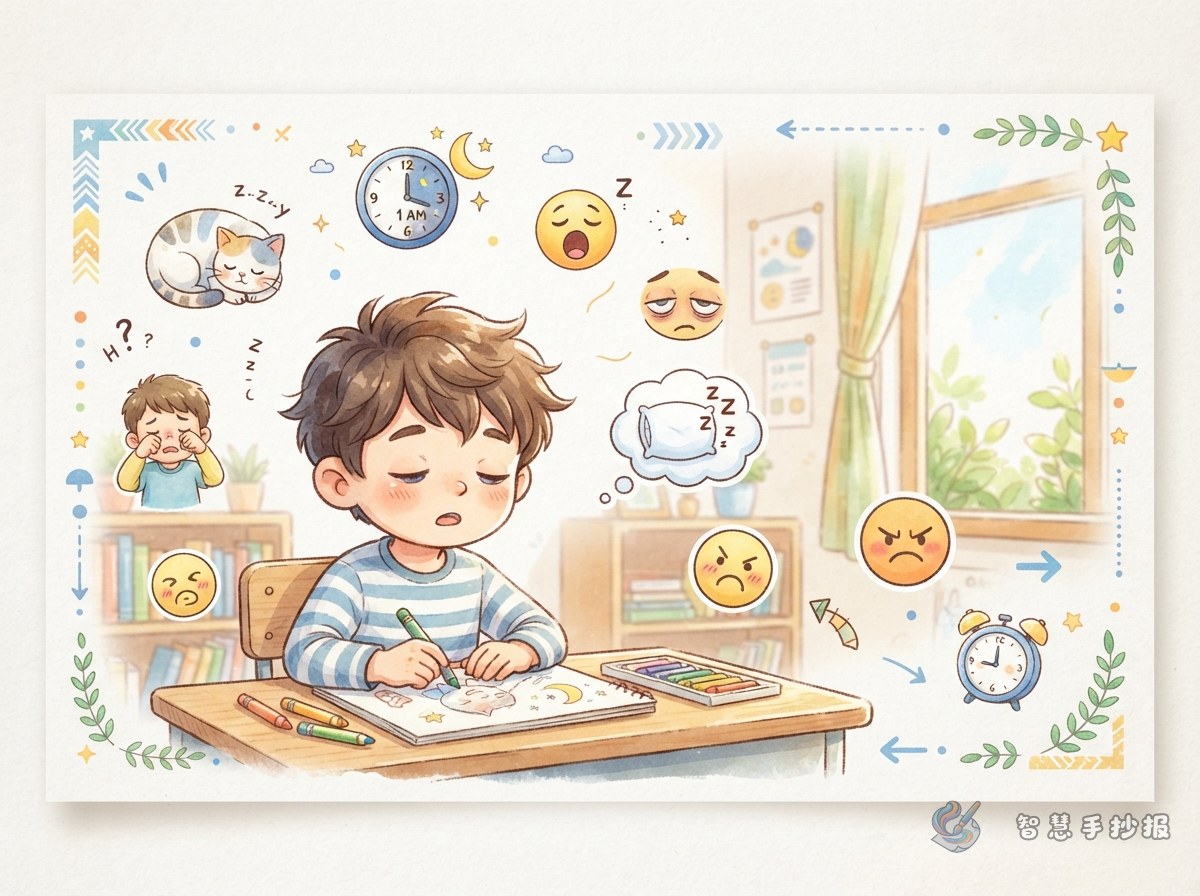
Turn the Poster into a Sleepiness Investigation
Build the handwritten poster around one question: How does the body tell us that it needs more rest? A young detective theme makes the subject engaging and helps students connect insufficient sleep with everyday school experiences. Possible headings include “Spot the Sleepy Signs,” “Do Not Build Up Sleep Debt,” and “Time for an Earlier Bedtime.”
Clues Students Can Recognize
Choose familiar situations and describe them in short, child-friendly sentences. Make it clear that an occasional tired day does not automatically mean someone has a health condition.
- Morning clues: struggling to get up, staying in bed too long, or forgetting school supplies.
- Classroom clues: repeated yawning, difficulty concentrating, or losing track while reading.
- Mood clues: feeling more irritable than usual or showing less interest in activities.
- Activity clues: taking longer to finish homework or lacking energy during exercise.
Add a responsible reminder: These signs may have other causes. If they continue or interfere with daily life, tell a parent or teacher and seek appropriate professional advice when needed.
Add a Practical Better-Sleep Checklist
- Keep bedtime and wake-up time as consistent as possible.
- Finish washing up and packing the schoolbag before it gets too late.
- Reduce exciting games and videos before bed to create a calmer transition to sleep.
- Be active and spend some time in daylight, but avoid vigorous exercise right before bedtime.
- Keep the bedroom quiet and comfortable, and talk to a parent if sleep problems continue.
Design the Page Like a Traffic Light
Divide the page into three color-coded areas. Use yellow for warning signs such as yawning and low energy, red for possible effects on learning and mood, and green for healthy actions. Place a bed, moon, or sleepy detective in the center, then connect the sections with stars, clouds, or footprints.
Put longer text inside pale boxes, make section headings bold, and leave enough open space around each area. After planning the content, students and parents can continue in the Smart Handwritten Poster WeChat mini program to choose a template, arrange the sections, and complete the poster.