Start with a Map of Sound
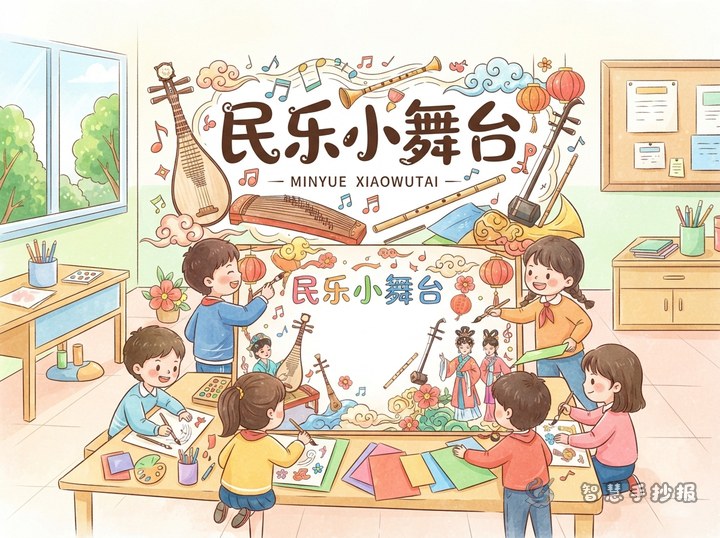
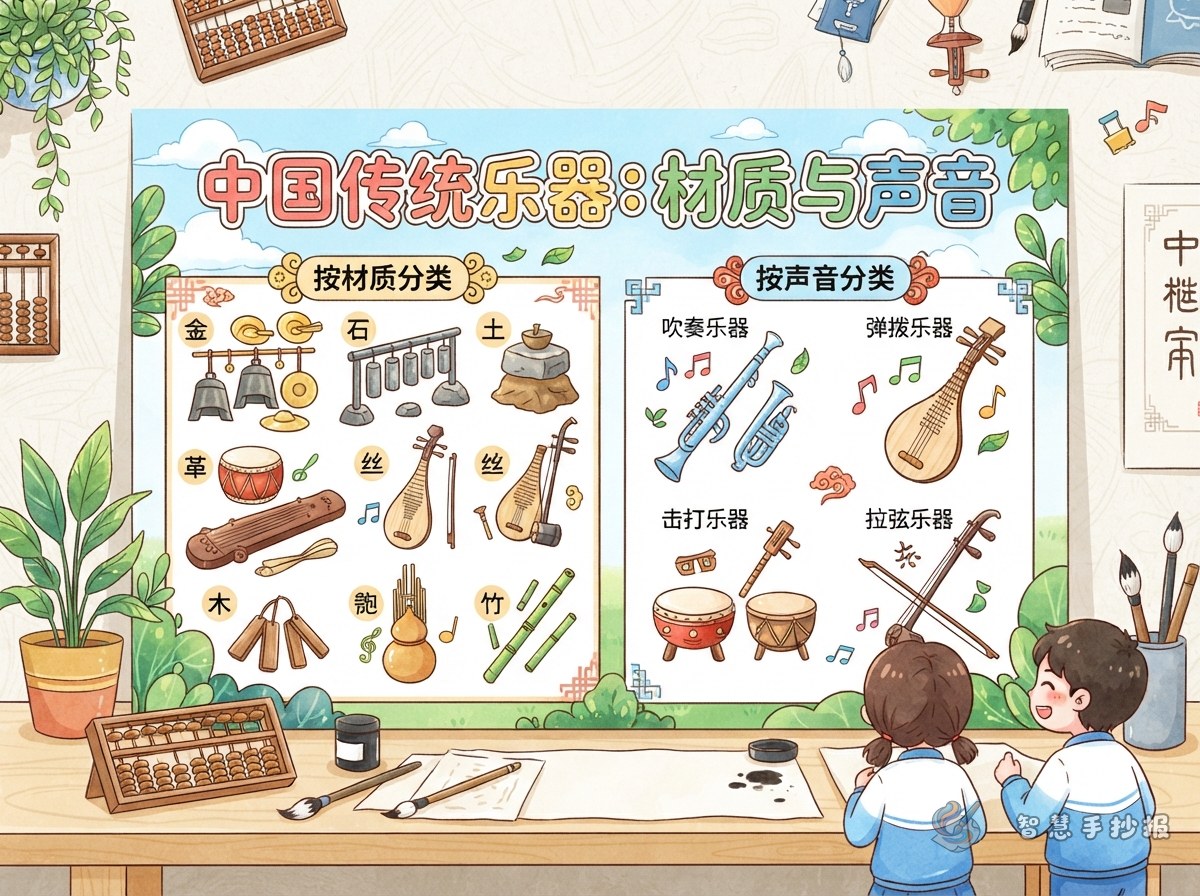
This handwritten newspaper can explore why traditional Chinese instruments produce different sounds. Group the instruments by materials such as wood, bamboo, silk, leather, metal, and gourd. Draw an open traditional instrument case in the center, then connect it with colored lines to instruments and their materials. This makes the cultural theme easy to understand and visually interesting.
Use “Hearing China’s Voice in Its Materials” as the main title, with “A Little Exploration of Traditional Instruments” as the subtitle. Vermilion, bamboo green, warm white, and deep blue can create a traditional but fresh palette suitable for primary school students.
Six Materials, Six Sets of Ideas
Wood and Bamboo
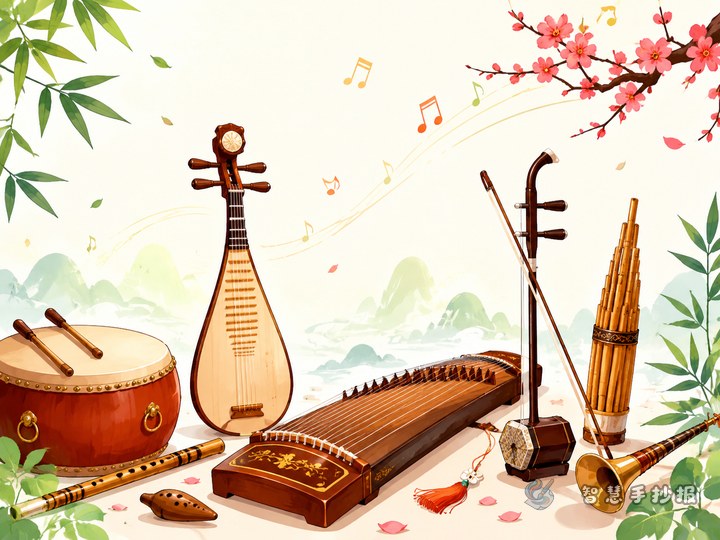
Wood is often used for instrument bodies, drum frames, and parts of some wind instruments. Bamboo is suitable for instruments such as the dizi and xiao. A short text can say: “Wood creates warm resonance, while bamboo creates a clear echo. Materials give instruments their individual tones.” Draw a guqin, wooden fish, bamboo flute, and xiao beside this section.
Silk, Leather, and Metal
Silk strings can introduce the guzheng, pipa, and erhu. Leather membranes can lead to drums, while metal can be connected with instruments such as the bianzhong bells. Instead of filling the page with facts, answer three questions for each material: where is it used, what does it sound like, and which section of the handwritten newspaper will explain it?
Gourd and Combined Materials
Hulusi can be used as an example of how a natural material can sing. You can also explain that many instruments use more than one material. Wood, strings, leather, or metal may work together to create sound. This makes a good “Did You Know?” note in a corner.
Arrange the Information into Four Sections
- Material Watch: Explain the connection between materials and instruments in short sentences.
- Sound Word Dictionary: Collect words such as clear, deep, bright, mellow, and resonant, then match each word with an instrument.
- Instrument Cards: Choose three or four instruments and write their names, materials, playing methods, and sound impressions.
- Cultural Thought: Add a short sentence such as “Protecting traditional instruments means protecting the sounds in our memories.”
Connect the sections with string lines, bamboo patterns, or drumbeat marks so that they feel like one complete design. Use short paragraphs and keywords, leaving enough space for drawings.
Build the Page in Layers
Place the title and a row of simple instrument silhouettes at the top. Make the central Sound Map the largest part of the page. Put Material Watch and Instrument Cards on the two sides, then reserve the bottom for the Sound Word Dictionary and Cultural Thought. A border made of strings, bamboo joints, or repeated drumbeats can unify the page.
First use a pencil to mark the title, sections, and drawings. Then outline them in black and add color to the key words. Focus on recognizable features such as the long tube and finger holes of a flute, the strings of a guzheng, and the round shape of a drum. Detailed realism is unnecessary. You can continue arranging the page, organizing text, and adding decorations in the Smart Handwritten Newspaper WeChat Mini Program.
Turn the Page into a Small Experiment
If classroom conditions allow, add a “Guess the Material from the Sound” activity at the bottom. List the bamboo flute, drum, guzheng, and bianzhong, then ask readers to match them with clues such as clear, heavy, mellow, and the sound of metal and stone. This checks whether the information is clear and makes the cultural content more interactive.