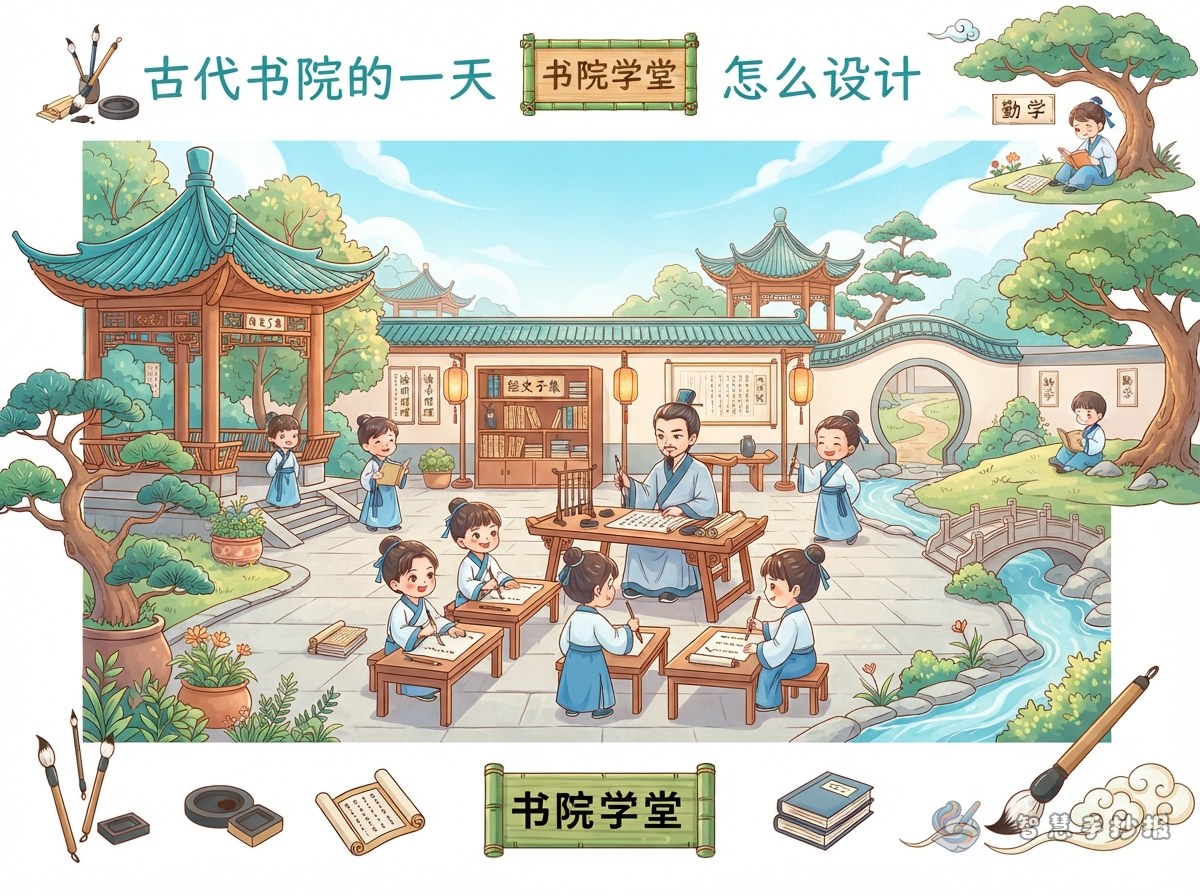
Turn the Topic into a One-Day Academy Journey
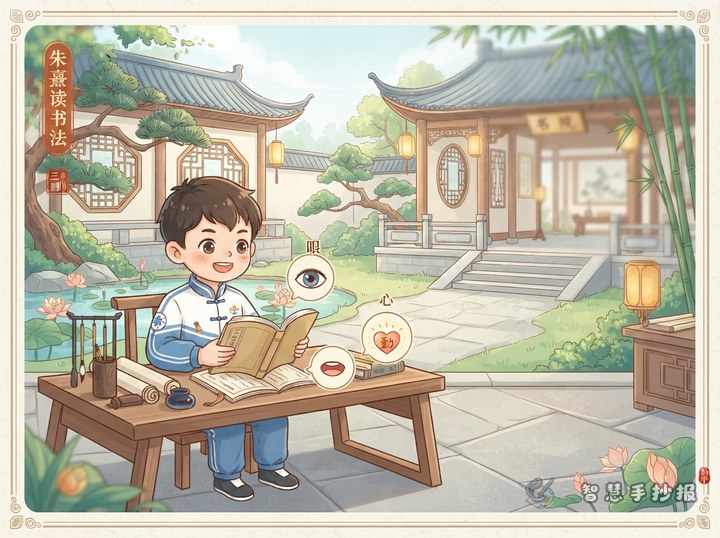
If the topic is written only as historical facts, it may feel too much like an encyclopedia page. A better idea is to design the handwritten newspaper as a day in an ancient Chinese academy. Readers can follow a young learner from morning reading to lessons, book study, discussion, and reflection.
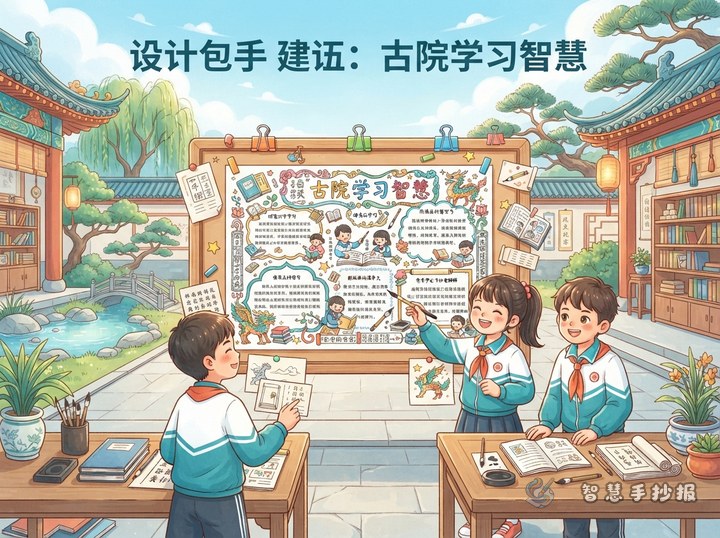
Possible titles include A Day in an Ancient Academy, Learning Among Books and Bamboo, or The Spirit of Study in an Old Academy. Place the title at the top or inside a scroll-shaped banner.
Build the Main Sections as a Timeline
- Morning: Reading Aloud — show students reading early and valuing time.
- Late Morning: Learning from the Teacher — write about listening carefully and taking notes.
- Afternoon: Studying in the Library — describe reading books, copying useful lines, and learning actively.
- Evening: Asking and Discussing — show classmates sharing ideas and asking questions.
- Before Rest: Quiet Reflection — write what was learned today and what can be improved tomorrow.
Short Text Materials for the Page
Small Fact Box
Ancient Chinese academies were places for reading, teaching, collecting books, and discussing knowledge. Students learned from teachers and also talked with classmates. Academies valued knowledge, but they also taught learners to be honest, respectful, hardworking, and thoughtful.
Learning Spirit Cards
- Diligence: Keep reading and practicing every day.
- Curiosity: Ask questions when something is unclear.
- Focus: Study quietly and finish one task carefully.
- Self-cultivation: Learn knowledge and also learn how to become a better person.
My Study Actions Today
Although we do not study in ancient academies today, we can still learn from their good habits: reading regularly, listening carefully in class, organizing notes, asking questions bravely, and sharing ideas with classmates. This section connects the old learning spirit with everyday school life.
Simple Visual Ideas with a Classical Feeling
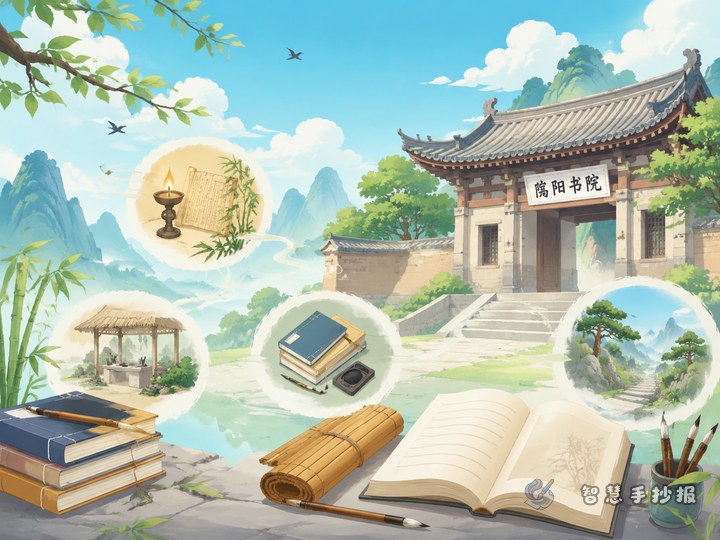
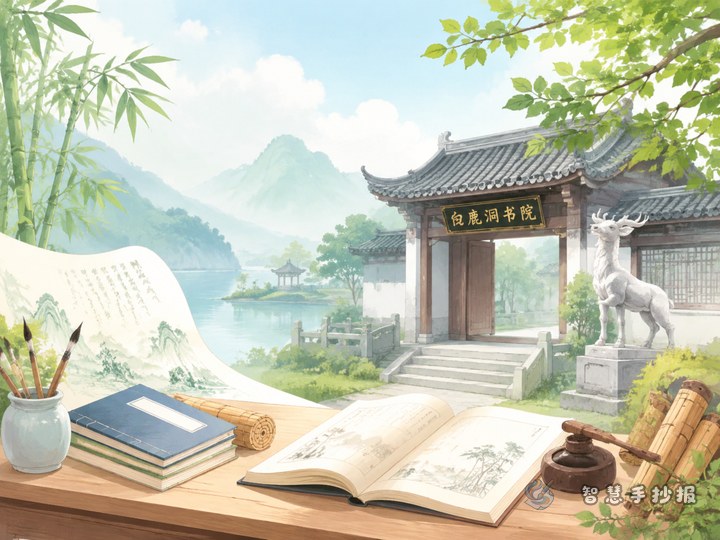
The main drawing can be a simple academy gate with stone steps, bamboo, pine trees, or a round window. Add a few student figures reading, listening, asking, or writing. The drawings do not need to be complicated; clear actions are more important.
- Use scrolls, bamboo slips, books, ink marks, or window grids as borders.
- Choose soft colors such as warm beige, light brown, green, and pale blue.
- Place the timeline in the center and smaller text boxes in the corners.
- Leave enough blank space so the page looks clean and easy to read.
Plan the Sections Before Writing
Before making the final page, draw four or five sections on scrap paper and decide how much text each section needs. Keep the title clear, match every illustration with the study theme, and write in short sentences. After planning, students can also open the Zhihui Handwritten Newspaper WeChat mini program to choose layouts, adjust sections, and continue making a neat handwritten newspaper reference.