Start With a Question, Not a Rule
Many students and parents wonder how long a noon nap should be. A poster on this topic works best when it does not pretend to give one perfect answer. Instead, turn the question into a small observation project: record how long you rest and how you feel in the afternoon. The poster then becomes a “noon nap report” that other students can read and think about.
Use the question as the main title, such as “How long should I rest at noon?” Add a subtitle like “My nap-time observation.” This makes the topic clear and leaves room for a log, feeling cards, and short tips.
Four Columns That Fit This Poster
Column 1: My Nap-Time Log
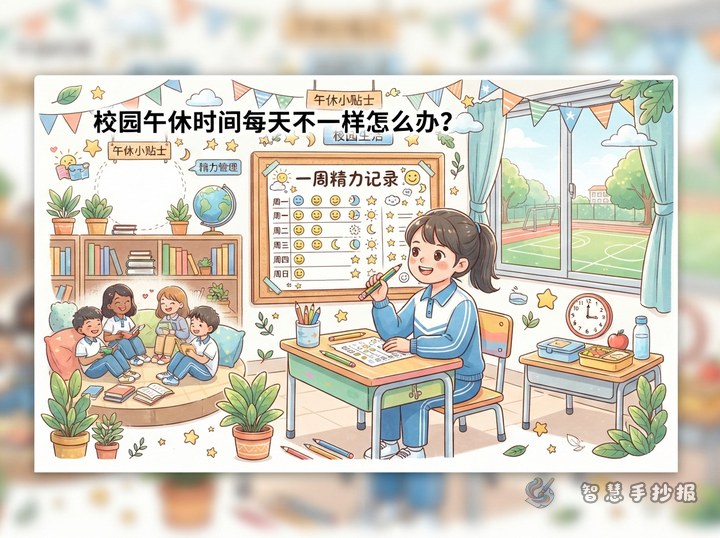
Draw a simple table with columns for the date, about how long the rest lasted, how you felt after waking, and whether the first afternoon class felt tiring. Three to five days are enough. Add a small note: “Look at this log with a teacher or parent, and do not change your rest time on your own.”
Column 2: Short-Rest Feeling Card
Use a card to describe what a short rest feels like: “I closed my eyes for a little while, and I could focus better in the afternoon.” Write only real personal feelings, and avoid phrases like “studies prove” without a source.
Column 3: Feeling Groggy After a Long Rest?
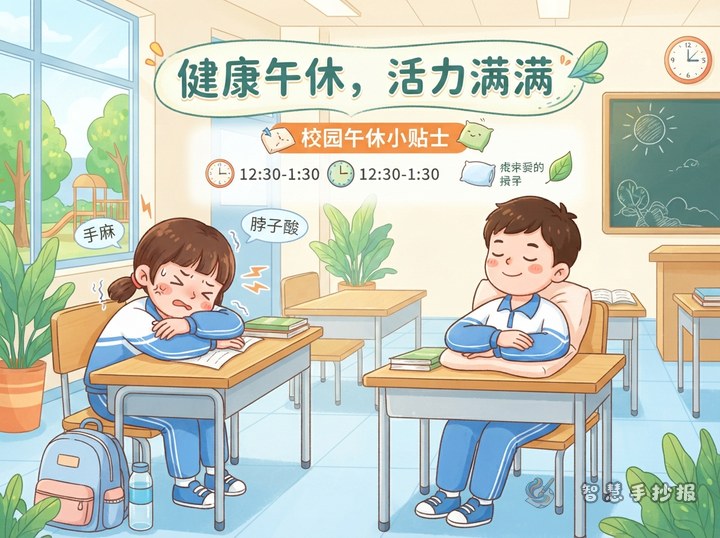
Many students know this feeling: after a longer nap, being woken up can feel foggy. Show this scene with a small comic or speech bubble, then add: “If this happens often, talk with a teacher or parent and adjust together.”
Column 4: Afternoon Energy Check
Use three simple icons — a happy face, a neutral face, and a sleepy face — so readers can rate their afternoon energy. This works well in a corner of the poster and makes it more interactive.
Short Lines Students Can Copy
- “A noon nap is not about being the longest; it is about finding a rhythm that helps me feel awake in the afternoon.”
- “First observe, then adjust. I am in charge of my rest, but I also listen to my teacher and parents.”
- “After waking up, sit for a moment and take a sip of water before starting the afternoon lessons.”
- “If I cannot sleep at noon, resting quietly with my eyes closed still helps.”
- “Before the first afternoon class, remind myself: sit up, take a breath, and look at the board.”
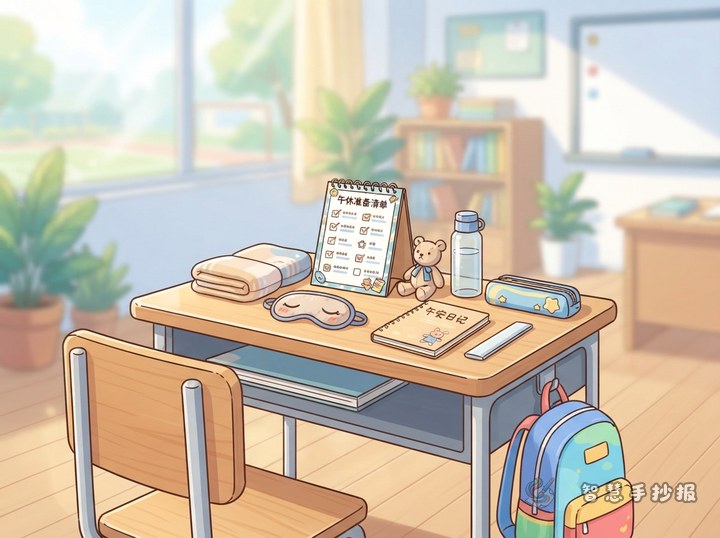
Place these lines in different columns so the poster does not become one block of text. Leave a little space beside each line for small drawings such as clocks, pillows, or stars. To make the poster feel like a survey, add a blank line: “My own finding: ____.”
Layout Idea: A Clock in the Center
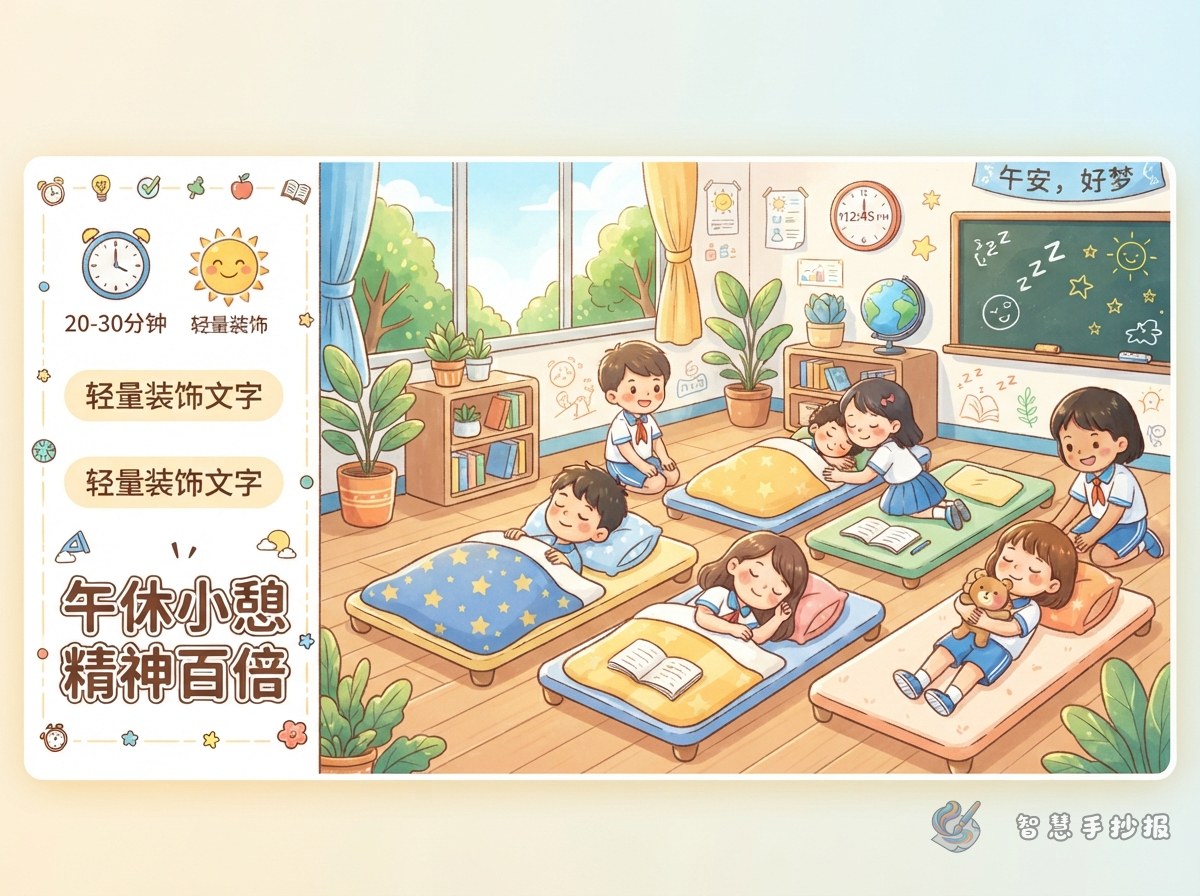
Divide the poster into two sides. On the left, draw a large clock and label it “noon rest time.” Use different colors to mark three short parts: get ready, rest, and wake up. On the right, place the log table and short text cards. Across the top, you can draw a “afternoon energy line” with a wavy shape to show morning, noon rest, and afternoon.
For colors, use light blue or light purple for the rest section and pale yellow or light green for the waking-up section. This creates a calm-to-awake contrast. The title can use rounded cartoon letters, but leave enough space for the text columns.
If there is extra space, add a small “class noon rest agreement” box with shared rules such as “do not disturb others, return to your seat on time, and stay quiet when you wake up.” This connects the poster to daily classroom life.
Three Details That Make the Poster Better
- Do not invent “research numbers.” A poster can share personal observations and feelings. Avoid made-up percentages, rankings, or “experts say” claims.
- Do not present one nap length as a rule for everyone. Schools and age groups differ. It is safer to write about “a rhythm that fits me.”
- Leave room for interaction. For example, write “What is your noon rest discovery?” under the log so readers can think about their own habits.
When the poster is finished, ask a teacher or parent to check whether the layout is clear and the sentences are easy to read. Then add color and small details. For more layout ideas and text cards about noon rest and energy management, students can also open the “Smart Handwritten Poster” WeChat mini program and continue building their own poster.