Why a Short Desk Nap Can Leave You More Tired
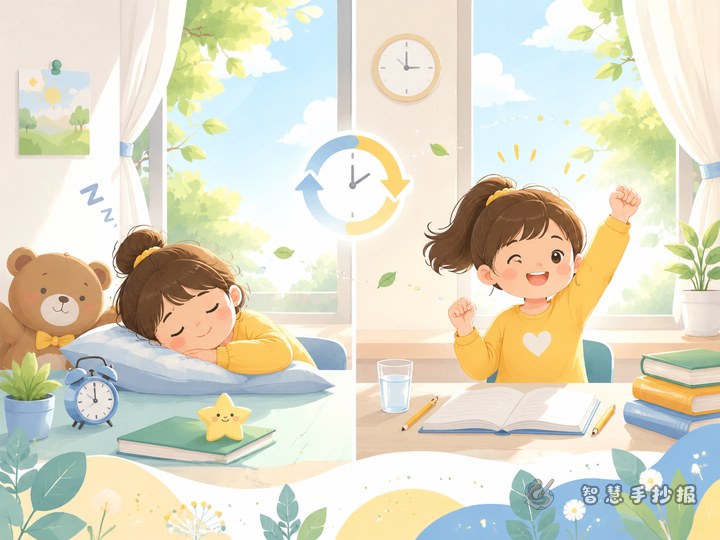
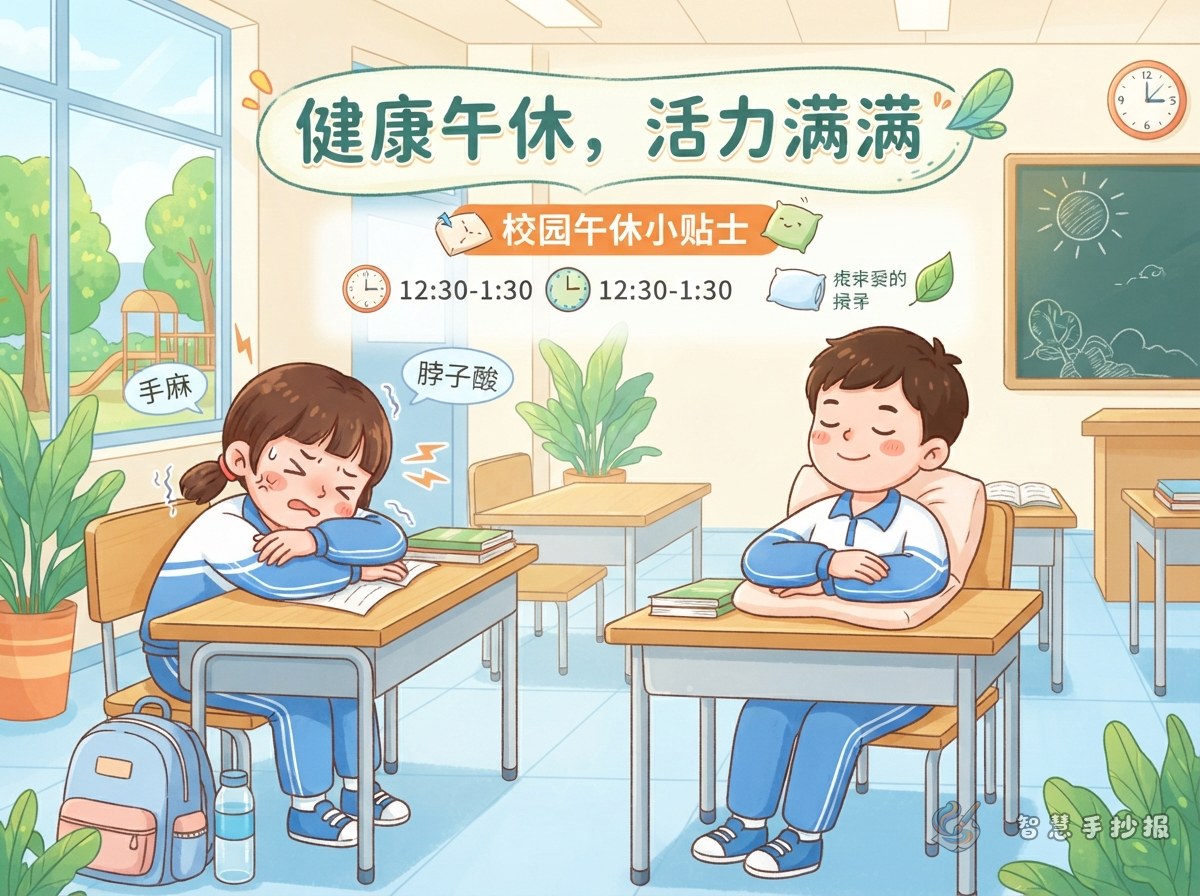
Many students put their forehead straight onto their arms and hunch their shoulders during the noon break. When they wake up, their hands feel numb and their neck feels stiff, which makes the first afternoon lesson harder to follow. A good poster can start with this familiar problem, then move on to the idea of adjusting posture.
Try an opening line like: “A good nap is not just putting your face on the desk. The right posture helps your body really rest.” Place it under the main title as a short introduction.
Choosing a Main Title and Three Core Columns
Keep the main title around six to ten words, such as “Desk Nap Posture Class”, “The Secret of a Comfortable Nap” or “Make Your Noon Break More Comfortable”. Then use three columns to carry the content, with two or three lines in each.
Column 1: Three Steps for a Better Desk Nap
- Turn your face to one side: do not press your forehead straight down, so your eyes and nose feel less pressure.
- Stack your arms as a soft cushion: place one arm over the other between your face and the desk.
- Relax your shoulders and lean back slightly: do not lift your shoulders, and let the chair support your back a little.
Column 2: Quiet Moves Before and After Rest
These moves make no noise and can be done before or after the nap to help your hands and neck feel lighter.
- Slowly turn your wrists a few times in each direction.
- Gently shrug your shoulders, then let them drop. Repeat three or four times.
- Take three slow breaths in and out.
- After waking up, move your ankles and turn your head slowly, never with a sudden jerk.
Column 3: A Small Checklist of Useful Items
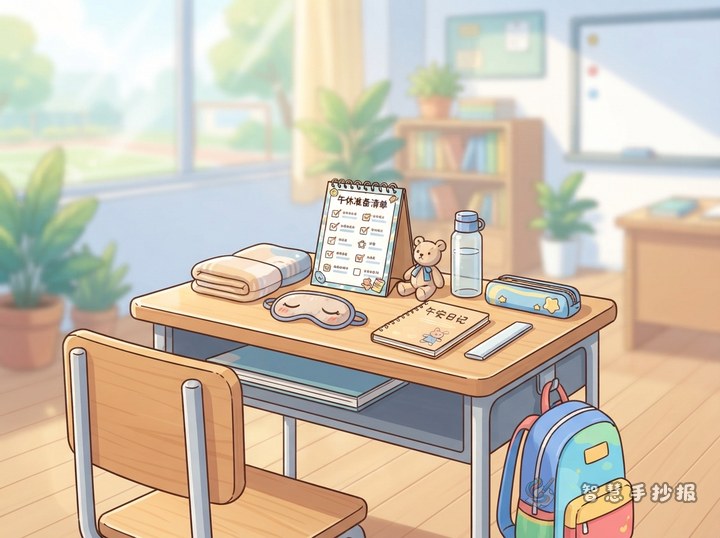
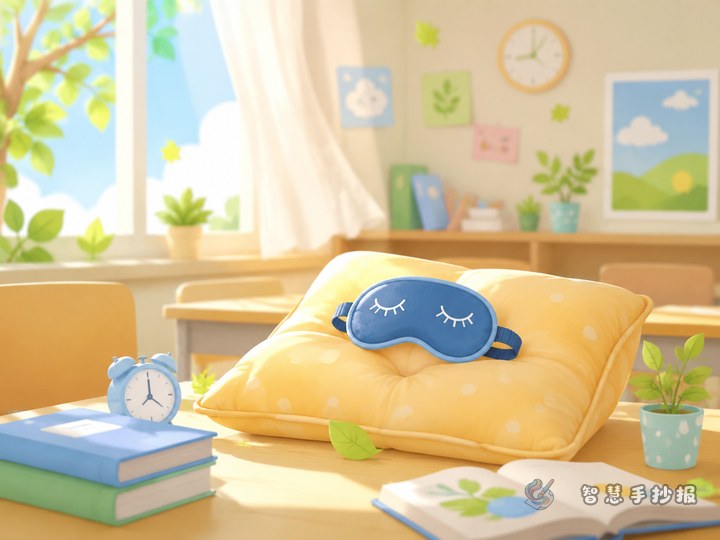
Use tick boxes so readers can check what they need. Ideas include a small cushion or soft pad, a clean eye mask, a thin jacket to use as a pad, and a cup of water at the desk for small sips after waking. Do not mention brands; focus on what each item is for.
Layout Idea: Make the Posture Diagram the Visual Centre
Divide the page into a title area at the top, a diagram in the middle and three short columns below. Draw a simple side-view figure sleeping on a desk, then use arrows to mark “arms stacked”, “shoulders relaxed” and “head turned to one side”. Put “quiet moves” on the left and the “small checklist” on the right, then leave a row at the bottom for an encouraging sentence.
Fresh light blue, pale green and cream work well. Use a slightly darker blue or green for headings. Avoid large areas of black or very dark colour, or the text will be hard to read.
Short Sentences You Can Copy Onto the Poster
- “Rest at noon, and you will have more energy in the afternoon.”
- “Numb hands do not mean a good nap. They mean too much pressure.”
- “Turn your face, stack your arms, relax your shoulders.”
- “Wake up slowly: move your hands first.”
- “Resting quietly also shows care for your deskmate.”
If there is still space, add a small box called “My Nap Goal” and let each student write one sentence, such as “Today I will stack my arms properly” or “Today I will turn my wrists when I wake up”.
Try a Different Layout Next Time
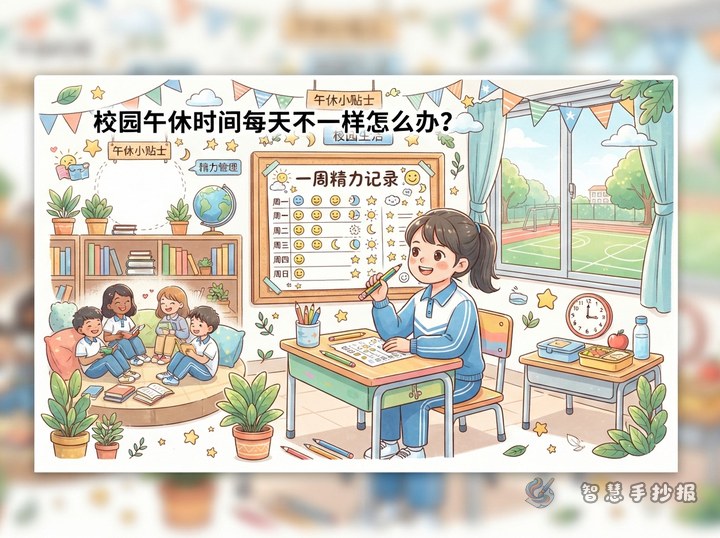
The same topic can become a vertical poster, a horizontal poster or a folded mini newspaper. It can also be turned into a set of desk cards reminding the class about good nap posture. If you want a neater column layout, open the 智慧手抄报 WeChat mini program, choose a suitable template, and place the text and diagram ideas above into your own design.