Why costumes and customs suit a unity-themed page
Costumes and customs give shape and colour to a topic that can otherwise feel abstract. A headdress, a sash, a festival scene all translate easily into drawing. Keep one idea running through the page: the clothes and festivals differ, but the wish for a good life is the same. With that thread, the page stays on the theme of unity and shared progress.
Costume details that are easy to draw
Choose four or five costumes with clear features. For each one, write a feature plus a short explanation.
- Silver headdress and neck rings: draw rows of small silver circles, then add a line such as "the shining silver is saved for festival days".
- Long robes and ceremonial scarves: draw the robe over one shoulder and let the scarf float, with the note "offering a scarf is a way of welcoming a guest".
- Embroidered caps: sketch a small four-cornered cap and fill it with tiny coloured dots.
- Robes with wide belts: the broad waistband is the clearest feature, with a small patch of grassland behind.
- Short jackets with long skirts: light colours, simple shapes, good for a corner of the page.
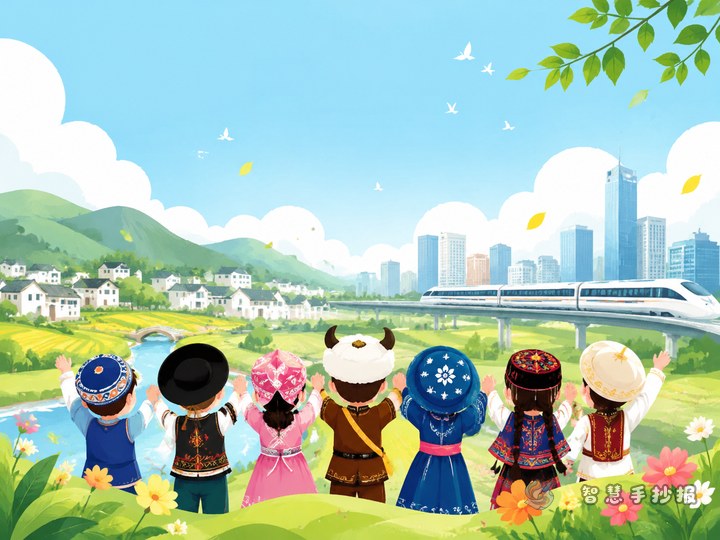
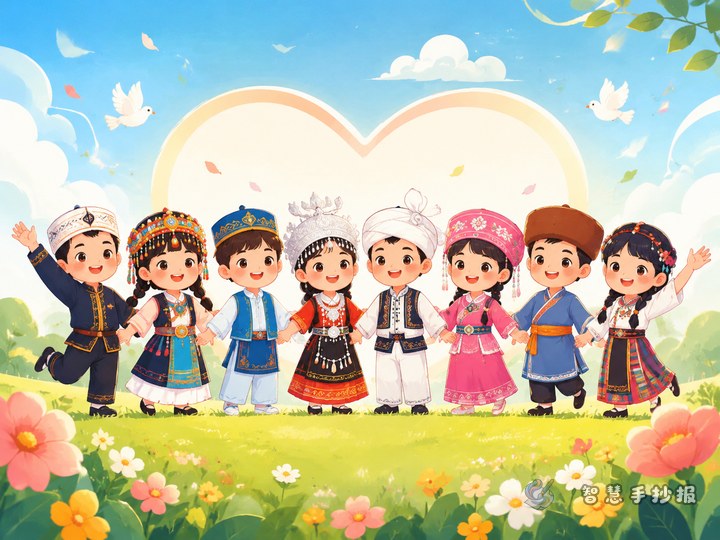
Keep the drawing style consistent: same size, same pose, all standing on one straight line. The result looks like people standing side by side.
Turning customs into short panels
Break each custom into one scene plus one feeling, and write in short sentences so the page can breathe.
Scenes worth using
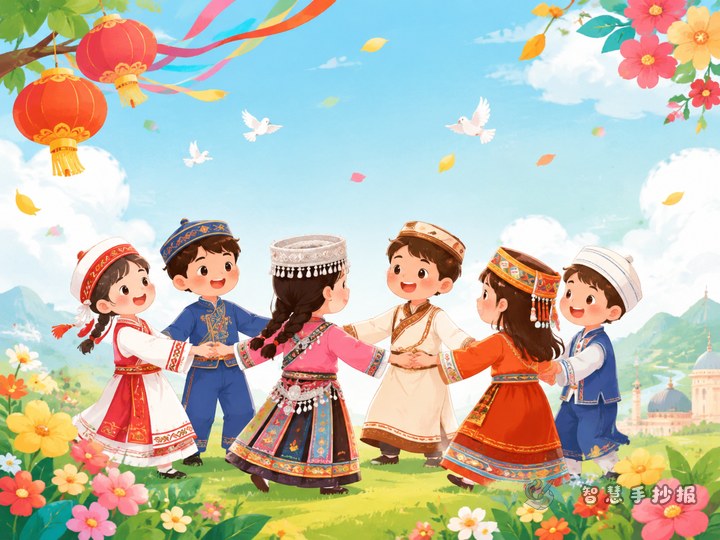
- Water-splashing festival: water is thrown, good wishes are sent.
- Torch festival: torches join into a long line of light.
- Grassland games: horse racing, wrestling and archery, lively but orderly.
- Embroidered balls: flowers stitched thread by thread, then handed to a friend.
Linking a custom back to shared progress
After each custom, add half a sentence about what we can do as well, such as "people wish each other well at the water festival, and we can say a kind word to a classmate too" or "the games have rules, so we shake hands even when we lose". The panel then moves from description to shared progress.
Arranging a colourful page without clutter
- Title area: put the main title across the top in two contrasting colours, and a smaller subtitle in the lower right corner.
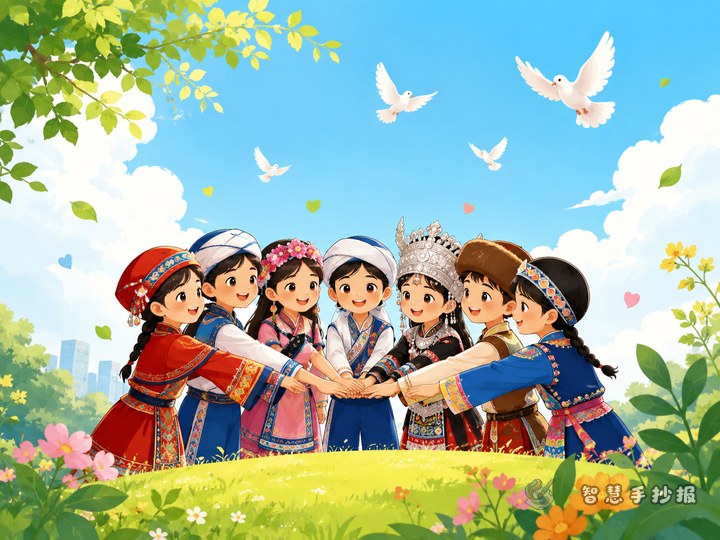
- Central drawing: a row of children in different costumes, holding flowers, balls or small flags, standing on one shared line.
- Two side panels: Colourful Costumes on the left, Festival Customs on the right, each with its own border colour and no more than two lines per paragraph.
- Bottom strip: one closing line, for example, "different clothes, the same smiles; different festivals, the same good wishes".
- White space: leave a finger-width gap between borders instead of filling every corner with pattern.
Short lines to copy and final checks
- Sketch the sections in pencil first and check that every panel has enough room.
- Keep the figures to three or five so the group looks clear.
- Limit each text panel to roughly sixty to ninety characters, then read it aloud and cut repeated words.
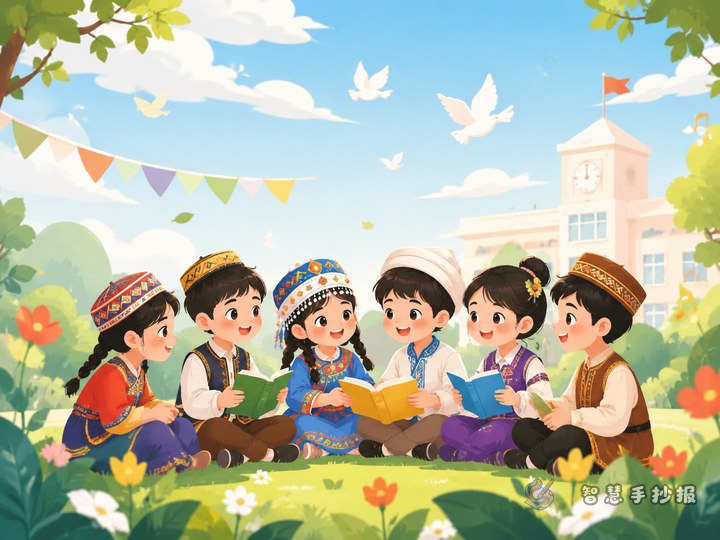
- Useful lines include "different clothes, the same smiles", "let each shine, and shine together", and "reading and growing up together is shared progress".
If you are unsure how to place the panels, look through unity-themed layouts in the Smart Handwritten Newspaper WeChat mini program, adjust the order and the length of the text on your phone first, and then copy the plan onto paper.