Build the theme around observation
A mantis poster looks more vivid when it focuses on how a mantis watches, waits, and catches prey instead of listing facts only. This gives the page a science theme and also makes it easier for children to understand. A title such as “Why Does a Mantis Always Look So Focused?” or “The Camouflage Hunter in the Grass” works well.
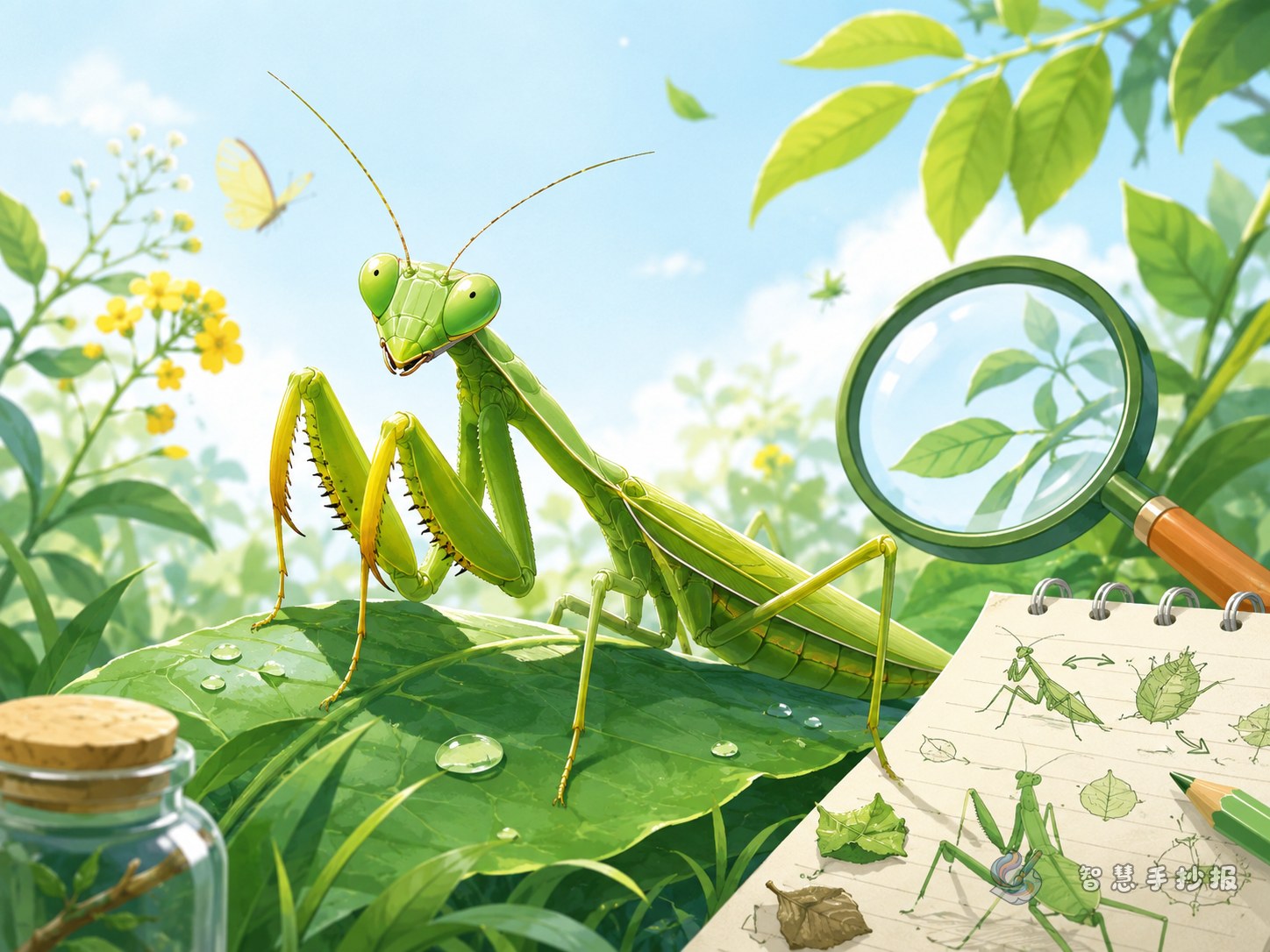
The opening can be very short: a mantis is a common insect with a slim body, a triangular head, and strong front legs that help it catch prey quickly. It often hides among leaves and branches. These lines are enough to set the tone.
How to divide the page into clear sections
You can split the poster into four useful parts so the content stays neat and easy to read.
- Meet the Mantis: describe its body shape, head, eyes, and folded front legs.
- Special Skills: explain camouflage, stillness, and fast hunting.
- Observation Corner: add a short first-person note about seeing one on a leaf.
- Nature Reminder: remind readers not to harm insects and to observe them gently.
If there is extra space, add a small section comparing a mantis with other insects to show what makes it special.
Text materials you can use directly
Short science sentences
- A mantis is an insect that is very good at camouflage.
- Its front legs look like folded hooks and help it catch prey quickly.
- A mantis can turn its head quite flexibly to observe its surroundings.
- In nature, mantises are also hunters among insects.
A simple observation paragraph
I saw a green mantis resting near the edge of a leaf. It stayed very still, almost like part of the plant. Its front legs were folded, as if it was ready to move at any moment. If I had not looked carefully, I might not have noticed it at all. That made me feel how amazing the insect world is.
A closing line for the poster
Learning about a mantis is not only about knowing one insect. It also helps us notice nature more carefully and respect small lives around us.
Design tips: show the feeling of waiting
A mantis-themed poster looks best with a calm but lively natural style. Draw the mantis on a leaf, branch, or in grass. Keep the main picture near the center and leave enough room for writing around it. Decorations can include leaves, grass lines, dew drops, or small insect shapes. Green, light yellow, and soft brown are good main colors.
The title can curve slightly like a leaf to make the page feel more natural. Small labels such as “Observation,” “Facts,” and “Nature Notes” are useful and easy to read. The drawing does not need to be complicated. A clear head shape and folded front legs already make the insect recognizable.
How to make the poster neat and practical
- Write the main title first and plan the four sections before filling in text.
- Keep each paragraph short so the page does not look crowded.
- Place the key science facts in the middle and smaller notes around the edges.
- Highlight words like “camouflage,” “front legs,” “hunting,” and “observation.”
- Check spacing at the end so the poster feels clean and balanced.
If you want to keep improving the layout, title style, or section ideas, you can continue designing in the Zhihui Shouchaobao WeChat mini program.