Build the page around a life cycle story
The most interesting part of a butterfly topic is not only its beauty, but also its clear transformation. That is why a handwritten newspaper can focus on the life cycle of a butterfly instead of trying to cover everything at once.
Good title ideas include “The Life of a Butterfly,” “How a Butterfly Grows,” or “From Caterpillar to Butterfly.”
Ready-to-use science text for the main sections
1. Egg
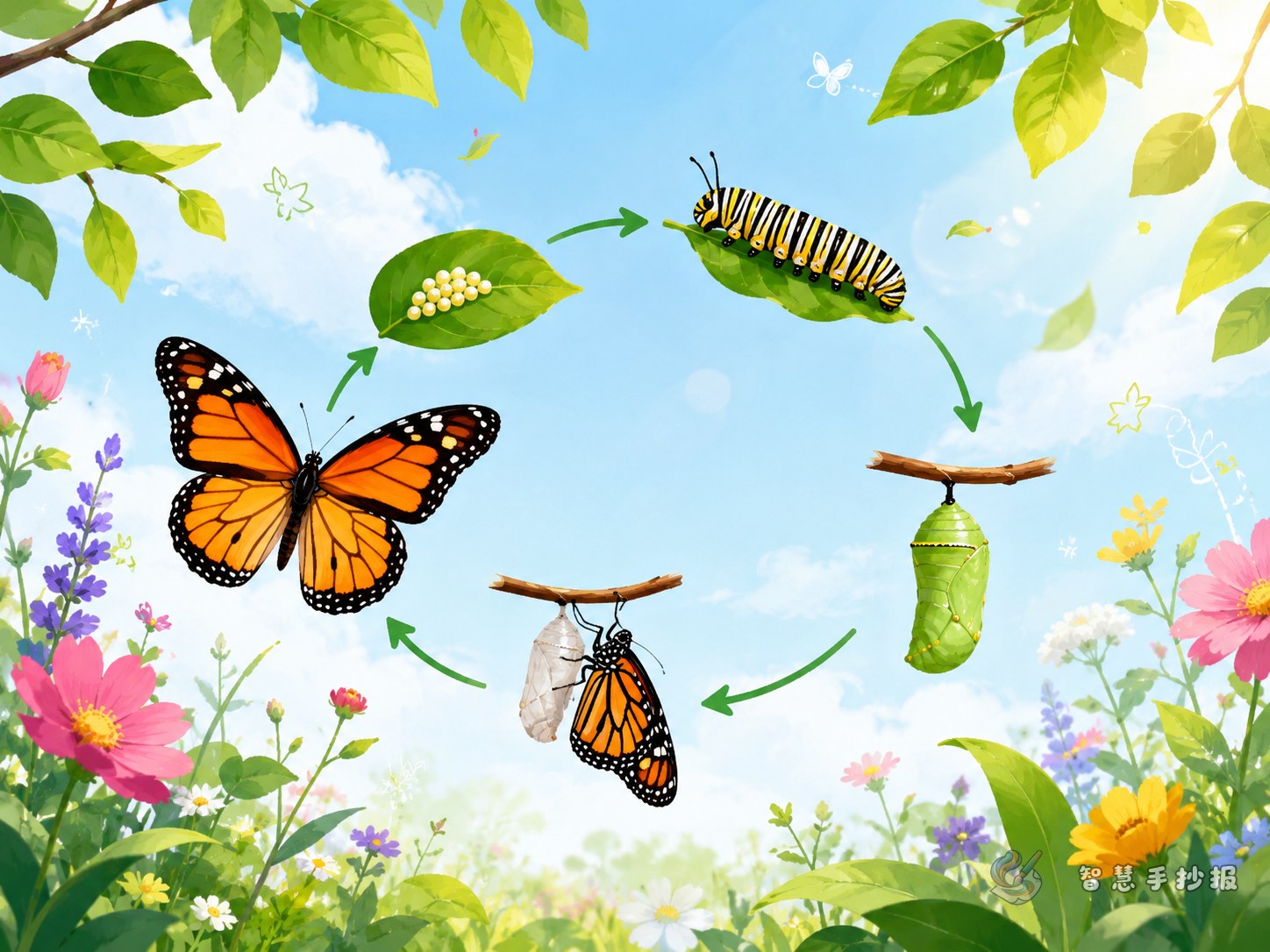
A butterfly lays eggs on plant leaves. The eggs are often very small and hard to notice. After some time, a larva hatches from the egg.
2. Larva
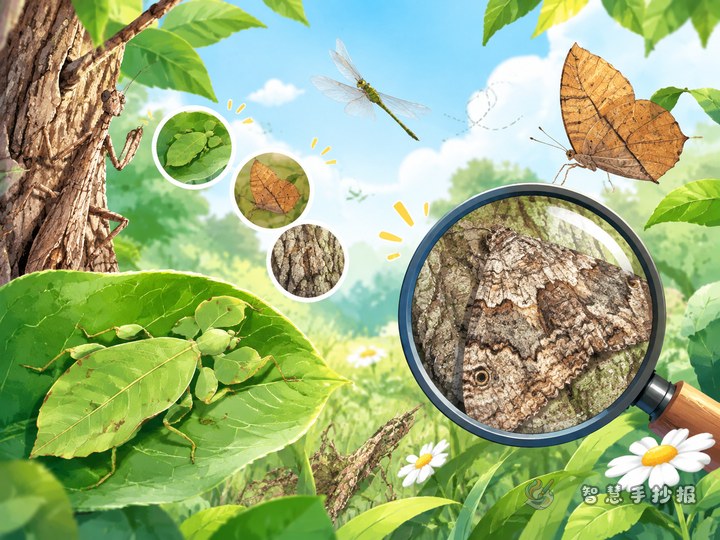
The larva is the caterpillar stage. Its main job is to eat and grow. Caterpillars often feed on leaves, and some colors help them stay hidden in nature.
3. Pupa
After growing enough, the caterpillar becomes a pupa. It may look still from the outside, but major changes are happening inside the body during this stage.
4. Adult butterfly
When the butterfly comes out of the pupa, its wings slowly open. Adult butterflies drink nectar and look for places to lay eggs, beginning the cycle again.
Extra sections you can add
- Body parts: antennae, wings, legs, and compound eyes.
- What butterflies eat: adults usually drink nectar, while caterpillars mainly eat leaves.
- Where butterflies live: they are often found in sunny places with flowers and plants.
- Observation notes: different butterflies have different wing patterns, and they often visit flowers quietly.
- Protecting insects: do not catch them carelessly and do not damage plants or natural habitats.
A layout that makes the topic easy to follow
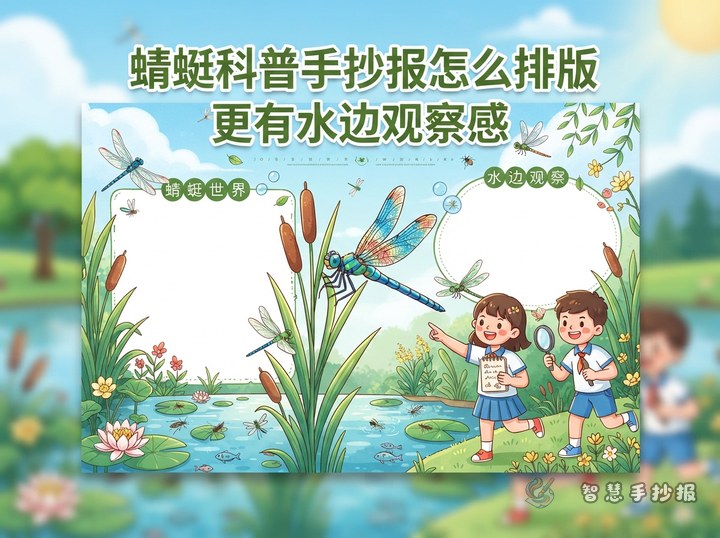
This topic looks great in a timeline layout or a circular cycle layout. On a horizontal page, you can place the four stages from left to right. If you want a more lively design, arrange them in a circle to show the repeating cycle of life.
- Place the main title at the top.
- Put the four life stages in the center as the key content.
- Use the side spaces for habitat, body features, or observation notes.
- Add flowers, leaves, and wing patterns in the corners for decoration.
Short sentences suitable for students
- A butterfly goes through four stages: egg, larva, pupa, and adult.
- The caterpillar stage is when it grows the fastest.
- The pupa looks quiet, but the body is changing inside.
- Butterflies visit flowers and can help plants in nature.
- Protecting plants and the environment also helps protect insects.
How to keep the page clear and attractive
Do not make every section too long. Two to four sentences under each heading are enough for a student handwritten newspaper. Choose bright natural colors such as yellow, green, light blue, and pink to match the butterfly theme.
If you want to continue improving titles, section boxes, and the full-page arrangement, you can move on to the Zhihui Shouchao Bao WeChat mini program and finish your design more easily.