Give the poster one clear centre
Most solar-term posters drift into a general introduction. The Summer Solstice has a stronger hook: it is the longest day of the year. Build the page around that single idea and everything else finds its place.
- When: around 21 June in the northern hemisphere.
- What you can see: the sun climbs high, noon shadows are at their shortest, morning and evening shadows stretch out.
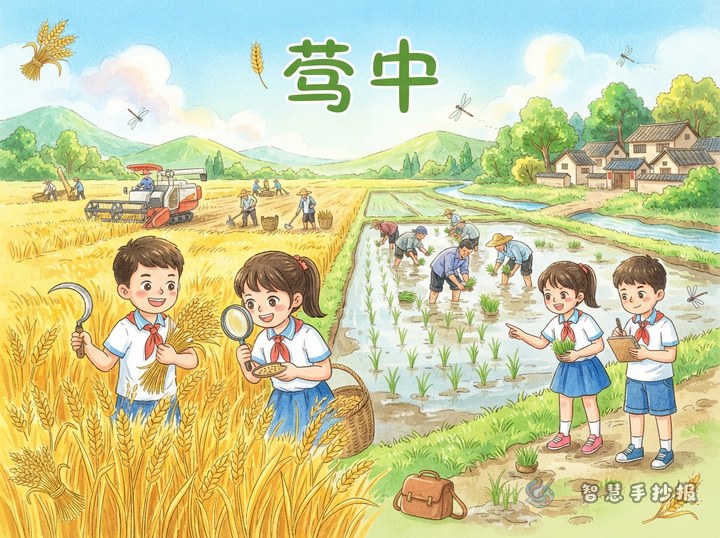
- What happens outside: weeding, watering, guarding against both drought and heavy rain.
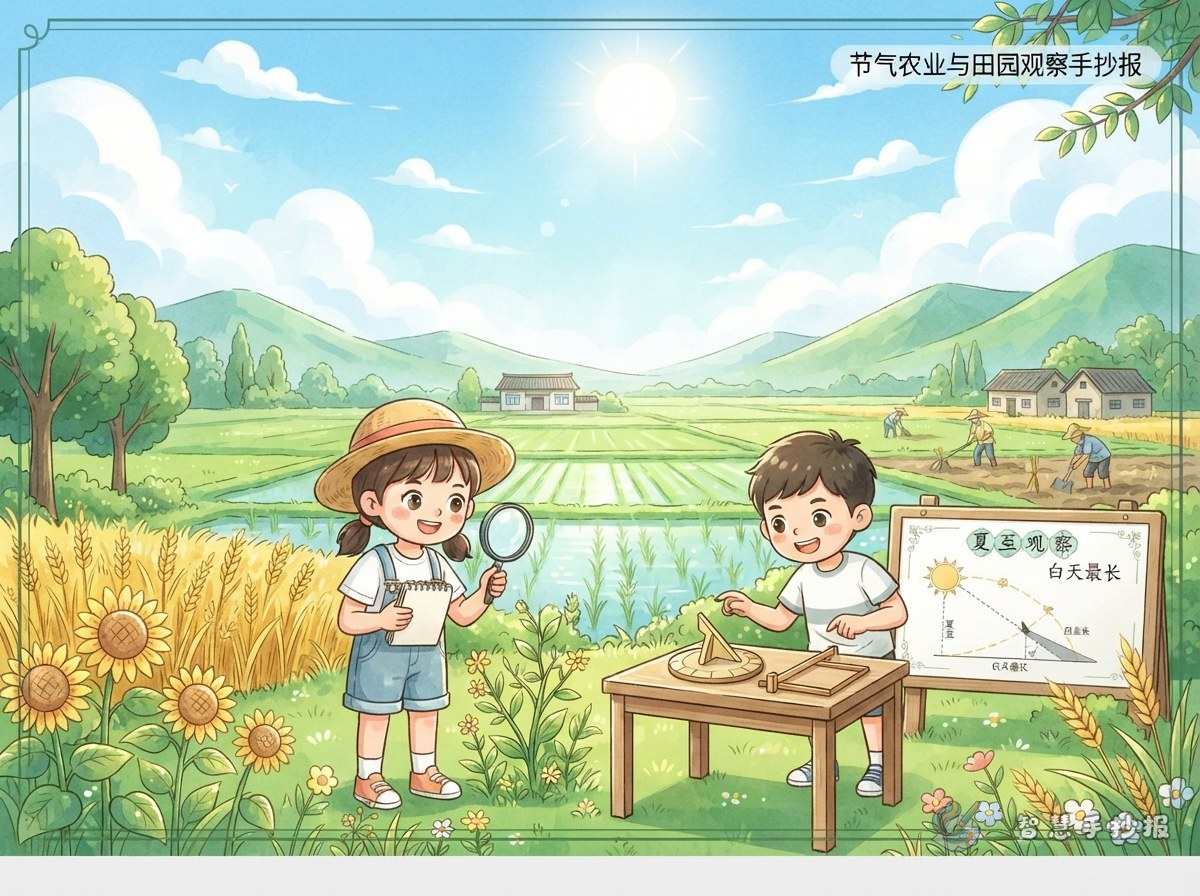
Turn a five-minute test into a shadow clock
Running the test
- Stand a straight stick in flat ground where the sun reaches it.
- Every hour, mark the tip of its shadow with a coloured pen.
- Write the time beside each mark, for example 9:00, 12:00, 16:00.
- Join the marks and look at how the shadow shortens, then lengthens again.
Drawing it on the page
Draw a wide arc across the paper to stand for the day, then plot the shadow tips along it. Show each shadow as a slim triangle, outline the shortest one in red, and add three lines of explanation: when the shadow was longest, when it was shortest, and whether the direction changed too. The diagram needs no more than a third of the sheet.
Results the child measured themselves always read better than a copied definition.
What to write about early-summer work
Avoid general statements. Write who does what, when, and how.
- Watering: early morning and evening are preferred; midday watering under strong sun is avoided.
- Weeding: warmth and rain push weeds up as fast as crops, so beds are cleared often.
- Drainage and drought: after heavy rain water must be let out; after days of sun it must be added.
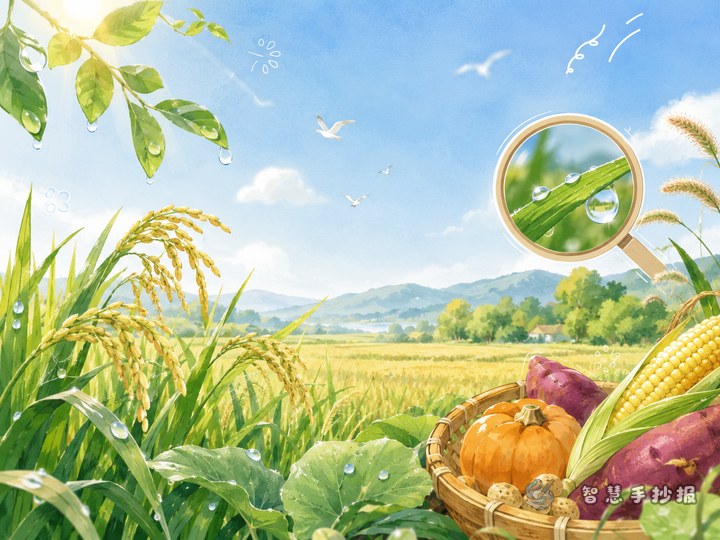
- Plant changes: rice tillers spread, corn gains height, squash vines begin to climb.
No field nearby? Swap in a flower bed, a balcony pot, or a street tree, and the observation still holds.
Layout ideas shaped by light
- Place a large sun in the middle and draw rays outward from it.
- Run a vertical timeline down the left side with four moments from dawn to dusk.
- Split the right side into two boxes: farm notes above, a short Q&A below.
- Keep a strip along the bottom for one closing sentence in the child's own words.
A wide banner title across the top, with generous letter spacing, gives the page a summery, open feel. Column names such as Shadow Clock, A Day in the Field, and From Morning to Evening work far better than generic labels. For printable frames and blank layouts, open the Smart Handwritten Poster mini program and pick a template to keep building.
Lines you can copy straight onto the page
- The sun rose earliest and will set latest today.
- At noon the shadow was so short it almost hid under our feet.
- Weeds and crops grow together, and so does the work.
- The day is long enough to finish a great many things.
For a question box, try three short entries: is the solstice the hottest day (no, heat usually comes later), why is the noon shadow shortest, and what happens to daylight afterwards. Two or three lines each is plenty; leaving white space makes the page look calmer.