Turn the Spring Equinox into a field-themed handwritten newspaper
Instead of writing only a textbook definition, this topic works best as a page full of real countryside details. You can build the handwritten newspaper around greening wheat fields, warmer spring winds, field work, and sounds of the village.
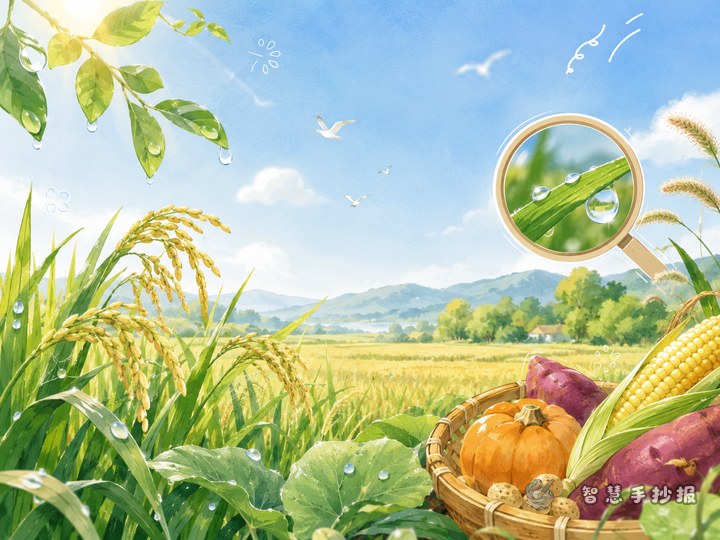
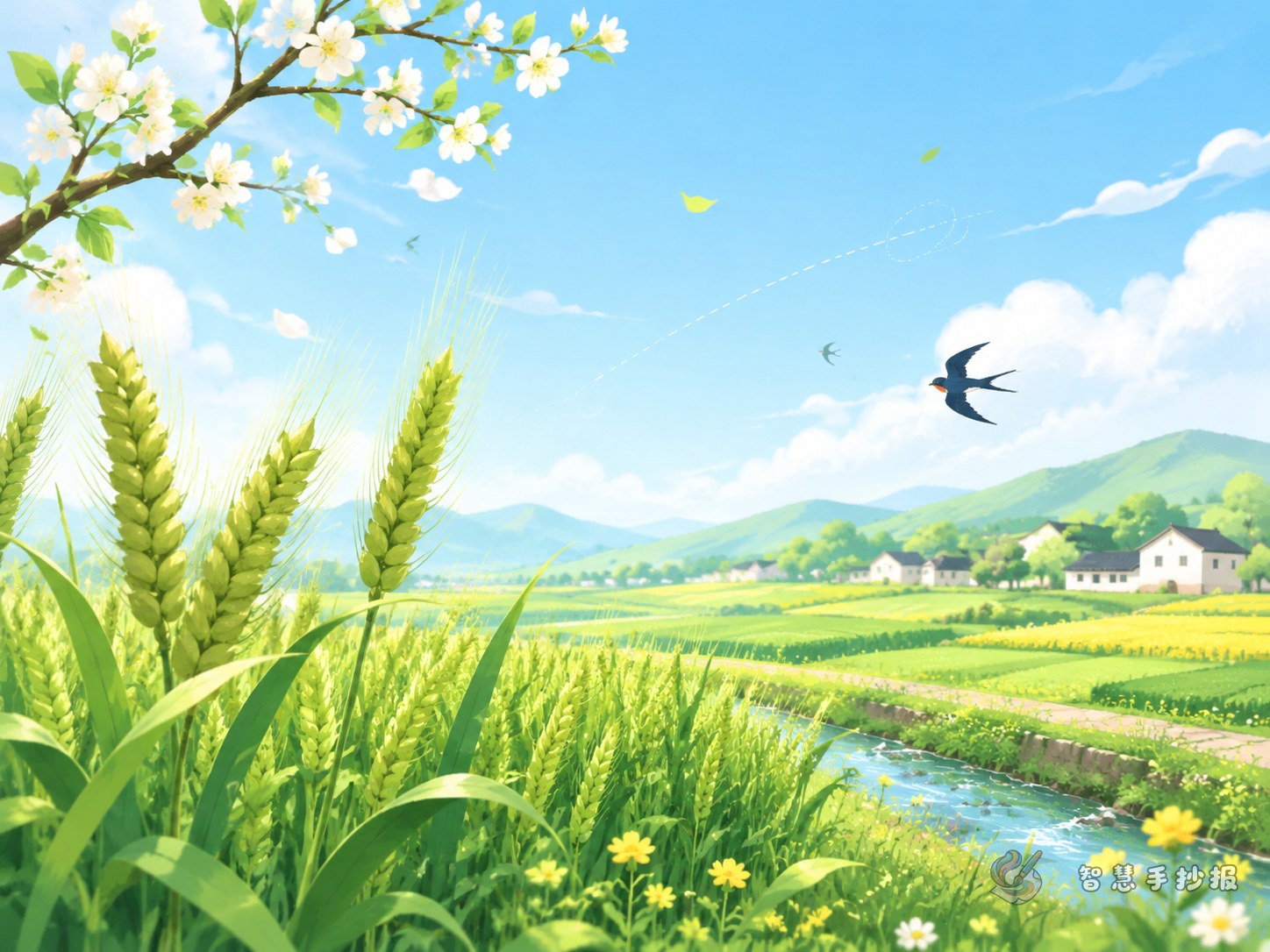
For younger students, it helps to imagine one main picture first: wheat fields in the distance, a small path through the fields, and swallows or wildflowers in the foreground. Once the image is clear, the writing becomes easier to organize.
The most noticeable wheat field changes to describe
The color of the land changes
One of the clearest changes around the Spring Equinox is that the wheat field becomes brighter and greener. After winter, the land starts to look fresh and lively again.
The plants grow faster
As the weather warms and spring rain increases, wheat seedlings grow more actively. Students can describe upright leaves, neat rows, and the feeling of the field moving like gentle green waves in the wind.
Field work becomes busier
Spring is also a season of care and preparation. Farmers may water fields, check the crop condition, or do other simple management work. This gives the newspaper a stronger farming connection.
- The wheat looks greener
- The field feels more alive
- The wind makes the plants move like waves
- People are busier in the fields
More than crops: small countryside details to observe
A good solar-term handwritten newspaper should not focus only on crops. The surrounding rural environment also changes in spring, and those details make the page more vivid.
- Sky: the daylight feels brighter and clearer.
- Animals: swallows and sparrows become more active.
- Plants: grass turns green and small flowers begin to open.
- Sounds: wind, birds, and light farm activity create a spring rhythm.
These details fit well in a short section such as “What I noticed in the countryside at the Spring Equinox.”
Ready-to-use writing materials
Short seasonal lines
The Spring Equinox arrives quietly. Day and night are nearly equal, wheat fields begin to green, and the countryside wakes up in the warm wind.
Observation sentences
- Standing by the field path, I can see bright green spreading across the land.
- The spring wind moves through the wheat like turning pages of a green book.
- There are more footprints in the field, showing that spring farm work has begun.
- Birds flying over the field make the village feel full of spring.
Words to place near the title
Spring, green-up, farming, breeze, wheat waves, field path, growth, observation, countryside, season.
Try a field-block layout instead of equal boxes
This theme works well with a layout that looks like divided farmland. Put the main title in the center and place four content blocks around it. The structure feels natural and matches the agricultural theme.
- Top left: Spring Equinox facts
- Top right: Wheat field observations
- Bottom left: Rural sounds and scenery
- Bottom right: Spring farming notes
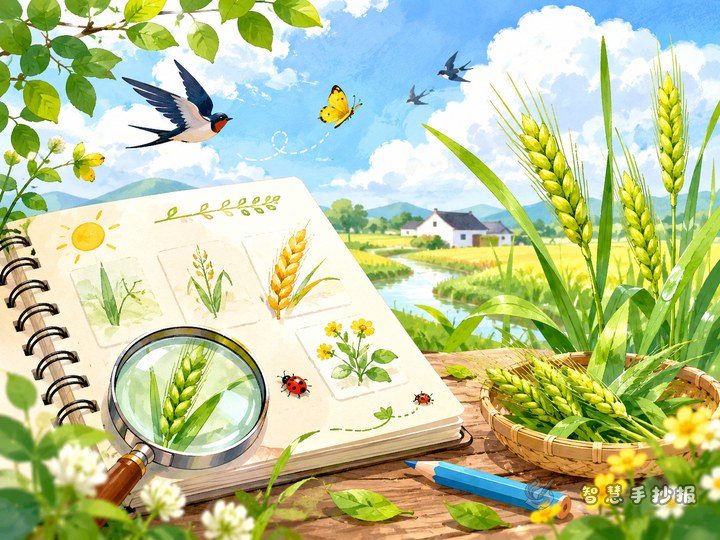
Use borders shaped like wheat ears, field lines, clouds, or swallows. Green and light yellow can be the main colors, with touches of blue for the sky.
Simple tips for students making the page
Do not try to include too many facts at once. It is better to focus on one main object, such as the wheat field, and then add nearby countryside changes. This keeps the theme clear.
You can also add a short first-person note like “What I saw on the Spring Equinox today.” That makes the handwritten newspaper feel more personal and lively. After drafting the content, you can continue arranging the page in the WeChat mini program Zhihui Shouchao Bao.