Choose Leaf Rubbing as the Main Idea
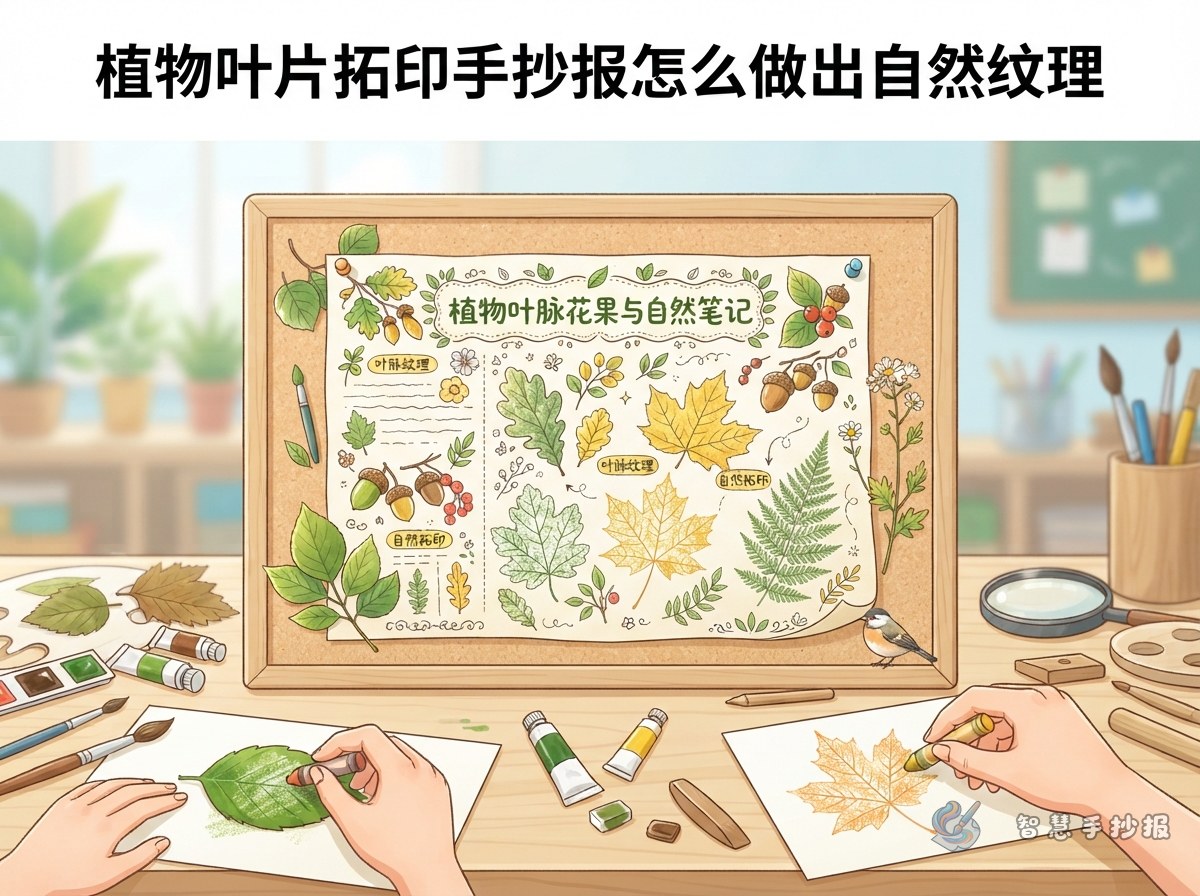
A plant leaf rubbing poster is more than a collection of leaf prints. It shows the outline, texture, and character of leaves. You can use a theme such as “The Secret Patterns of Leaves” or “Nature’s Imprints.” Choose fallen leaves with different sizes and shapes, and avoid picking fresh leaves from living plants.
Begin with a short introduction: Even an ordinary leaf holds a unique pattern of fine natural lines. You can then explain that leaf rubbing transfers the texture of a leaf onto paper with colored pencils, crayons, or oil pastels.
Useful Sections for the Poster
Leaf Observation Cards
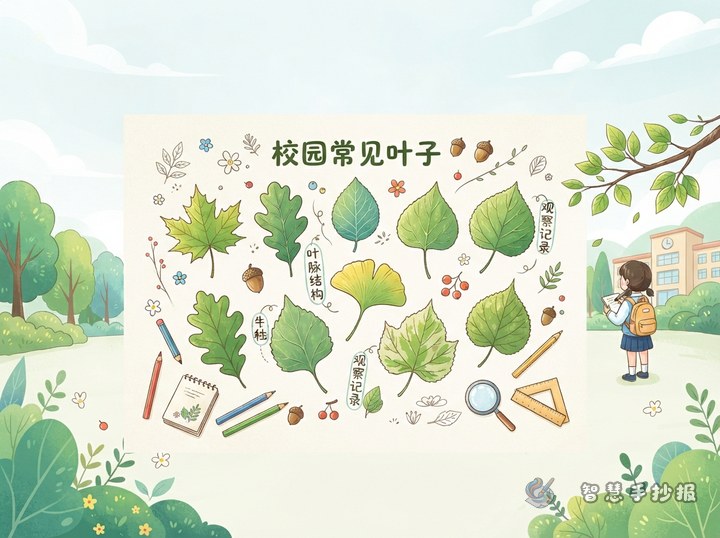
Create a small card for each leaf and record its name, where it was found, color, shape, and texture. For example: “Leaf: fallen sweetgum leaf; Color: yellow-brown; Edge: gently wavy; Texture: dry and crisp.” If you are unsure of the plant name, write “Campus Leaf No. 1” instead of guessing.
How I Made the Rubbing
- Place a clean, flat fallen leaf on a table and compare its front and back.
- Put the leaf-textured side up and cover it with a thin sheet of white paper.
- Use the side of a colored pencil, crayon, or oil pastel to rub gently until the veins and edges appear.
- Write the collection place and observation date beside the rubbing.
Guess the Leaf Texture
Make an interactive section by labeling several rubbings with letters and placing the answers below. Readers can compare the density and direction of the patterns, making the poster more engaging.
Design the Page Like a Nature Study Desk
Try an asymmetrical layout with large rubbings on the left and observation notes on the right. Connect the sections with thin lines, arrows, or small dots. Use green, brown, and warm cream for a nature-journal feeling.
Leave some open space instead of filling every corner. Small drawings of a pencil, magnifying glass, paper tape, fallen leaves, and date labels can add interest. Use different shades in the rubbings, while keeping the writing area clear and readable.
Simple Tips for a Clean and Safe Project
- Use clean fallen leaves without mold, sharp spines, or irritating sap.
- Test the colors on scrap paper before working on the poster.
- Rub from light to dark so the texture remains visible.
- Add decorations after finishing the writing to prevent smudges.
To finish the layout more easily, prepare the leaf names, observation sentences, and color palette first. Then continue creating the poster in the WeChat mini program with Zhihui Shouchaobao, turning your nature notes into a clear and attractive handmade newspaper.