Choose One Flower and Follow Its Changes
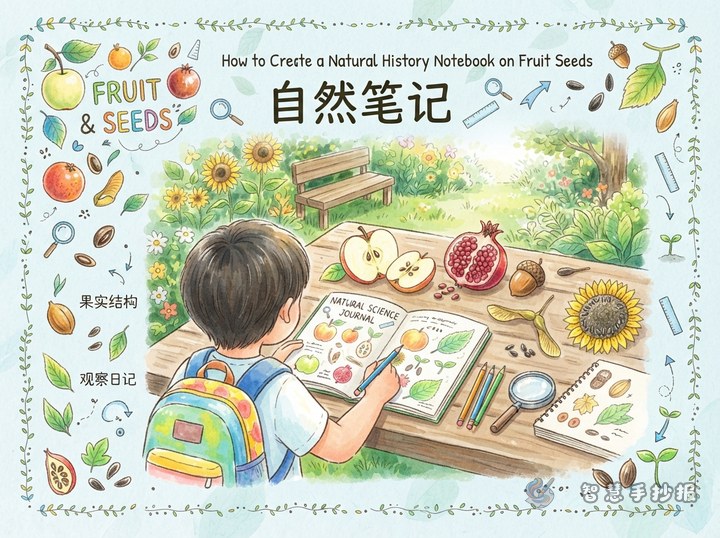
Select a flower that is easy to revisit at school, on a balcony, or near home, such as a morning glory, rose, or sunflower. Observe the same plant whenever possible. Make a new note every day or whenever a visible change occurs. The goal is not to collect difficult facts, but to show clearly what happened over time.
Build the Main Page Around Four Moments
- New bud:Note its size, shape, color, and how tightly it is closed.
- Petals opening:Look at where the petals begin to separate and whether their color changes.
- Full bloom:Count visible petals, find the center of the flower, and watch for visiting insects.
- Fading flower:Record curling petals, falling petals, and changes beneath the bloom.
Draw a small picture for each moment and place the pictures in chronological order. Dates and short captions will make the sequence easy to understand.
Short Notes to Adapt for the Newspaper
Starting note:I chose a closed flower bud because I wanted to discover how it would open step by step.
Change note:At first, the petals were held tightly inside the green sepals. Later, color appeared at the top of the bud, and the petals slowly spread outward. When the flower was fully open, I could see its center and notice small insects nearby.
Reflection:A flower does not bloom all at once. Careful observation reveals small changes each day, and a nature journal helps preserve them through words and drawings.
Arrange the Page as a Blooming Timeline
Place the title across the top with a few simple leaf or petal details. Run a timeline through the center of the page and add the four stages from left to right. Use the side spaces for a flower profile and a section called “What I Discovered.” Green can be paired with the flower’s main color, while open space will keep the drawings and notes readable.
Details That Make the Observation Convincing
- Add the date, weather, and location beside each sketch.
- Estimate the size with a ruler, but do not invent exact measurements.
- Use specific comparisons such as “more open than yesterday.”
- Include one unanswered question, such as whether fruit will form after the flower fades.
After organizing the notes, students and parents can continue in the 智慧手抄报 WeChat Mini Program to choose a suitable layout, adjust section placement, and refine the colors.