Choose a focused angle: regional snacks make the topic easier
If you are preparing a handwritten newspaper about Chinese traditional food culture, a practical idea is to narrow the big topic down to regional snacks. This makes the page more vivid, easier to organize, and more suitable for primary school students.
You can build the whole page around one key question: how do different local snacks show different food traditions in China? In this way, your work is not only about food names, but also about taste, ingredients, lifestyle, and local culture.
Useful sections you can place on the page
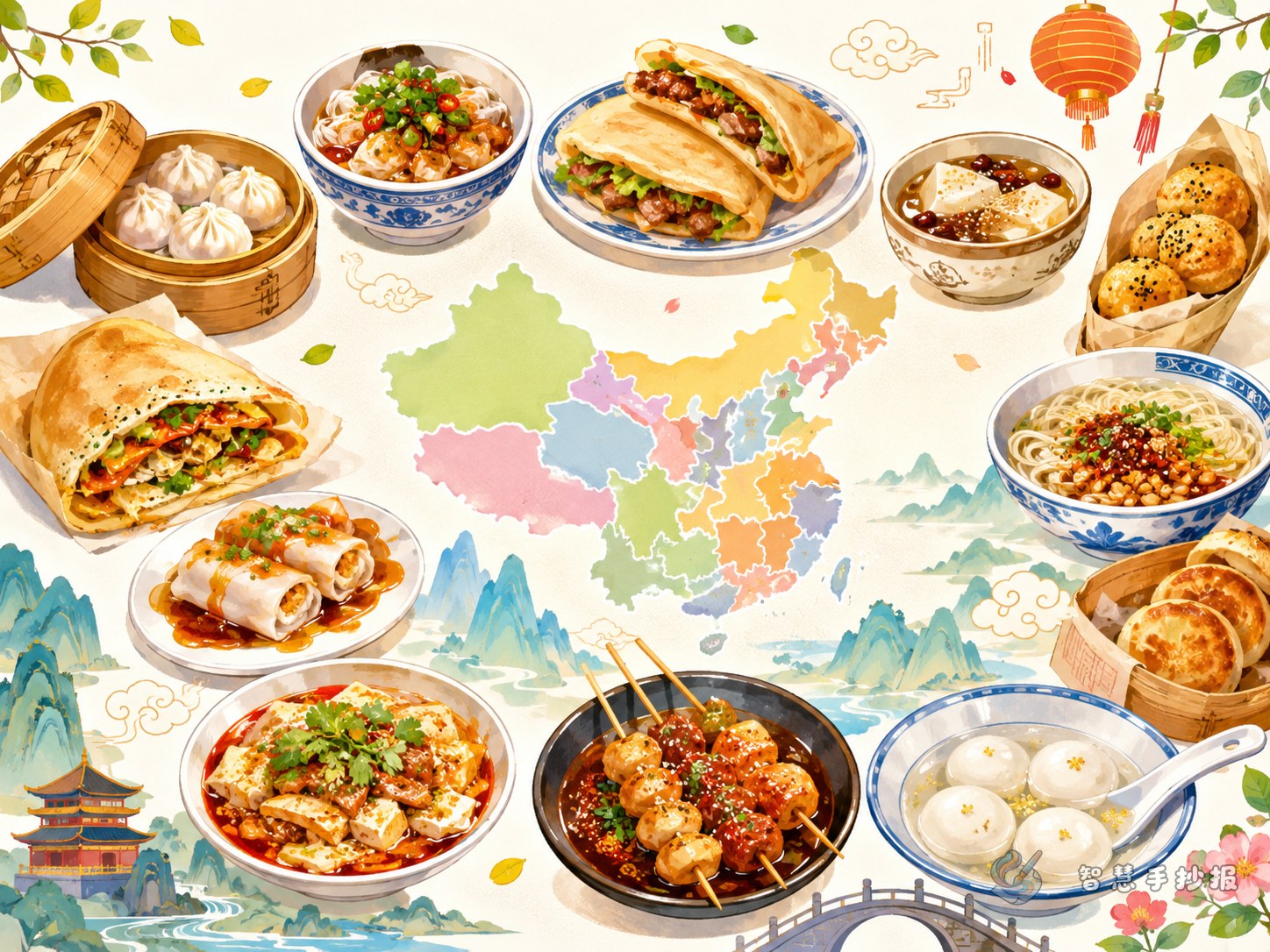
Section 1: Snack Map of China
- Beijing: douzhi, jiaoquan, luzhu
- Tianjin: jianbing guozi, steamed buns
- Xi'an: roujiamo, liangpi, yangrou paomo
- Wuhan: hot dry noodles
- Chongqing: hot and sour noodles, xiaomian
- Guangdong: rice noodle rolls, shrimp dumplings, double-skin milk
Section 2: Three snacks I want to introduce
Pick three snacks you know best. For each one, write its name, main ingredients, taste, and what local feeling it represents. This keeps the page clear and not too crowded.
Section 3: Food culture facts
- China has a vast land, so climate and crops influence food tastes.
- Northern areas are known for wheat-based foods, while southern areas have many rice-based dishes.
- Traditional snacks are not just food; they are also part of daily life and local memory.
- Many snacks are connected with markets, seasons, and family traditions.
Short text materials for a handwritten newspaper
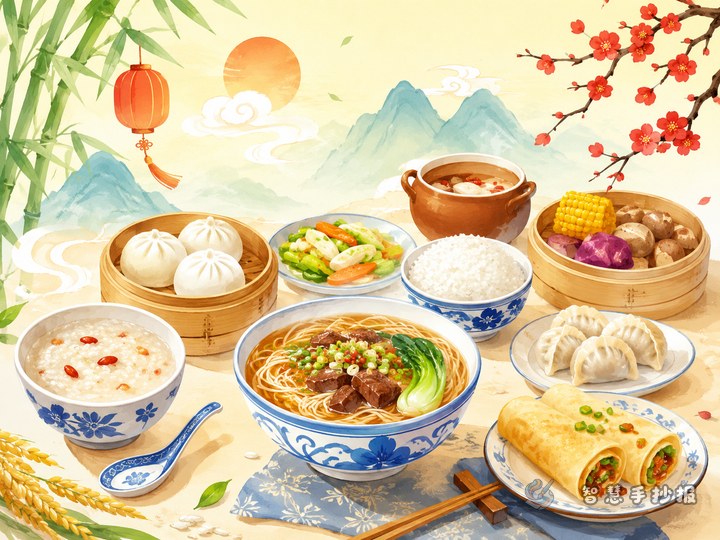
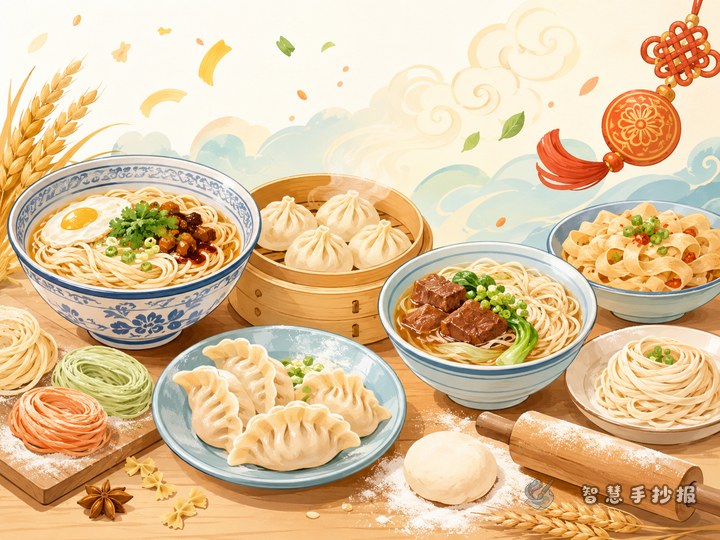
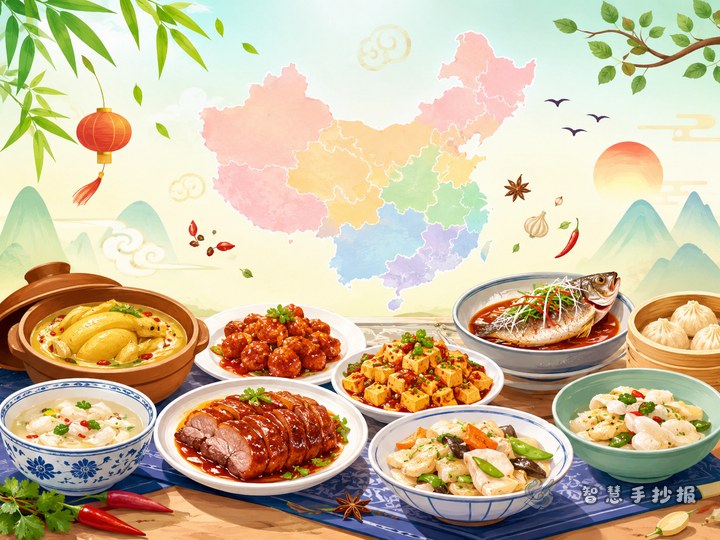
Opening text: Chinese traditional snacks are rich and colorful. They are not only delicious, but also carry local customs and memories. From steaming noodles to soft rice cakes, each snack is like a name card of its region.
Sample text 1: Roujiamo from Xi'an is crispy outside and savory inside. It shows the bold and hearty character of northwestern food culture.
Sample text 2: Wuhan hot dry noodles are fragrant and chewy. They are a familiar breakfast choice and reflect the lively rhythm of city life.
Sample text 3: Guangdong rice noodle rolls are smooth and delicate. Their taste and preparation show the fresh and refined style of southern cuisine.
Ending text: Traditional snacks are an important part of Chinese food culture. Learning about them means learning about the rich and diverse life of China.
A page layout that looks neat and lively
A good design is to place the main title in the center, such as Traditional Snacks Across China or A Taste of Hometown Flavors, and arrange the content in four surrounding sections. Put the snack map in one corner, culture facts in another, featured snacks in a third area, and your own thoughts or recommendations in the last area.
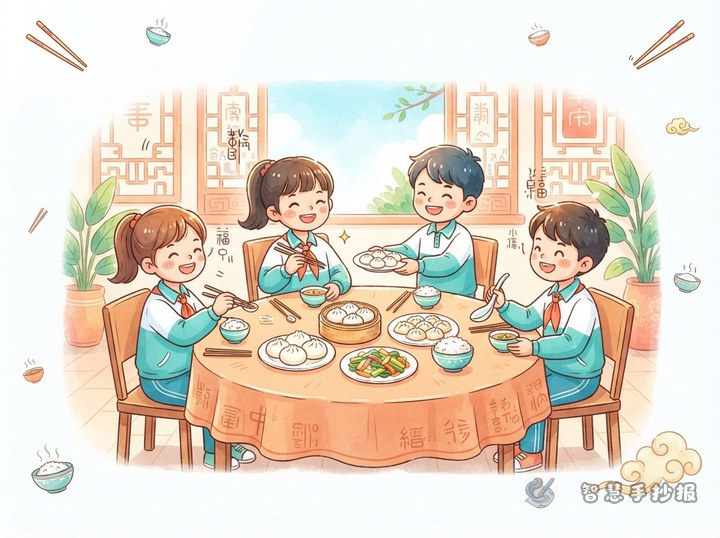
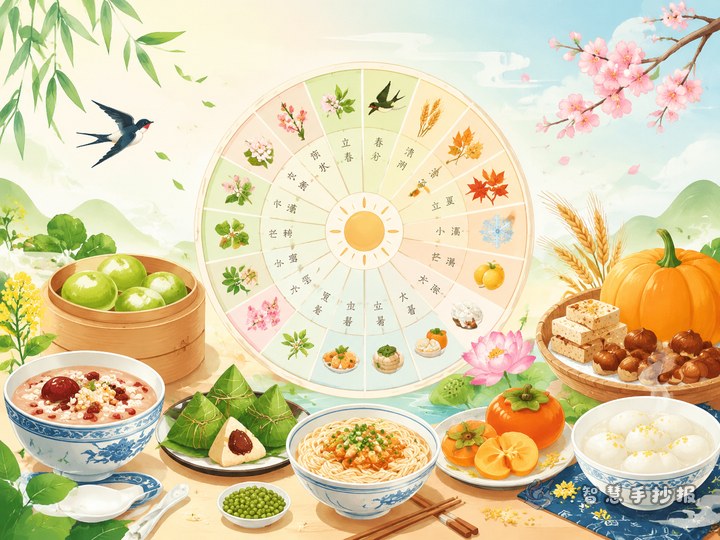
Warm colors like orange, red, and light yellow work well because they match the cozy feeling of food. Small decorations such as bowls, chopsticks, steamers, noodles, or dumplings can make the page more attractive without making it too crowded.
Simple tips for writing and making the page
- Do not list too many foods. Choose 3 to 6 representative snacks.
- Keep each snack description to 2 to 4 sentences.
- Write about taste, local features, and cultural meaning, not only cooking methods.
- Make the title larger and keep the body text neat and easy to read.
- If you want more layout ideas and ready-to-use content inspiration, you can continue creating in the Zhihui Shouchaobao WeChat mini program.