Begin with the Meaning of Table Manners
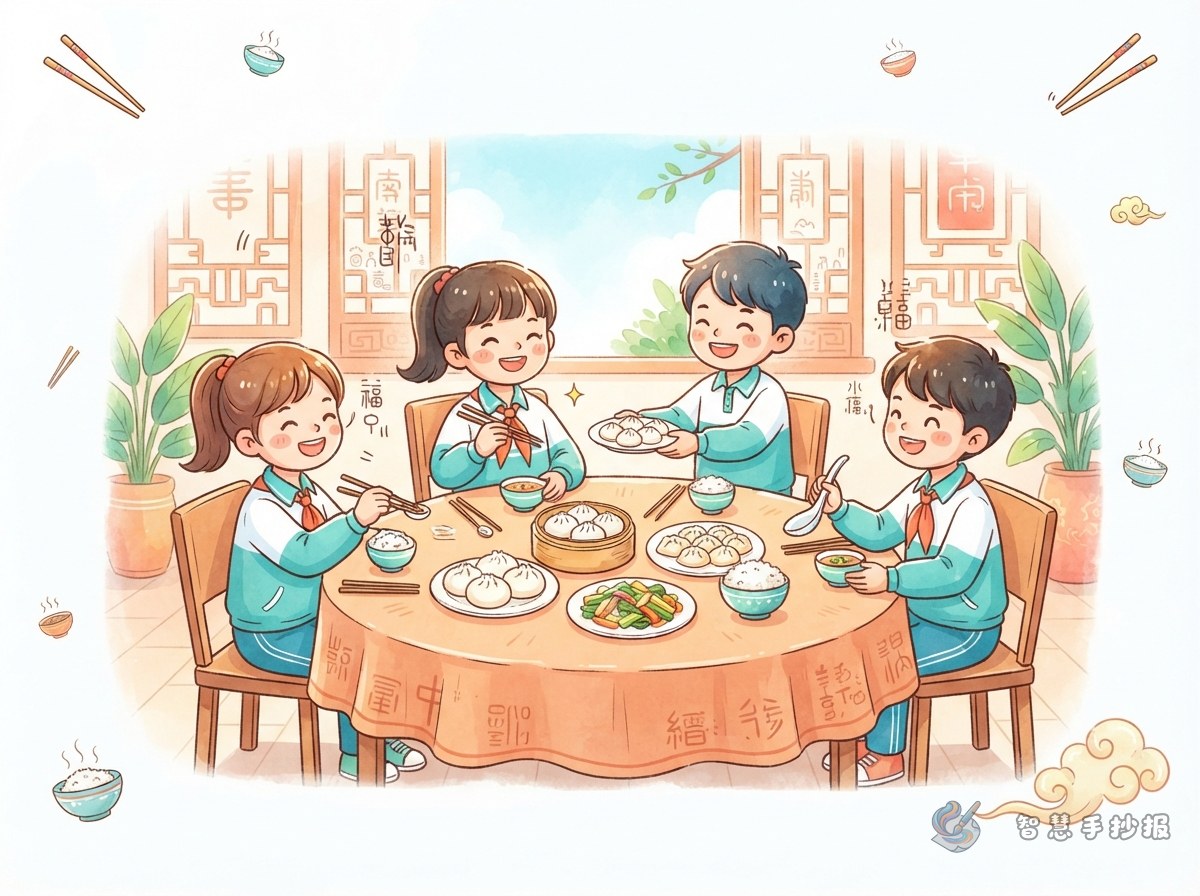
This handwritten newspaper does not need to present table manners as a long list of strict rules. Start with a simple question: why should people show respect when they eat together? The answer can focus on good manners, sharing, thrift, and hygiene. With “respect and courtesy at the table” as the central idea, students can show the charm of traditional Chinese food culture in their own words.
Four Sections to Give the Page More Variety
1. Be Courteous to Others
Write about respecting older family members, welcoming guests politely, making room for one another, and caring about the people sitting nearby. Customs may differ between families and regions, so phrases such as “a common practice” or “a family agreement” make the writing more accurate and inclusive.
2. Use Chopsticks and Spoons Properly
Introduce simple manners such as not tapping bowls, pointing at people with chopsticks, searching through a shared dish, or waving utensils around. Keep each point short and add a small icon beside it to create clear information cards.
3. Appreciate Every Meal
Present food conservation as a traditional virtue: take only what you need, serve an amount you can finish, handle leftovers properly, and avoid wasting food because of unnecessary pickiness. A short slogan such as “Care in every grain, gratitude at every meal” can make this section memorable.
4. Share with Consideration
Traditional family meals often highlight sharing and warm hospitality. You can also connect this idea with serving chopsticks, serving spoons, and separate portions today, explaining that respecting others includes caring about everyone’s dining safety. This gives the page both traditional character and a connection to school life.
Turn Traditional Tableware into Visual Storytelling
Draw chopsticks, bowls, spoons, plates, and serving chopsticks in the illustration area, then add brief notes about their uses. Chopsticks pick up food, spoons make soup easier to serve, and serving utensils help reduce contact between diners. You can draw the tableware as a group of “little table ambassadors,” each holding a sign that says respect, sharing, thrift, or hygiene. This is more lively than simply listing objects.
Build the Layout Around a Round Table
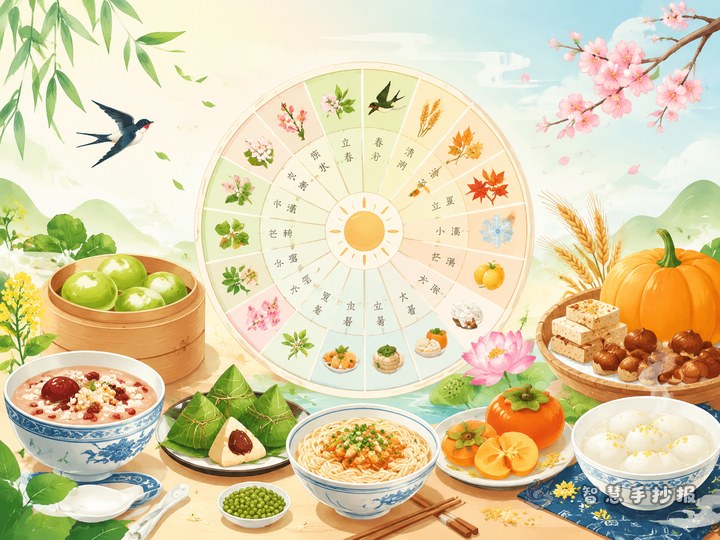
Place a round table or plate in the center of the page. Write the main title inside it, then divide the surrounding space into four fan-shaped sections for courtesy, utensils, food conservation, and considerate dining. A small table-manners quiz can go in the upper-left corner, tableware illustrations in the upper-right, and an action message with short slogans along the bottom. Cream, warm red, pale yellow, and bamboo green create a welcoming food-culture palette without making the page look crowded.
End with a Promise for Everyday Life
Finish with a short promise such as: “Think of others before eating, take only what you can finish, handle utensils gently, and waste not a single grain.” After the text and sketches are ready, students can continue organizing the columns and adjusting the layout in the WeChat mini program “智慧手抄报” to turn this traditional food-culture idea into a neat handwritten newspaper.