Make the Pavilion the Character Who “Looks at the Scenery”
A pavilion in a Chinese garden is more than a roof supported by columns. It is a place to rest, enjoy the view, and pause along a walking route. For a handwritten newspaper, make the pavilion the main character and surround it with water, a winding bridge, plants, rocks, and garden walls. This shows how traditional architecture and nature complement each other.
Main idea: Organize the article around three questions: Why is the pavilion placed here? What can people see from it? What natural features surround it? This creates more interest than simply listing its architectural parts.
- Architectural clues: roof, upturned eaves, columns, railings, and platform.
- Garden clues: water, bridges, plants, rocks, and decorative windows.
- Cultural clues: resting, viewing scenery, borrowing views, and living in harmony with nature.
Four Short Text Blocks for the Page
What a Pavilion Looks Like
A pavilion is usually a small and open building in a traditional garden. Its roof and columns are easy to recognize, so they can be shown with simple lines. Draw the eaves turning gently upward, keep the columns straight, and add a platform to make the structure look stable.
What a Pavilion Is Used For
A pavilion gives visitors a place to rest and enjoy views of water, flowers, or distant hills. It also creates a pause or a turn in the garden route, encouraging people to slow down and notice scenery from different directions.
How the Pavilion Joins the Garden
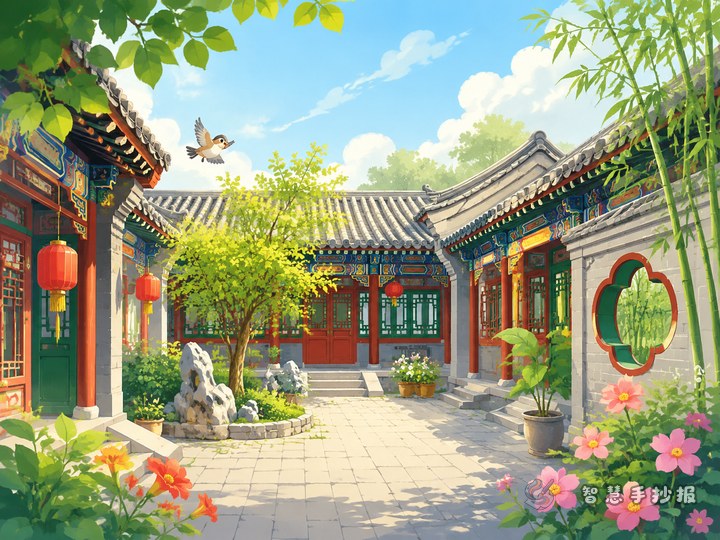
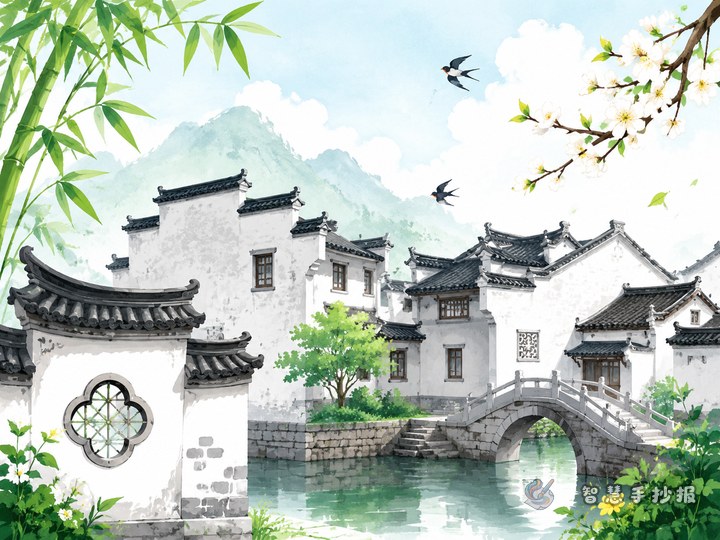
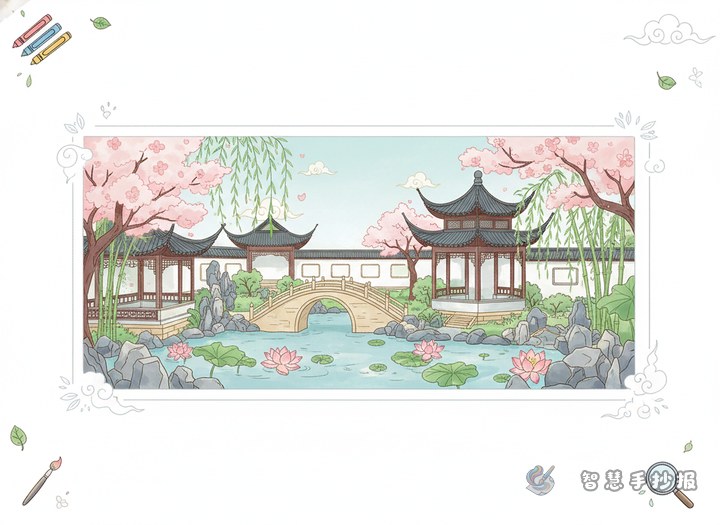
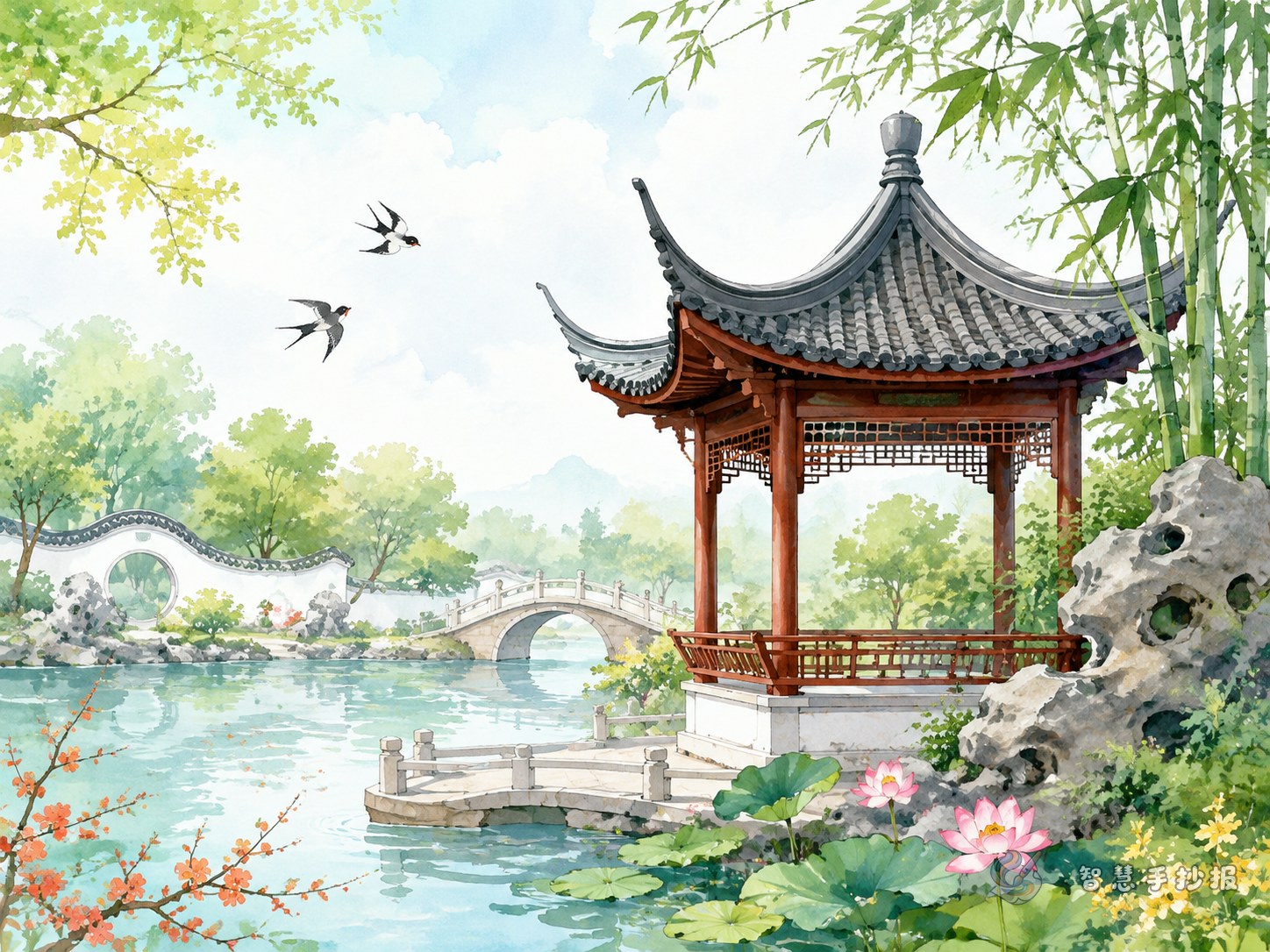
The beauty of a pavilion comes from its connection with the surroundings. Water can reflect its shape, plants can partly cover the columns, and a winding bridge can guide the eye toward it. Garden walls, windows, and rocks in the distance add depth to the picture.
A Closing Line
A pavilion connects the roof with the scenery, and it connects a visitor’s footsteps with the quiet pleasure of observing nature.
Turn the Layout into a Garden Walk
To keep the page from looking like a building diagram, use a walking-route composition. Let a curved path or stone bridge begin near the bottom of the page and lead toward a pavilion in the upper middle. The reader’s eyes will naturally follow the route.
- Place the main title at the top or upper left, with a small eave or cloud pattern beside it.
- Put the pavilion near the upper middle or visual center, making it clearly larger than the surrounding scenery.
- Use a bridge, ripples, or a path to connect the lower part of the page with the pavilion.
- Place text sections beside the path, in an open wall area, or above the water without covering the main drawing.
- Add branches, bamboo leaves, window frames, or seal-shaped decorations in the corners while keeping the page lively and open.
Use Lines and Colors to Create a Classical Mood
The pavilion does not need to be complicated. Younger students can begin with rectangles, triangles, and curves, then add the eaves and railings. A few calm lines can show the water, while leaves and branches of different sizes can suggest distance.
- Main colors: Use ivory, light gray, brick red, or ink green for an aged and elegant feeling.
- Accent colors: Add blue-green, pale yellow, or vermilion to highlight eaves, flowers, and the title.
- Line weight: Use clearer, slightly thicker lines for the pavilion and thinner lines for distant rocks and ripples.
- Open space: Leave some areas blank. Empty space helps express the quiet and spacious quality of a garden.
A Five-Step Checklist from Sketch to Final Copy
- Choose the paper direction and title position, then lightly sketch the relationship between the pavilion, path, and water.
- Check that the roof, columns, and platform are reasonably balanced so the building looks steady.
- Add two or three garden features without filling the page with excessive details.
- Break the information into short paragraphs or small cards that are easy to read.
- Finish the outlines and colors, erase extra pencil marks, and check that the title, text, and drawings work together.
If you want to arrange the title, sections, and rough layout more quickly, you can first refer to related ideas from 智慧手抄报 and then continue designing in its WeChat Mini Program to complete the pavilion-themed handwritten newspaper.