Begin With One Clear Idea
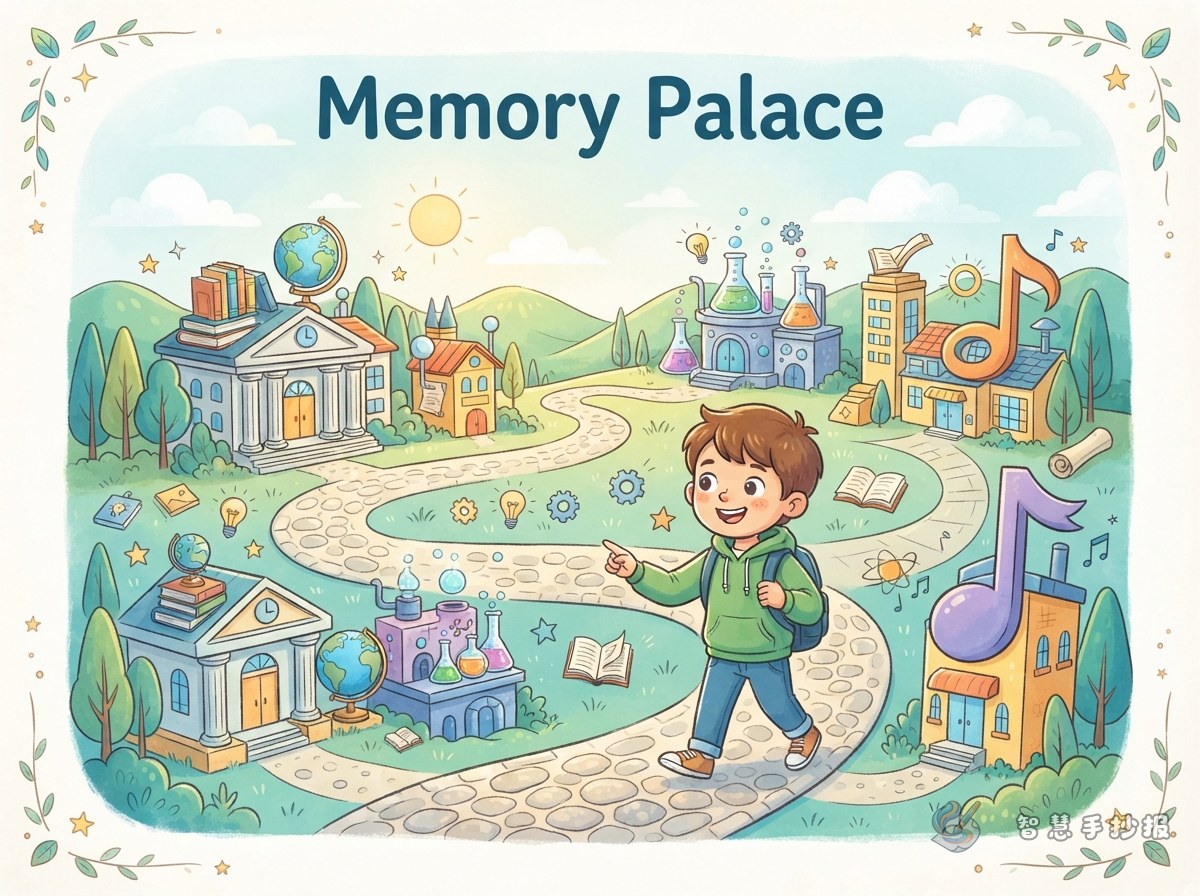
A memory palace, also called the method of loci, is simple: place what you want to remember in fixed spots inside a familiar place, then walk through the route in order. A handwritten newspaper does not need a whole palace. One short route with five to eight stops is enough to show how the method works.
Three things the page should explain
- What a memory palace is: using familiar places as memory hooks.
- How to place facts: one spot for one small picture or keyword.
- How to recall: follow the same route and say each item aloud.
Design the Layout Around the Route
Divide the page into three or four areas. Put the route map in the centre or top left, and let the text blocks sit around it so the eye moves naturally.
- Title area: 'My Memory Palace', 'Put Knowledge in Rooms'.
- Method area: three or four sentences explaining the method of loci.
- Route map area: front door, shoe rack, desk, window, bed—five or six stops.
- Example area: choose a small set of words or facts and show how they fit the route.
- Review area: 'Close the page and walk the route from memory.'
Text Bits and Column Names You Can Copy
Short lines for headings
- A familiar route is the best memory map.
- One spot, one picture, one fact.
- Learn the route first, then the facts.
- The stranger the picture, the easier the recall.
Column name ideas
- My Memory Route
- Spot and Picture Match
- Three-Minute Recall Challenge
- How to Use a Memory Palace
Make It Step by Step
- Choose a familiar route and mark five to eight fixed stops.
- Sketch the route on scrap paper and number the stops.
- Give each stop one keyword from the facts you need to remember.
- Turn each keyword into a simple, memorable picture.
- Divide the page lightly in pencil, then write the title, method and example.
- Add borders, arrows and a review reminder, then check that the route flows.
Small Touches That Make It Readable
- Link stops with dashed lines or footprints so the order is clear.
- Keep only one keyword beside each stop to avoid crowding.
- Use a matching set of small icons for rooms, desks and bags.
- Leave a small 'My Try' box for the facts you have really remembered.
- Limit colours to three or four, and use one colour family for the title and route.
Use the Page After You Finish It
Once the page is done, ask the child to close it and walk the route aloud, naming each spot and its fact. Mark the stops that are hard to recall, then try again the next day. This turns the handwritten newspaper into a memory tool instead of a one-time display piece. If you want a more polished page, you can open the Smart Handwritten Newspaper WeChat mini program, pick a layout and keep working on your memory palace topic.