Start With One Empty Plate
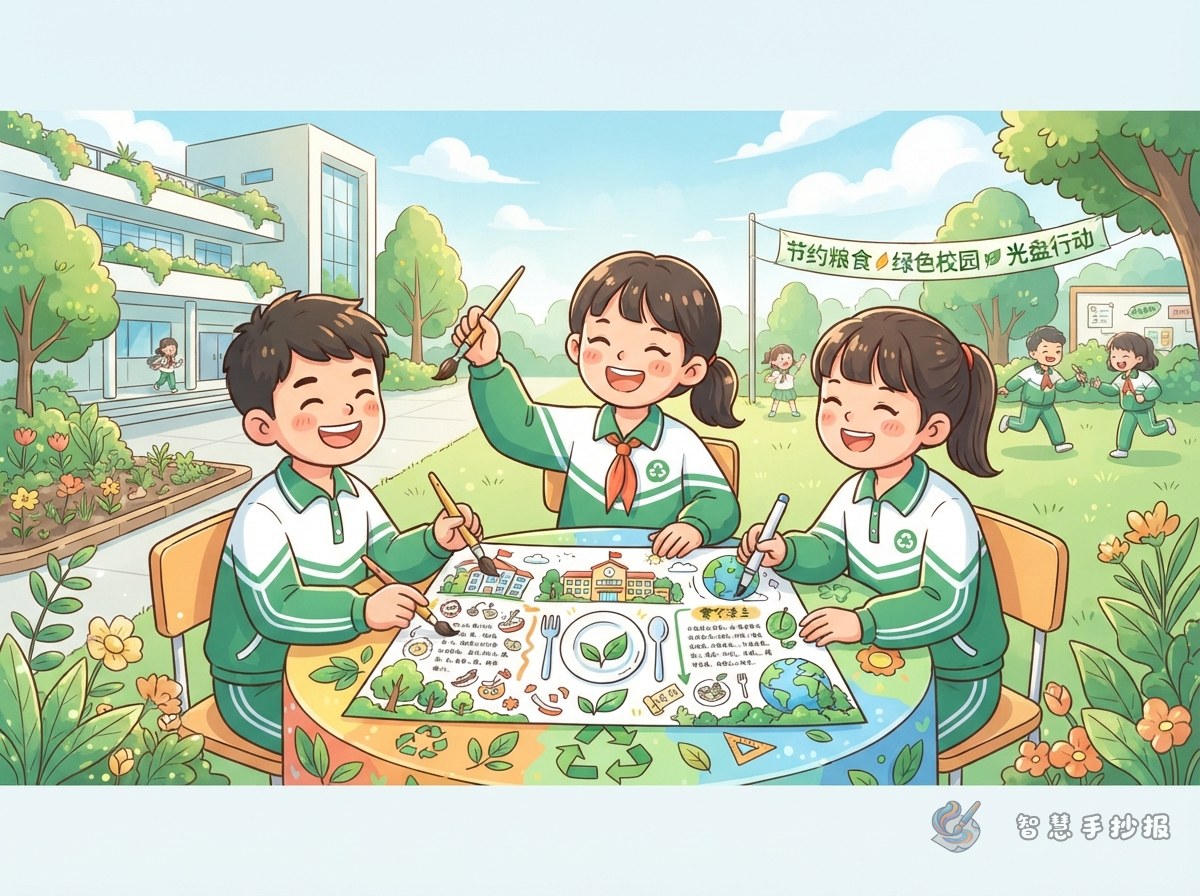
Energy saving and carbon reduction may sound like a big topic, but a handwritten poster can begin with something students see every day: lunch at school. By using the Clean Plate Campaign as the main idea, the poster turns green campus values into simple actions such as taking only what you need, finishing your meal, and reducing leftovers.
Possible titles include “A Clean Plate, A Greener Campus,” “Save Food, Live Low-Carbon,” or “Every Grain Matters.” A large clean plate can be placed in the center, with rice grains, leaves, and a smiling Earth around it to show the connection between food saving and environmental care.
Key Messages to Include
1. Why saving food is a low-carbon habit
Before food reaches our table, it needs sunlight, water, land, transport, and cooking energy. When we treasure every bite, we also treasure the resources behind it. A short sentence such as “Less food waste means less wasted energy” works well on the poster.
2. How students can reduce food waste at school
- Think about your appetite before taking food, and add more only if needed.
- Try a small amount of food you do not usually like instead of throwing it away.
- Remind classmates to take a suitable portion.
- Check your plate after lunch and make a clean plate your daily goal.
3. A one-week low-carbon lunch plan
A small weekly chart can make the poster interactive. Students may write actions such as “No leftover rice today,” “Finished my soup,” or “Reminded a friend to take only enough.” This section is easy for children to fill in and makes the poster feel personal.
Short Text and Slogan Ideas
- One grain is small, but saving it shows responsibility.
- Finish your plate and keep low-carbon habits close.
- Take only what you need, and make the campus greener.
- Do not turn good food into waste.
- A clean plate is a green promise.
- Saving food begins with every school lunch.
A longer paragraph can read: On campus, low-carbon living is not only about turning off lights. It can also begin with our lunch plates. When we take suitable portions, finish our meals, and reduce leftovers, we save food and protect resources. Clean plates can help a green campus grow from small daily habits.
Layout Idea: Make the Plate the Visual Center
This poster can look bright and neat. Place the main title at the top with green or warm yellow outlines. Draw a large plate in the middle and write “Clean Plate Campaign” inside it. Arrange the text boxes around the plate.
- Top left: Write why clean plates matter in three or four short sentences.
- Top right: List school lunch tips with bullet points.
- Bottom left: Add a slogan corner with short green messages.
- Bottom right: Create a promise card and write your own food-saving pledge.
Use light green, rice yellow, sky blue, and a little orange. These colors feel fresh, friendly, and related to both nature and the dining table. Borders can be made with rice grains, vines, or small footprints.
Details That Make the Poster Stand Out
For a creative touch, draw a “leftover reduction bar” in one corner using five small plates to show progress through the week. You can also draw a contrast: one plate with wasted food and one clean plate, so the message becomes easy to understand at a glance.
Before finishing, check whether the title is clear, the text is divided into readable sections, and the drawings all support the Clean Plate theme. Students and parents who want more layout inspiration can open the Smart Handwritten Poster WeChat mini program and continue creating a poster that fits their own class or school activity.