Why Flying Apsaras Work Well on a Grotto Mural Page
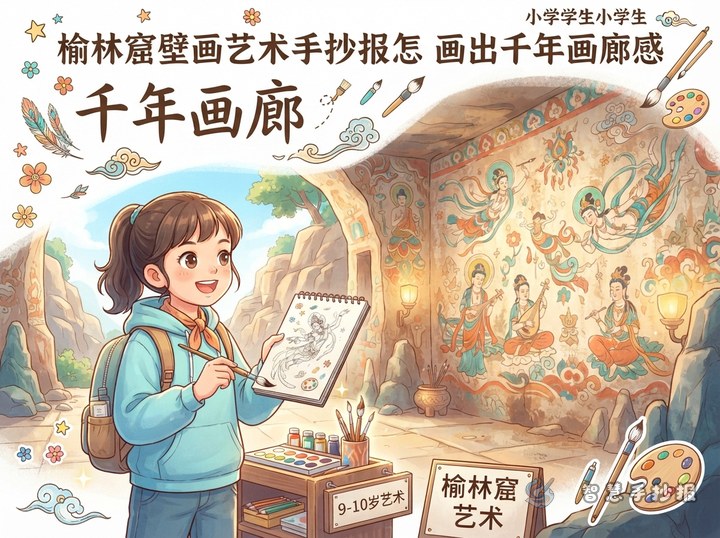
Flying apsaras appear again and again in the caves at Dunhuang, Yungang and Maijishan, both in wall paintings and in relief carving. For a student project they have three advantages: the lines can be long or short so any skill level can manage them, the flowing ribbons naturally divide a page into sections, and the graceful figure looks beautiful as soon as you add clouds and lotus petals.
If you cannot decide on an angle, choose just one of these to develop: the pose and ribbons, the colors on the costume, or the way a group of apsaras flies in a line. One idea explained well beats three ideas mentioned in passing.
Four Details to Look for Before You Start Drawing
Before picking up a pencil, spend two minutes studying a clear picture and focus on these four things.
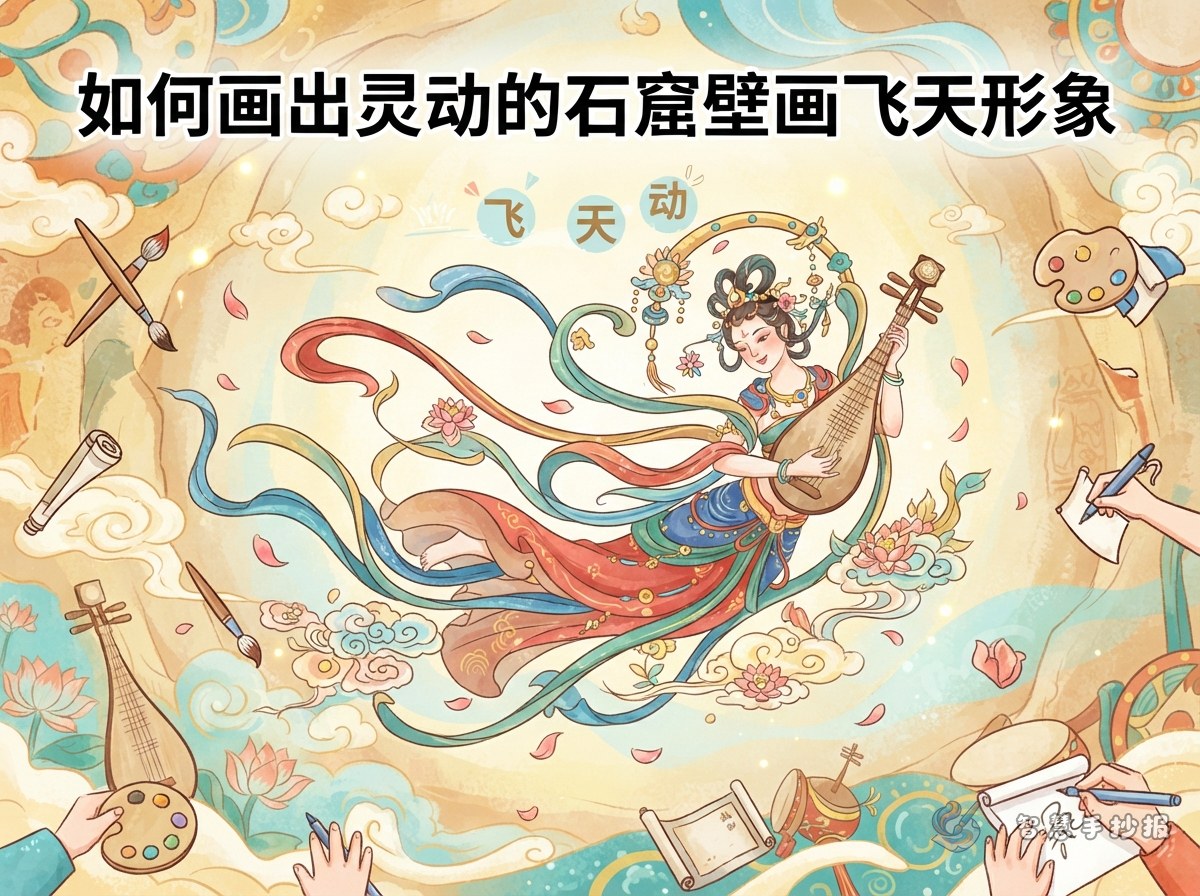
- Ribbons and drapery: the scarf loops out from the shoulders and may trail down to the feet, with clear folds at every turn.
- Pose and hands: the body usually curves like an arc, one hand holding a flower or flute, the other hanging loosely.
- Face and hair: a rounded face, long thin eyebrows, and a topknot or crown on the head.
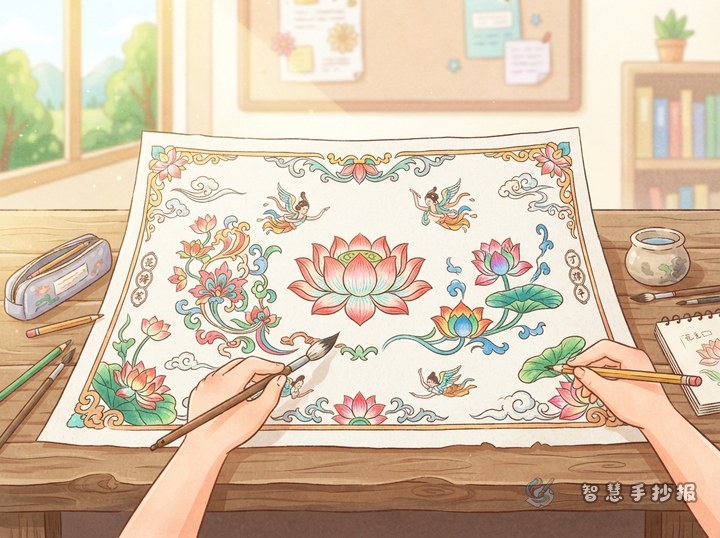
- Surrounding patterns: cloud scrolls, lotus flowers and vine patterns fill the space around the figure.
Noticing these four points keeps you from drawing a person who simply floats in the air instead of a figure that belongs to a mural.
Short Text Blocks You Can Copy onto the Page
Keep each text block to three or four lines. Saying one thing clearly is enough.
- Flying apsaras are a common figure in cave paintings, often placed on ceilings, around niches and beside preaching scenes to create a lively atmosphere.
- Poses and costumes vary from cave to cave; earlier figures tend to look sturdier and more open, while later ones become lighter and more elaborate.
- The scarves are drawn long and curved so the figure appears weightless and seems to move forward through the picture.
- A short drawing order to remember: ribbon first, pose second, drapery third, color last.
Add a small box for your own observation, such as "her hands hold a flower tray and the scarf loops behind her." One concrete sentence is more interesting than a general comment.
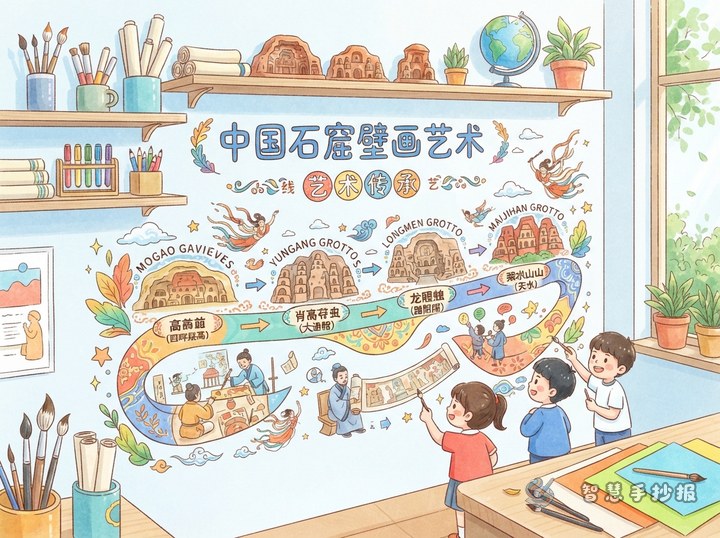
A Ribbon-Shaped Layout That Divides the Page for You
The simplest structure for this theme is to let the ribbon do the dividing.
- Place the title at the top or upper left and shape its border like a scarf with small curls at both ends.
- Draw one larger apsara on the left, then let the ribbon stretch to the right and split the page into upper, middle and lower bands.
- Use the top band for an "apsara fact file," the middle for your text blocks, and the bottom for a few clouds and lotus flowers.
- Keep a small box in the lower right for "the apsara I like best" and finish with two or three sentences.
This arrangement weaves words and images together, so you never end up with all the text on one side and all the drawing on the other.
Coloring Order and Finishing Touches
Sketch in light pencil and check the proportions before adding color. A good order is: lay in the background with pale beige or light ochre, then the skin tone, then earth red and ochre for the clothing, and finally azurite and malachite on the ribbons and clouds, with a touch of gold or bright yellow for highlights.
Avoid these common problems: straight, stiff ribbons that make the figure look wooden; five or six colors that turn the page muddy; text written over the figure's face; and too many patterns crowding the space. Leaving some areas empty actually makes the page easier to read.
If you would rather not begin with a blank sheet, open the WeChat mini program "智慧手抄报" and choose a Chinese grotto mural theme, then adjust the apsara position and the text to make the page your own.