Begin with a visual idea: show how a book is opened
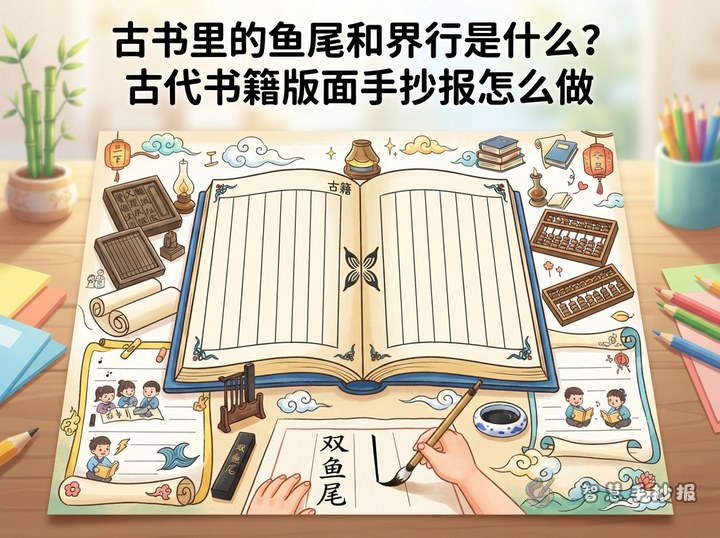
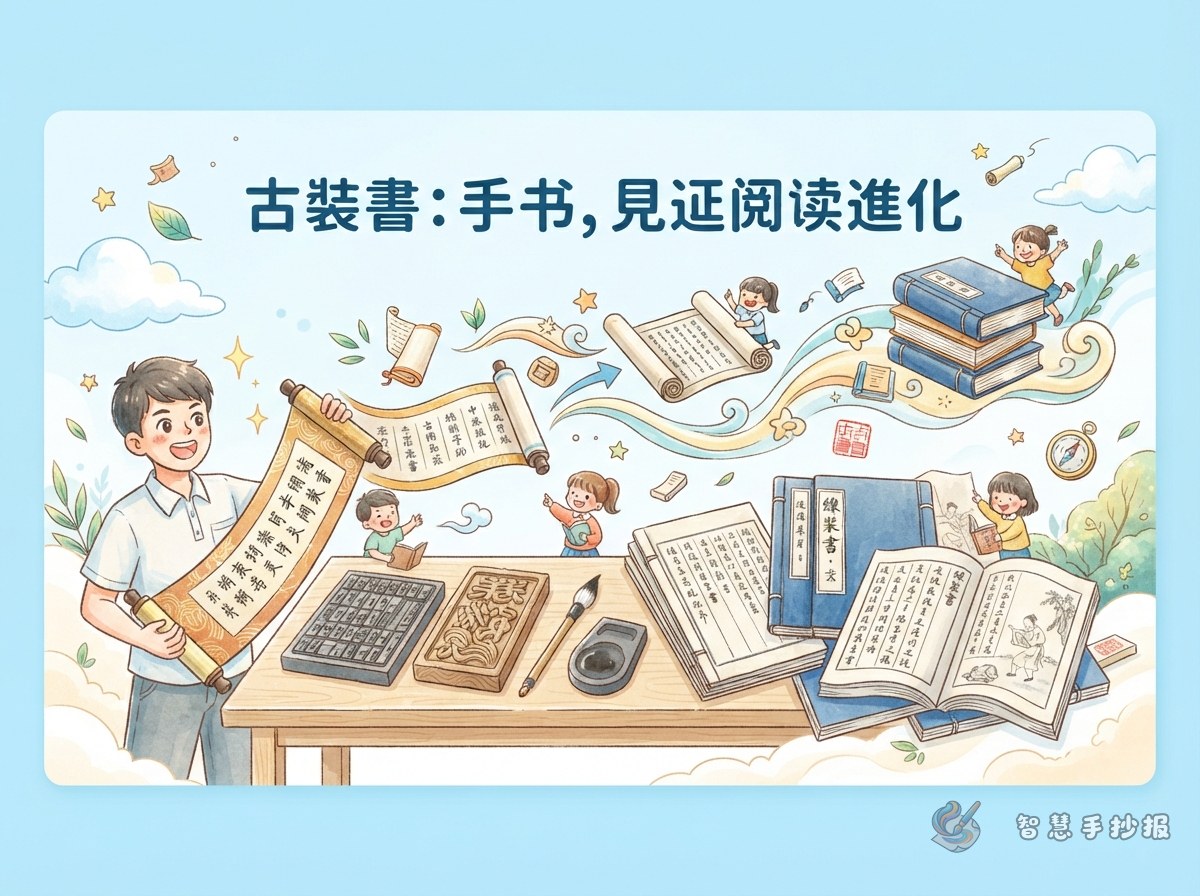
This project does not need to become a long list of dates. Instead, build it around the question, “How did the way a book opens change?” Draw an open thread-bound book in the center, then let scrolls, bamboo slips, folded books, and printing tools spread outward from its pages. The reader can follow the design like turning through a book.
Planning the central illustration
- Draw warm ivory pages in the middle and place the main title on them.
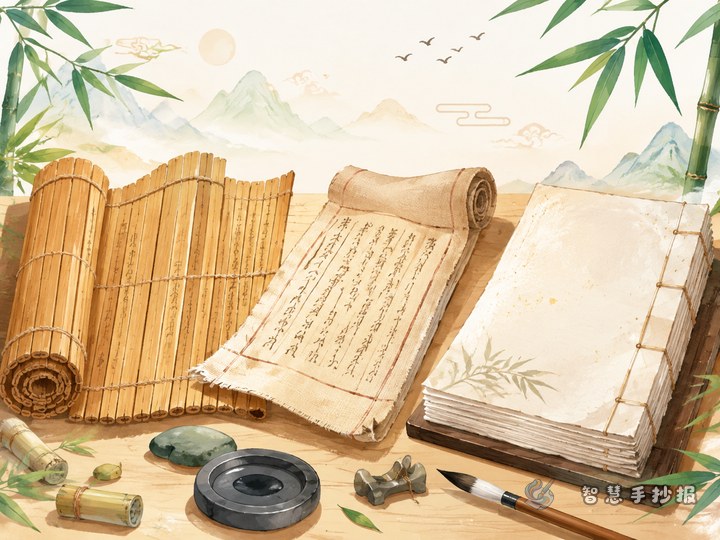
- Put bamboo slips and a scroll on the left, and folded pages and a thread-bound book on the right.
- Use small arrows for ideas such as unfolding, folding, binding, and reading, without turning the whole page into a standard timeline.
- Add a brush, inkstone, carved printing block, and sheets of paper in the corners for a traditional touch.
Four book forms and the reading experience they created
The key is not simply to name old book forms, but to explain how each one affected reading. Give every form a small drawing and one or two short sentences so the information is easy to understand.
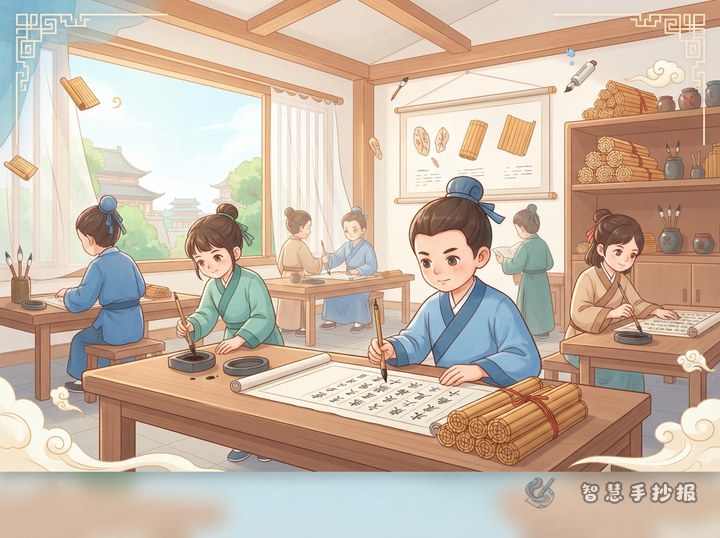
- Bamboo slips: Text was written or carved on narrow strips of bamboo, which were tied together. They were durable, but a large collection could be heavy and inconvenient to carry or browse.
- Scrolls: Paper or silk sheets could be joined and rolled up for storage. A scroll could hold a long text, but readers had to unroll and roll it back as they read.
- Folded and page-form books: Pages could be folded or joined, making it easier to return to a particular section without opening an entire scroll.
- Thread-bound books: Pages were punched and sewn together with thread. Their covers, page edges, and visible stitches can also become attractive details in the project.
Turn printing into a small bookmaking workshop
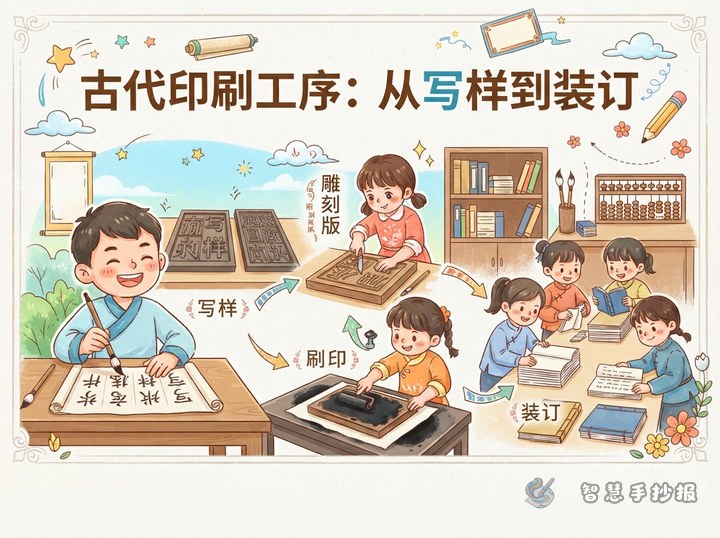
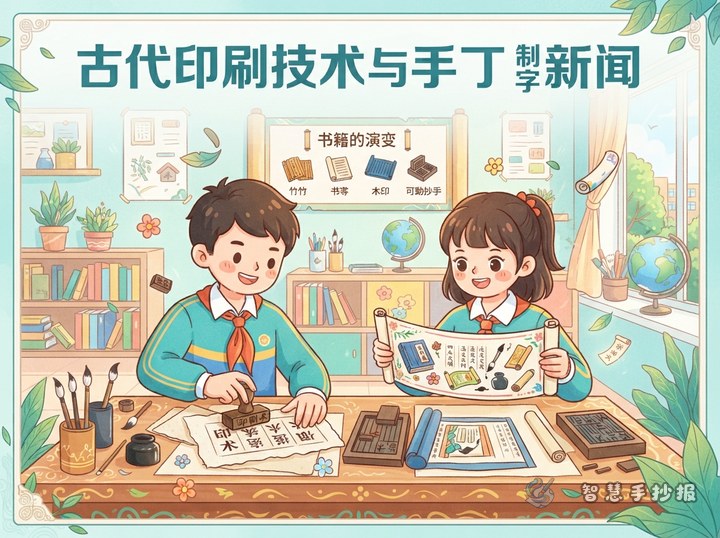
The spread of books also depended on advances in printing. Draw a little “bookmaking workshop” near the bottom, using a wooden block, an ink brush, and separate type pieces as visual clues.
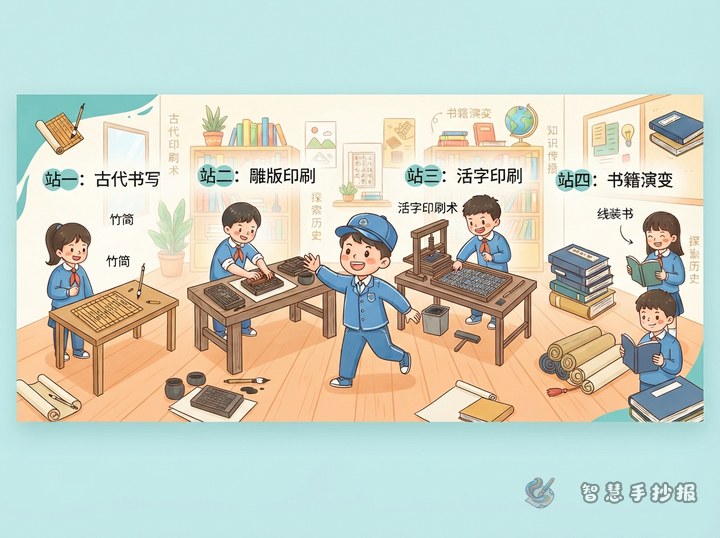
- Woodblock printing: A complete page of words or pictures was carved into a wooden block. Ink was applied to the block and paper was pressed against it, making it useful for printing the same page repeatedly.
- Movable type: Individual characters were made as separate pieces, arranged into a page, and then printed. During the Northern Song period, Bi Sheng developed clay movable type, showing the idea of flexible page setting.
- A connecting sentence: Paper made books lighter, binding made them easier to browse, and printing helped knowledge travel to more readers.
Copy-ready text for the page
Opening paragraph: The shape of a book records how people preserved and read knowledge. From bamboo slips to paper, and from scrolls to thread-bound books, bookmaking gradually became more convenient for reading and storage.
- Fact card: Woodblock printing carves a whole page, while movable type uses separate characters that can be arranged into a page.
- Theme sentence: Book pages changed, but the wish to read and learn remained the same.
- Closing sentence: Every improvement in binding was another step toward valuing knowledge and passing civilization on.
Make the layout feel like a book that can be read
- Write the title on the open center pages in dark brown or ink black, leaving some empty space around it.
- Use ivory, brown, blue-green, and a small amount of vermilion to suggest paper, bamboo, ink, and seals. Try not to use more than four main colors.
- Give each fact section a small icon, such as bamboo slips, a scroll, a needle and thread, or a carved block, and connect it to the text with a thin line.
- Sketch the pages, illustrations, and sections in pencil before copying the text, outlining, and coloring so the content does not become crowded.
- If you want to organize the sections and colors more quickly, continue in the WeChat mini program “智慧手抄报”, then add the title and key facts in your own handwriting.