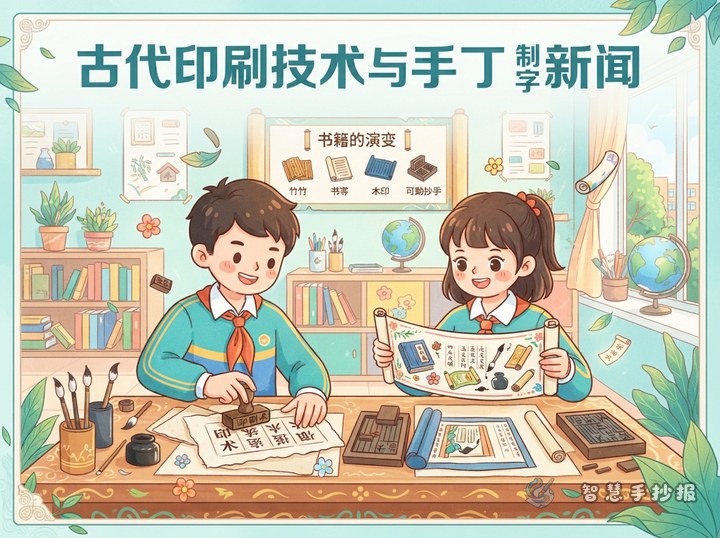
Build the page around a journey of knowledge
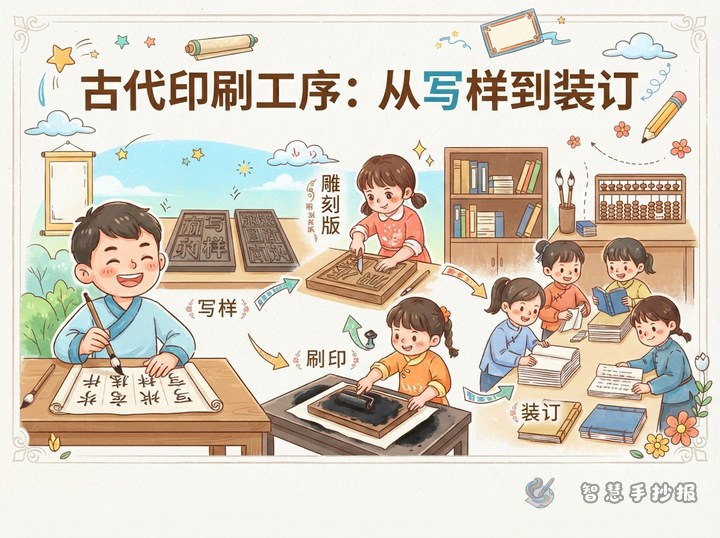
Instead of listing inventions, make the newspaper answer one question: how did a book move from a handwritten copy seen by a few people to printed knowledge shared by many? Draw a central “knowledge journey” connecting hand copying, woodblock printing, movable type, and book distribution. This gives the page a clear story.
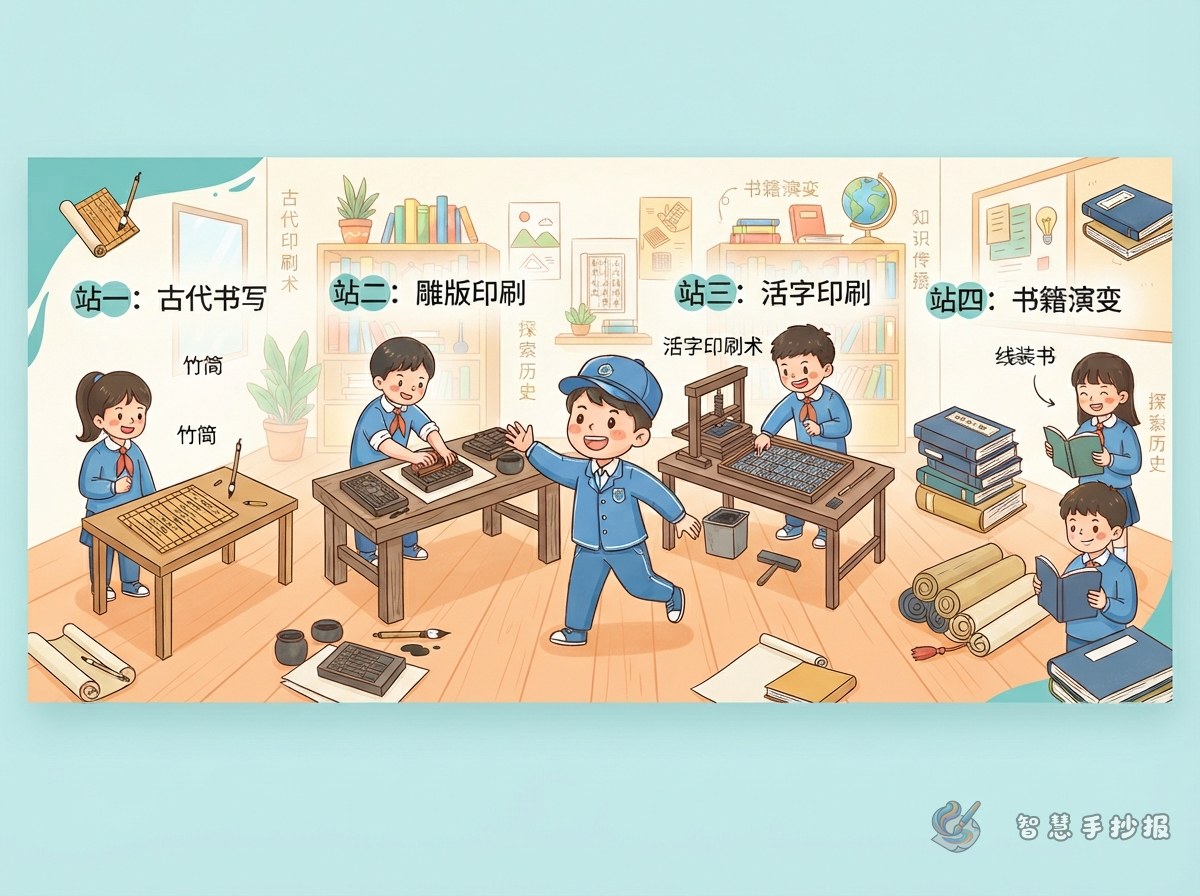
Arrange the topic into four stops
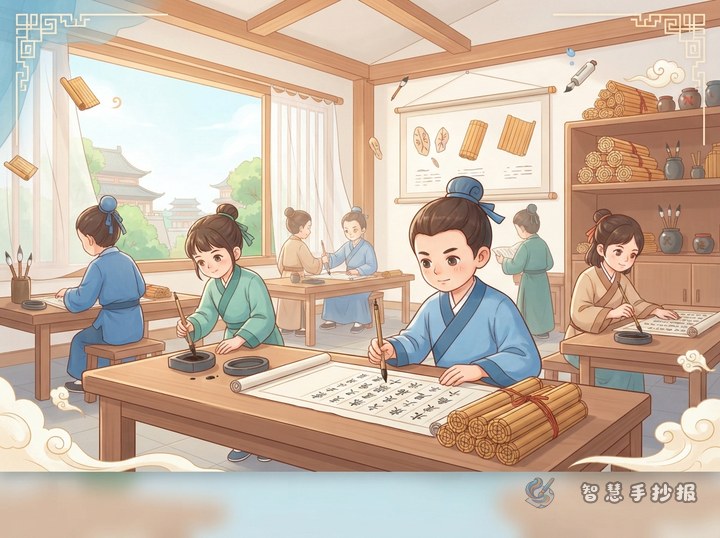
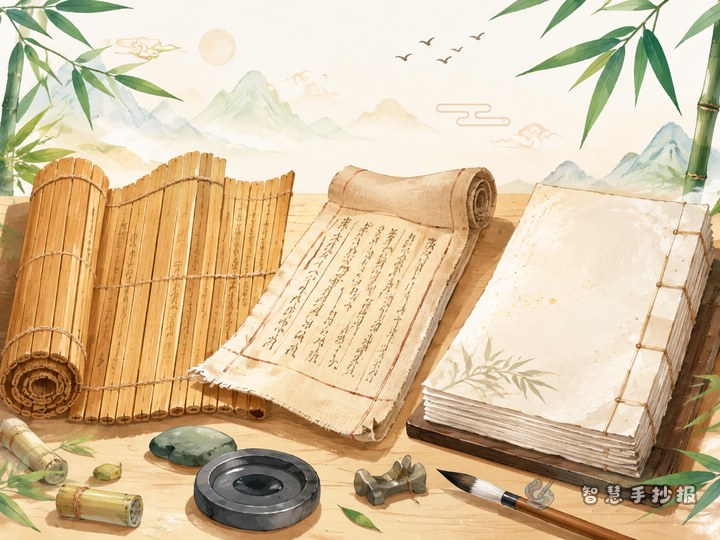
- Handwritten books: Before printing, books were copied by hand. The process was slow, and errors had to be checked and corrected.
- Woodblock printing: A whole page of words and pictures was carved into a wooden block, covered with ink, and pressed onto paper.
- Movable type: Individual characters could be arranged for a text, used for printing, and separated for another page.
- Book circulation: Printing workshops, libraries, and readers helped books travel farther and made knowledge easier to share.
Add a simple icon to each stop, such as a brush, carving knife, type block, or bookshelf. These small images make the historical process easy to follow.
Short text you can use
Main idea: Printing changed not only how books were made, but also how quickly and widely knowledge could travel.
Woodblock fact: The page was carved in reverse on the woodblock. After printing, the letters appeared in the correct direction.
Movable type fact: Individual type pieces could be rearranged for different texts and stored for later use.
Think about it: Without printing, how many people would need to copy one book page by page? What changed when books became easier to make?
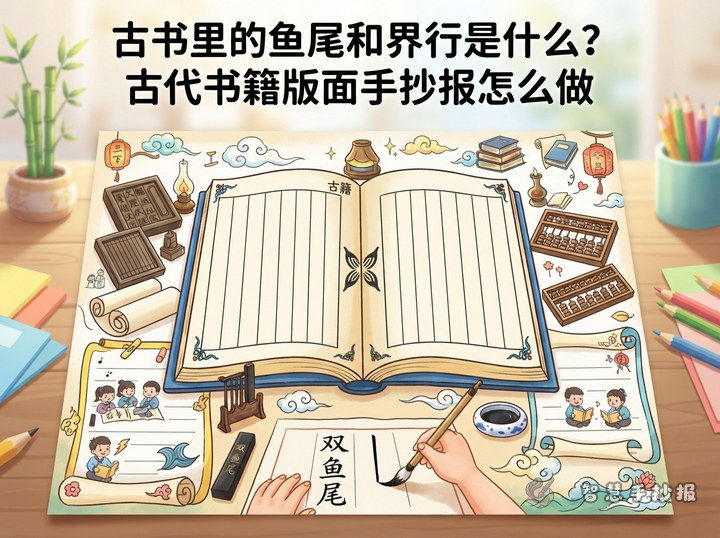
Make the layout look like an open book
Try a horizontal composition. Draw a person copying a book on the left, a wooden block and movable type in the center, and an open book with pages spreading outward on the right. Use brown and cream for wood and old books, then add blue or green to highlight the path of knowledge. Shape the title like an open page and leave enough blank space around each section.
Final design tips
- Keep only the most important stages instead of filling the page with dates.
- Draw people, blocks, and type simply, focusing on how printing worked and what it changed.
- Use a consistent style for subheadings and keep each paragraph short.
- After sketching, you can use the Zhihui Handwritten Newspaper WeChat mini program to organize sections, adjust the layout, and finish the page.