Start with a clear angle: Jiangnan gardens are more than pretty scenery
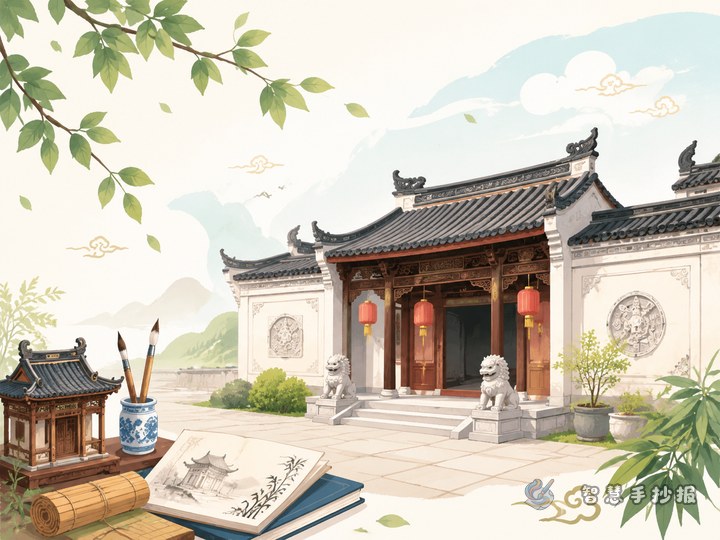
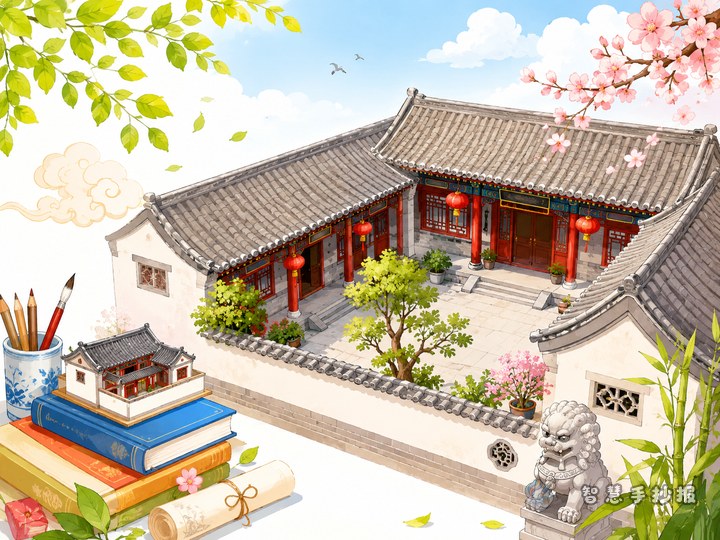
For a handwritten newspaper about Jiangnan gardens, it works better to focus on their place in traditional Chinese architecture instead of turning the page into a travel note. You can build the theme around ideas like white walls, dark tiles, winding paths, borrowed scenery, pavilions, and flowing water.
A title such as “The Architectural Wisdom of Jiangnan Gardens” or “My Jiangnan Garden Handwritten Newspaper” feels natural for students and easy to organize on the page.
Plan the layout like a small garden
This topic looks especially good with a layered layout. Put the main title in the center, then arrange small sections around it like garden spots. The page will feel more lively and thematic than a simple box layout.
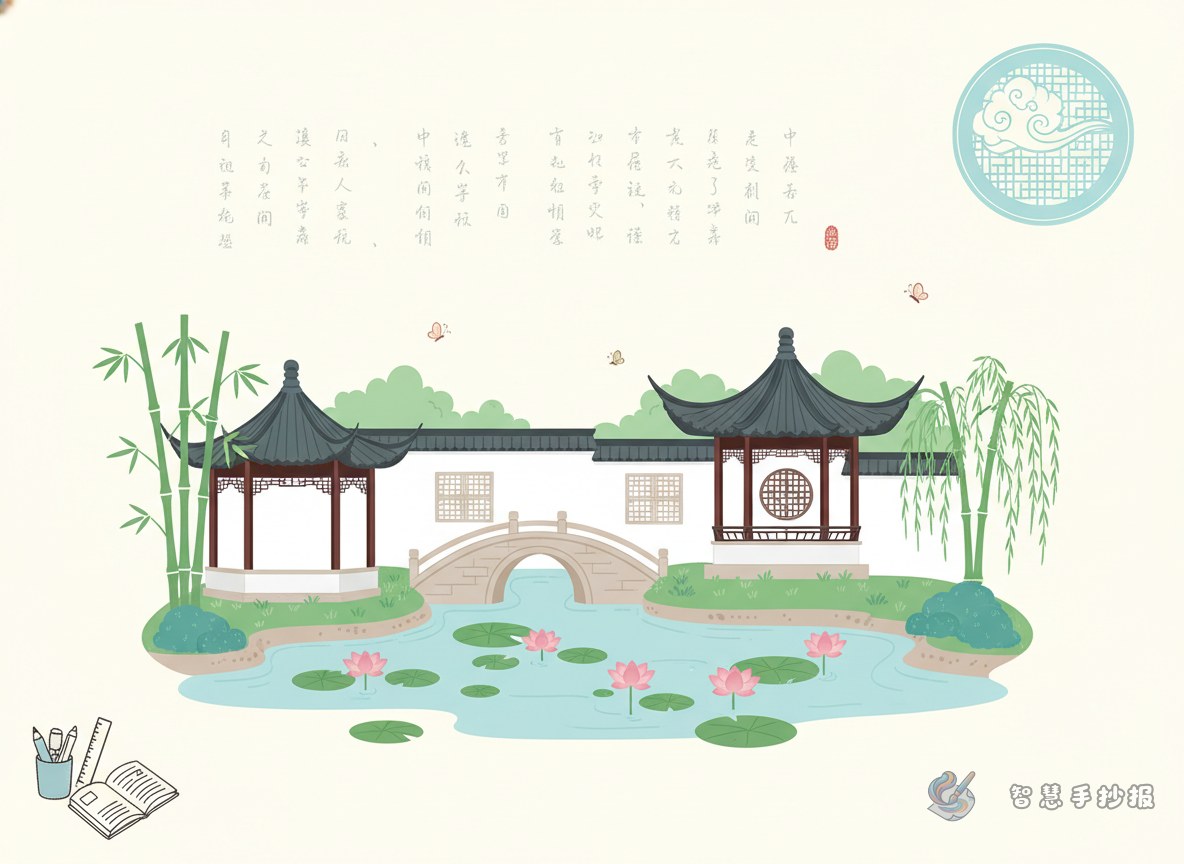
- Center: Main title with decorations like a pavilion, moon gate, or lotus border.
- Top left: A short introduction to Jiangnan gardens as part of traditional Chinese architectural culture.
- Top right: Architectural features such as white walls, lattice windows, corridors, rockeries, and ponds.
- Bottom left: A section for “My Favorite Garden View” where students can add personal thoughts.
- Bottom right: A small knowledge box with aesthetic terms or building details.
If you want to keep polishing the page, you can also continue designing in the WeChat mini program and explore more garden-style layout ideas.
What to write: short sections work better than long paragraphs
The biggest mistake in this topic is filling the page with too much text. Short paragraphs and bullet points match the elegant style of Jiangnan gardens much better.
Sample introduction
Jiangnan gardens are an important part of traditional Chinese architecture. They combine buildings, water, rocks, and plants in a skillful way. Even when the space is small, they create rich and beautiful scenery through winding paths, quiet ponds, and carefully placed pavilions.
Sample features
- White walls and dark gray tiles create a simple and elegant look.
- Pavilions, halls, and towers are arranged with flexibility.
- Ponds and rockeries bring natural mountain-and-water beauty into the garden.
- Lattice windows, moon gates, and corridors create changing views as people move.
- Borrowed scenery lets outside views become part of the garden picture.
Sample personal reflection
To me, a Jiangnan garden feels like a painting you can walk through. Each turn shows a different scene. Its quiet, delicate beauty reflects the special charm of traditional Chinese architecture.
Useful words and lines for a more refined page
If the page feels plain, add a few short phrases with a graceful tone, but do not overcrowd the layout.
- Keywords: winding path, changing views, white walls, dark tiles, pavilions and waterside halls
- Section names: Garden Beauty, Architectural Secrets, A View Through the Window, My Garden Notes
- Highlight line: A small garden can hold a wide world.
- Highlight line: One pavilion and one pond carry Chinese aesthetic wisdom.
- Highlight line: Jiangnan gardens bring nature into architecture.
Keep the colors light and calm
This topic does not suit heavy, bright colors. Soft green, light gray, ivory, and pale blue work best. You can add small touches of pink lotus flowers or dark green bamboo leaves.
- Use borders shaped like lattice windows, corridors, or moon gates.
- Decorate with pavilions, bridges, lotus leaves, rocks, and willow branches.
- Choose a title style with a slight calligraphy feeling, but keep it easy to read.
- Leave enough blank space so the page feels fresh and elegant.
A cleaner page better matches the quiet and graceful spirit of Jiangnan gardens.
How to end the page simply
The ending does not need to sound complicated. One or two clear sentences are enough. For example: Through this handwritten newspaper, I learned that Jiangnan gardens are not only beautiful scenery, but also a reflection of the wisdom and artistry of traditional Chinese architecture. They show how people in the past loved nature and knew how to shape it beautifully.
If you want to refine your title, sections, or layout, you can continue making your work in the Wisdom Handwritten Newspaper WeChat mini program.