Start with the most recognizable architectural image
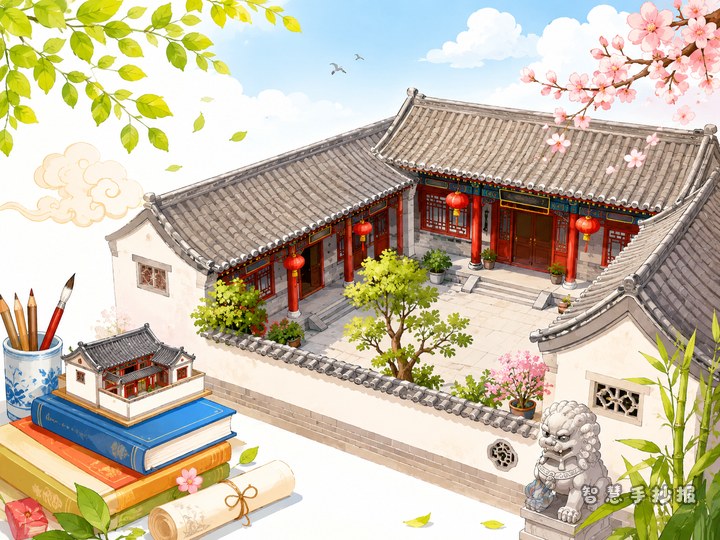
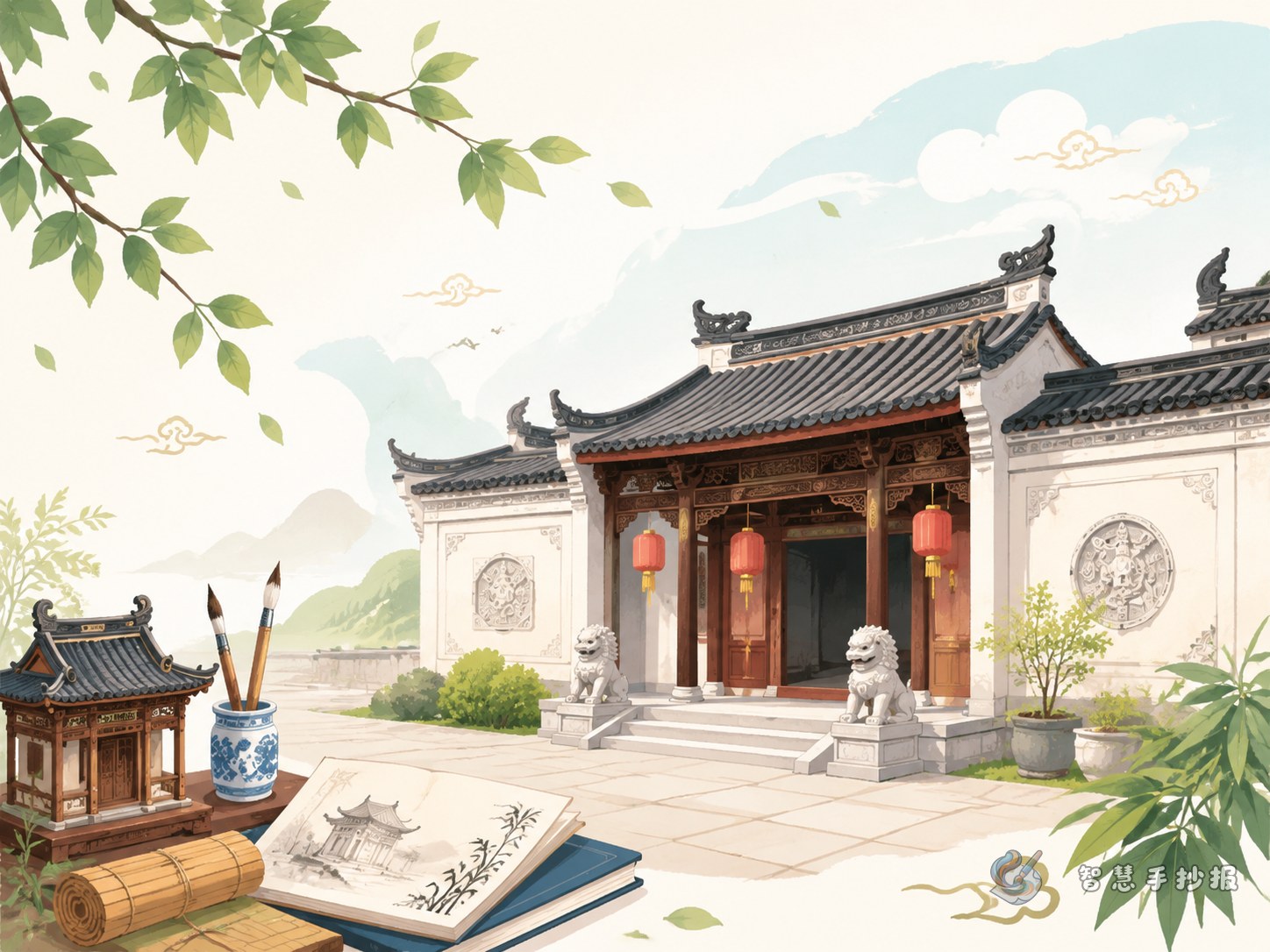
When making an ancestral hall culture handwritten newspaper, do not begin with too many historical details. First describe the overall feeling of the building: formal, symmetrical, traditional, and orderly. Common features include a prominent entrance gate, curved rooflines, layered courtyards, and a central main hall.
A short opening sentence can help: an ancestral hall is an important type of traditional Chinese architecture that combines memory, ritual, and cultural education in one place.
Break the content into clear and simple sections
Section 1: What is an ancestral hall for?
Explain that it was often used for ancestor worship, family gatherings, and passing down family values. Keep the wording simple and suitable for students.
Section 2: What parts can be found in the building?
- Main gate: shows dignity and marks the entrance.
- Open patio or courtyard: brings in light and air.
- Main hall: the central and most important space.
- Side rooms: help complete the traditional layout.
Section 3: Why does it look so traditional?
Students can mention gray tiles, wooden beams, stone bases, carved doors and windows, and plaques or couplets. These details make the page feel more connected to architecture.
Short text materials students can copy
- An ancestral hall is an important part of traditional Chinese architectural culture.
- From the gate to the main hall, the layout often looks neat and balanced.
- Wood, stone, and brick carvings add artistic beauty to the building.
- An ancestral hall reflects both architectural wisdom and family tradition.
- One building can hold both cultural memory and architectural beauty.
If there is extra space, add a small box called “What I learned” and write two or three simple summary sentences in the student’s own words.
Design the page like a traditional courtyard
This topic works especially well with a building-inspired layout. The title can be placed under a roof-shaped header, and the main content can be arranged like rooms around a courtyard.
- Use dark red, gray, black, and beige for a calm traditional feeling.
- Decorate borders with rooflines, lattice patterns, steps, or cloud motifs.
- Keep subheadings short, such as “Purpose,” “Building Features,” and “Decorative Details.”
- Do not make each text block too long. Short sections look cleaner.
Choose details that are easy to draw
There is no need to draw a full complex building. A corner of an eave, a patterned window, a plaque, or a stone step can already show the theme clearly. This keeps the page neat and manageable for students.
Small lanterns, tile shapes, or lucky cloud patterns can be added in blank areas, but use them lightly so the decorations do not overpower the content.
Finish with a strong conclusion
A good ending can say that learning about ancestral halls helps us see not only the beauty of traditional Chinese buildings but also the values and customs they preserve. This gives the handwritten newspaper both knowledge and meaning.
If more layout ideas or ready-to-use page inspiration are needed, students and parents can continue creating in the Wisdom Handwritten Newspaper WeChat mini program.