Set the focus first: an ancient opera stage is more than a performance spot
Many students only write about singing and acting when they choose this topic, but that makes the poster feel thin. A better handwritten newspaper combines traditional architecture with local folk culture. An ancient opera stage is both a building and a public cultural space, which makes it a strong topic for school display work.
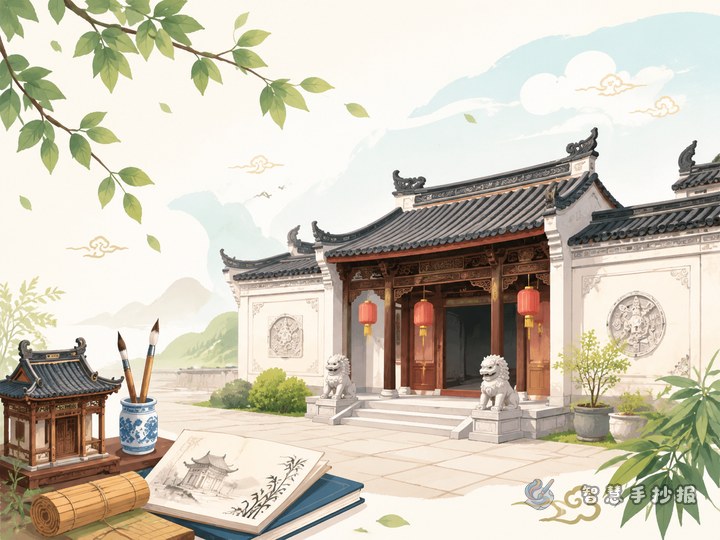
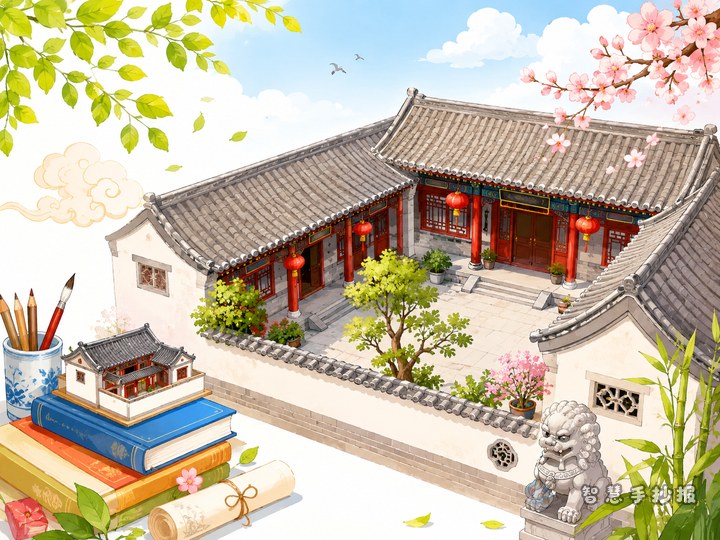
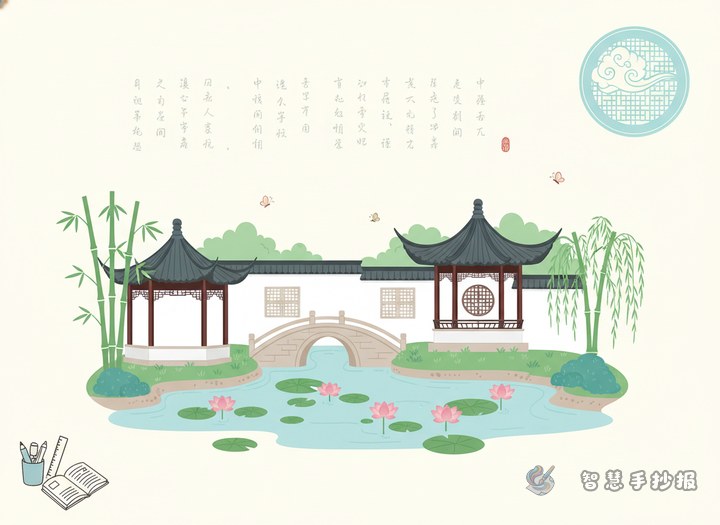
You can begin with a short introduction: ancient opera stages were often built in old towns, temple fair areas, or village centers. With timber frames, upturned eaves, and decorative details, they show how traditional Chinese buildings could be practical and beautiful at the same time.
Four content sections that work well on a handwritten newspaper
1. What does an ancient opera stage look like?
- It often stands on a raised platform so the audience can watch clearly.
- The roof may have sweeping eaves that make the stage look lively and elegant.
- Timber columns and beams create a clear and layered structure.
- The front is usually open to support performance and sound projection.
- Some stages feature carved wood, painted beams, or decorated ceilings.
2. Why is it important?
- It was a key place for festivals, temple fairs, and village gatherings.
- It connected performance, community life, and local memory.
- It shows that traditional architecture was made to serve everyday life.
3. Where is the architectural beauty?
- The layout often feels balanced and dignified.
- Carvings and painted patterns may carry lucky meanings.
- Details like eaves, railings, and column bases show traditional craftsmanship.
4. Why should we still care today?
You can mention protecting historic buildings, learning about local opera, and valuing cultural heritage. This gives the poster a stronger ending and a clearer message.
Ready-to-use writing materials
Text 1: The ancient opera stage is a vivid combination of traditional architecture and folk art. It was not only a place for performances, but also a space filled with festival life and community memories.
Text 2: Many ancient opera stages use timber structures and roofs with elegant eaves. These features show the skill and wisdom of traditional builders.
Text 3: One ancient opera stage can connect architecture, opera, and local culture, making it an interesting way to learn about Chinese traditional buildings.
Text 4: Protecting an ancient opera stage means protecting more than an old building. It also means preserving the cultural memories around it.
Try a stage-inspired page layout
This topic works especially well with a dramatic composition. Place the main title at the top like a plaque above a stage. Use the middle as the main “performance area” for the introduction. Put “architectural features” on one side and “folk customs” on the other. At the bottom, add a small box for heritage protection or a quick fact list.
- Use lattice, cloud, or classic geometric patterns for borders.
- Add small decorations such as lanterns, opera masks, roof corners, or tiles.
- Colors like red, dark green, gold, and ink black fit the traditional mood.
- Highlight key words in bold, such as “eaves,” “timber frame,” and “festival.”
Small tips that make the poster better
- Do not turn it into a general opera poster. Keep the focus on architecture.
- Split the writing into short sections instead of one long paragraph.
- A simple sketch of the roofline and columns is enough to make the theme clear.
- If you need more content, compare an ancient opera stage with a modern theater.
If you already like this topic but still need help finishing the layout, you can continue creating your work in the Zhihui Shouchaobao WeChat mini program.