Why reusing water makes a better poster topic than a slogan
Everyone knows that saving water matters, but a poster full of slogans feels empty. Reusing water gives you something you can actually see: the same basin of water does one job, then another, then one more before it is poured away. Each step can become a small drawing, so the page fills up naturally and readers understand your point at a glance.
Before you start, answer one question in your head: this water was about to be poured out, how many more jobs could it do? Once you can answer that, the structure of your poster is ready.
Map the route: first stop, second stop, last stop
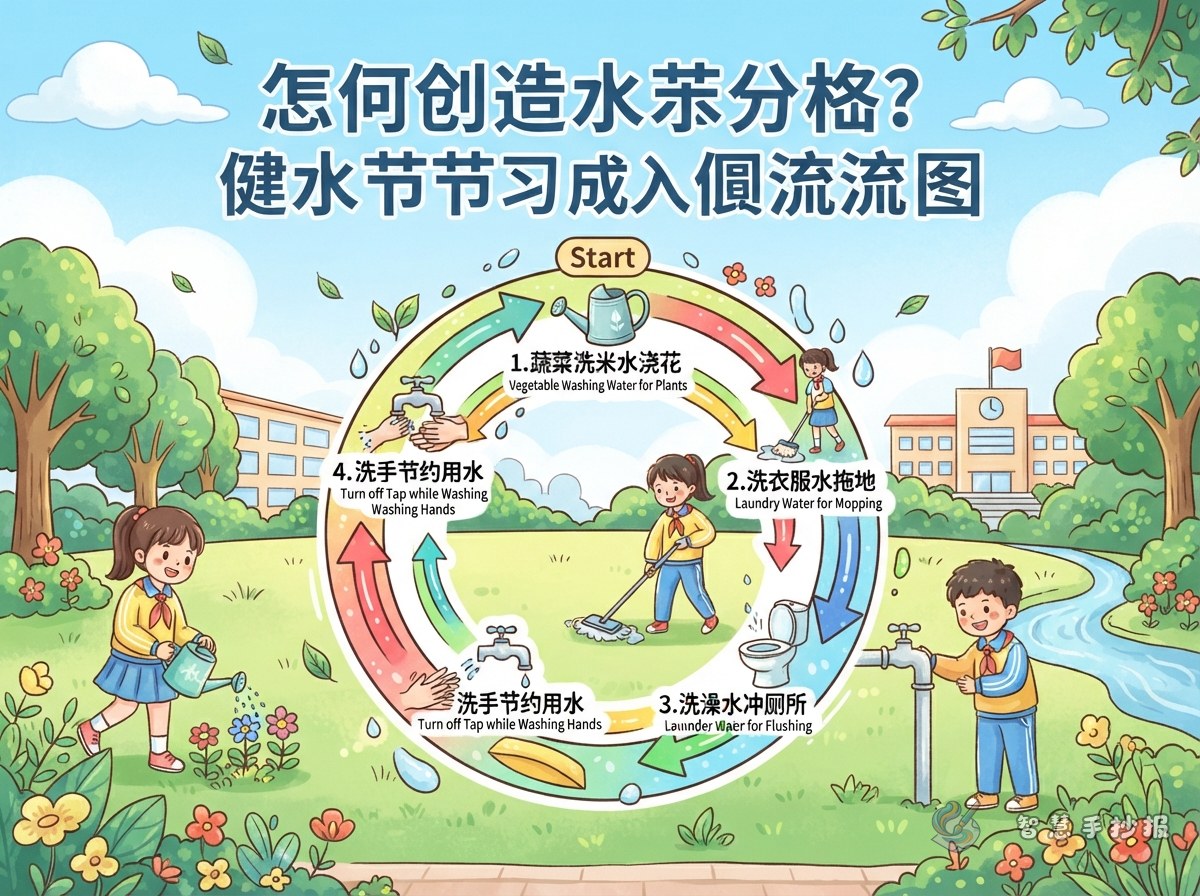
The easiest way is to list the water in your home that could be used twice:
- Rice water: rinse vegetables with it, then water the plants;
- Vegetable washing water: let it settle, then mop the floor or flush the toilet;
- Face washing water: use it to wash your feet, then flush the toilet;
- Cold water before a shower: catch it in a bucket for laundry or mopping;
- Rinse water from the washing machine: keep it for the floor or the toilet;
- Water from a fish tank or leftover tea: use it on plants.
Three or four routes are plenty. For each one, write where the water comes from and where it goes, then join them with arrows.
Short lines you can copy straight onto the page
You do not need long paragraphs. Short labels and single sentences work better:
- Opening line: Water that has been used once is not water that is finished.
- Tip card: Rice water for plants, washing water for the floor, face water for the toilet.
- Small note: Water used on plants should not contain oil or dish soap.
- Personal line: When one basin does two jobs, my family empties one less bucket.
- Action line: Keep a bucket in the bathroom for water that can be used again.
- Closing line: Every bucket we save gives the river a little more time to flow.
Page layout: let one main drawing carry the poster
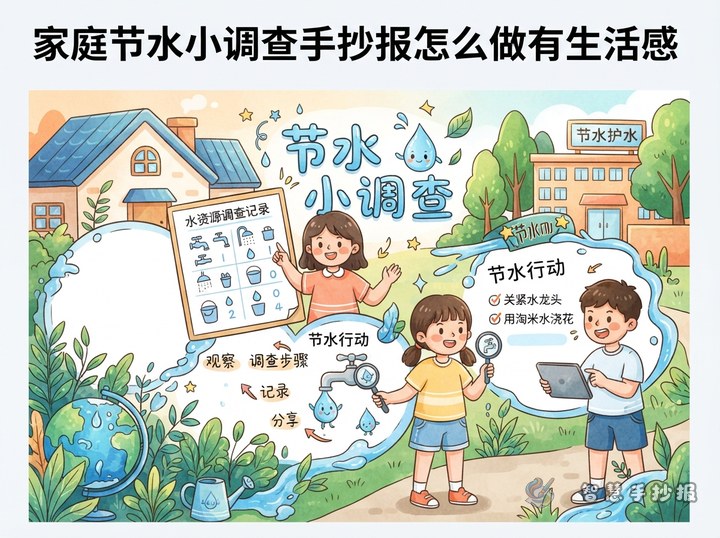
- Draw a large water drop in the centre and divide it into three or four sections.
- Put one small scene in each section and join them with curved arrows that follow the water.
- Leave two narrow columns at the sides: one for water-saving tips, one for what your family does.
- Fill the corners with small icons such as a tap, a bucket, a plant or a mop instead of more text.
- Replace straight borders with wavy lines or a string of small drops, and keep to three or four colours: blue, pale blue and white.
Place the title at the top left in the largest letters, make column headings slightly bigger than the body text, and leave enough space between lines so the page reads well from a distance.
A closing line that connects your bucket to the river
You do not need to shout. Try a sentence that starts with you: if every family used its water one more time, the river would have a little more time to flow. That moves the reader from one bucket at home to the water we all share.
If you want to see more recycling-route layouts before you begin, open the Smart Handwritten Poster mini program in WeChat, pick a water drop or arrow template, and arrange your notes until the page looks like your own work.