Build the poster around a rain route
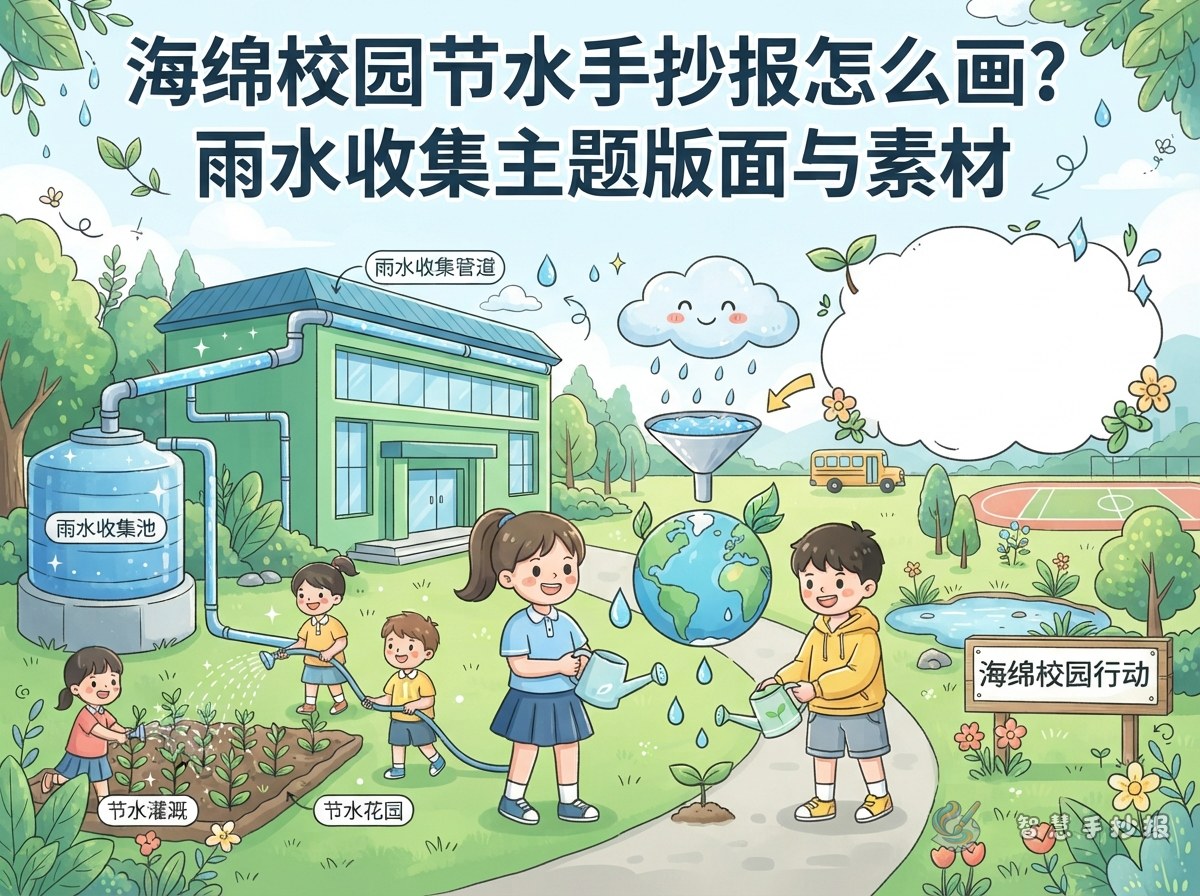
Instead of drawing only a faucet and a few water drops, imagine the school as a sponge that can catch, store, and use rainwater wisely. Let one raindrop travel from a cloud to the school roof, through a water channel and a rain garden, and finally to the plants. This route gives the whole poster a clear story.
Main picture: Draw clouds and falling rain at the top, a school building and playground in the middle, and flower beds, trees, and a rain barrel at the bottom. Use curved arrows to connect each part.
- Use the cloud area to show that rain is a valuable gift from nature.
- Draw a roof gutter leading rainwater into a storage barrel.
- Add permeable pavement or grass to show water slowly entering the ground.
- Finish the route with plants being watered, showing reuse.
Explain the idea with three information cards
What is a sponge campus?
You can write: A sponge campus is not a real sponge. It is a school designed to catch, keep, and use rainwater more wisely. Green spaces, permeable surfaces, and collection facilities help slow down rainwater and support plant growth.
What can collected rainwater do?
When it is safe and suitable, collected rainwater can be used to water plants or clean some outdoor areas. Show the three steps of collection, storage, and use with small icons instead of filling the poster with technical explanations.
My water-saving actions at school
- Turn off the faucet tightly after washing your hands.
- Tell a teacher or maintenance worker when you notice a leak.
- Use the right amount of water when watering plants and aim for their roots.
- Protect school lawns and rain gardens by keeping them clean and not stepping on them.
Short lines that are easy to copy
- Main title: Let Rainwater Start Again, and Let Our School Save Water
- Slogan: Catch every raindrop and keep one more patch of green.
- Fact line: Saving water means not only using less, but also giving every drop a sensible purpose.
- Action line: Start by turning off the faucet and make caring for water a daily habit.
- Closing line: I will be a young water protector and help clean water stay valued while plants keep growing.
Turn the page into a small school map
A horizontal layout works well. Leave a blue cloud band across the top for the title. Place the rain route on the left, enlarge the school building and storage facility in the center, and add three information cards on the right. Connect the action list and the closing message with a green flower bed along the bottom. This arrangement gives both pictures and words enough room.
Try light blue, lake green, and bright yellow. Use blue curves for the water route, different greens for plants, and yellow for the title or key words. A few drops, leaves, clouds, and small barrels are enough to create a consistent border.
Check the poster before coloring
- Can viewers tell where the rain comes from and where it goes?
- Are the information cards short and easy to understand?
- Are the water-saving actions specific enough to try today?
- Is there enough blank space around the title, drawings, and text?
Sketch the rain route in pencil first, then add the text and decorations before outlining and coloring. After the draft is ready, you can continue arranging the page in the WeChat mini program Wisdom Handwritten Posters so the title, words, and drawings work together.