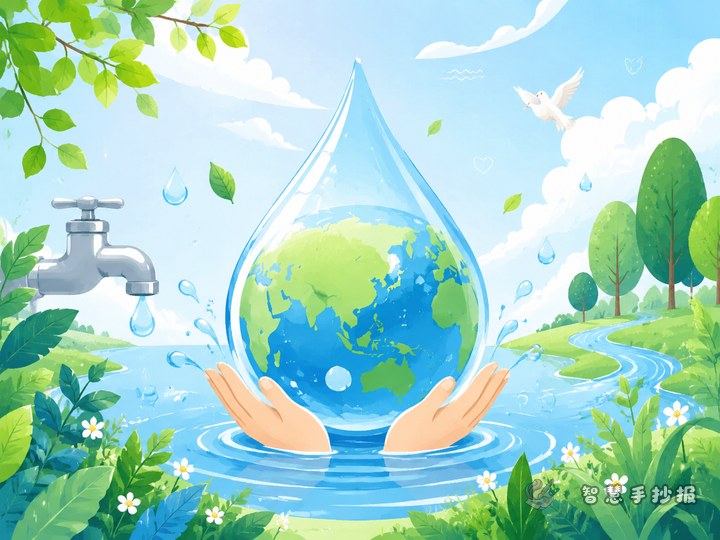
Begin with the thought of a day without water
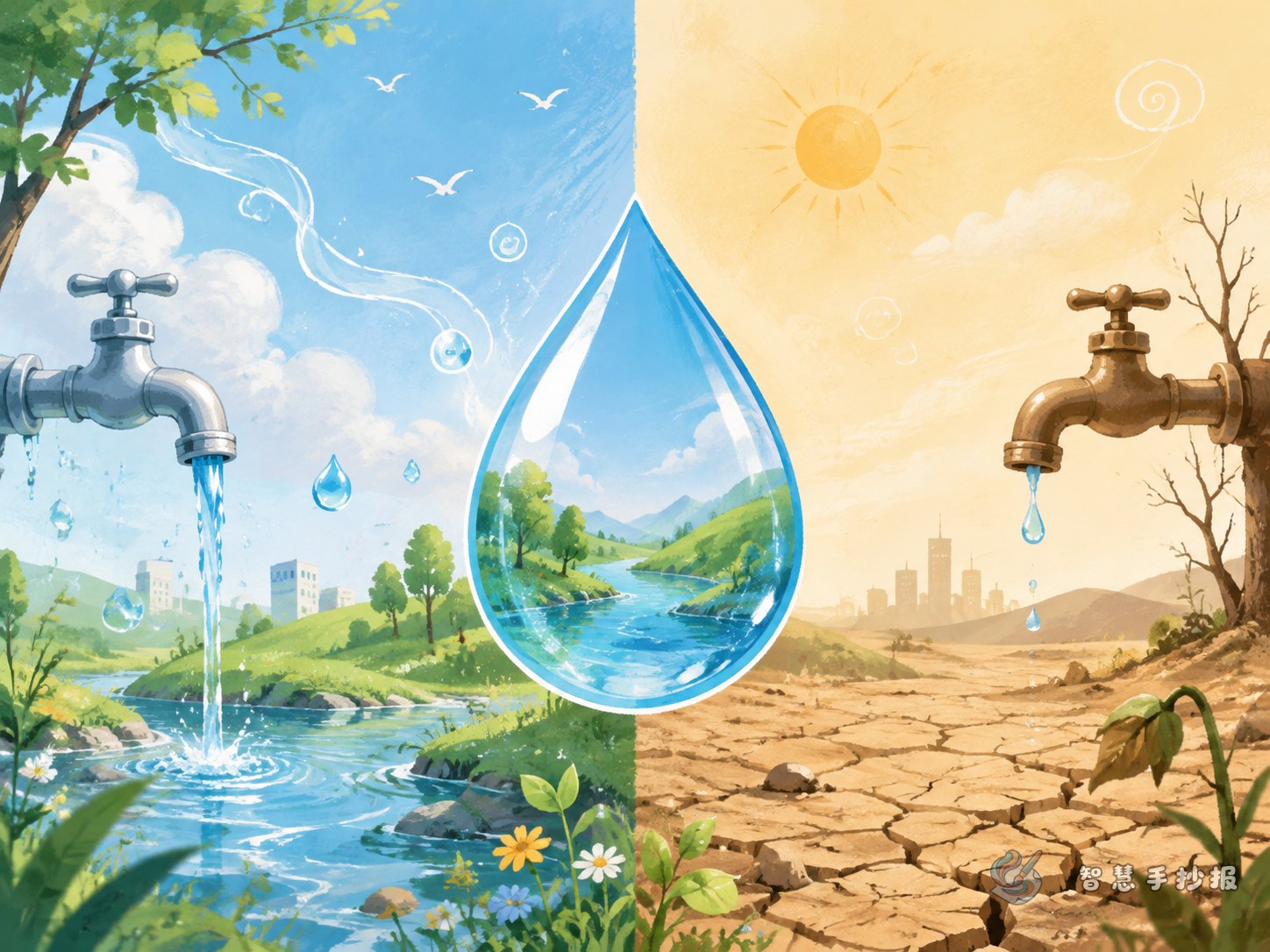
This poster does not need a long list of abstract facts. Start with an easy-to-imagine question: what would happen if the home and school temporarily had no water? Place an ordinary day with water beside a day without it. The contrast is simple to draw and helps readers understand why water matters.
Divide the page into two visual areas. On the left, draw a faucet, a cup for brushing teeth, a drinking cup, a clean floor, and a plant being watered. On the right, show a dry faucet, an empty cup, an unwatered flowerpot, and people waiting for water. Connect both sides with a blue stream or a clear question in the center to create a strong change from taking water for granted to valuing it.
Turn everyday moments into a short story
Morning: where does washing begin?
Draw a child getting ready to brush their teeth and wash their face, only to find that no water comes from the faucet. Add a short note explaining that water supports drinking, cleaning, health, and an orderly daily life.
Daytime: water at school
Use the second scene for drinking, washing hands, cleaning, or observing nature in class. Keep one main action in each box instead of filling the page with details. Small arrows can connect the scenes and make the poster look like a comic about daily life.
Evening: a plant needs water too
Draw flowers on a windowsill, trees in the schoolyard, or a small garden. This reminds readers that water is also connected with plant growth and the surrounding environment. A useful transition sentence is: the water we use every day is connected to many visible and invisible forms of life.
Ready-to-use writing for the poster
Opening: Water quietly appears in almost every part of our lives. Only when it is temporarily gone do we notice that brushing our teeth, drinking, cleaning, and caring for plants all depend on it.
Slogans: Use every drop where it is truly needed; start saving water with one small action; valuing clean water means valuing life.
Water protection reminders: Saving water is not only about using less. It also means keeping rivers, lakes, and canals clean, never throwing rubbish into the water, and not pouring oil or harmful substances carelessly into drains.
Action card: I will turn off the faucet while brushing my teeth; I will tell an adult or teacher when I notice a leak; I will check the faucet after washing my hands; I will use suitable clean household water to water plants; I will carry a reusable cup when I go out.
Use color and icons to show the contrast
Use bright blue, green, and yellow for the water-filled day to create an energetic mood. For the waterless day, use less color, with light gray, brown, or open space to show difficulty and reflection. The title could show a water drop holding up the sun, or a water drop designed as a key that opens scenes from everyday life.
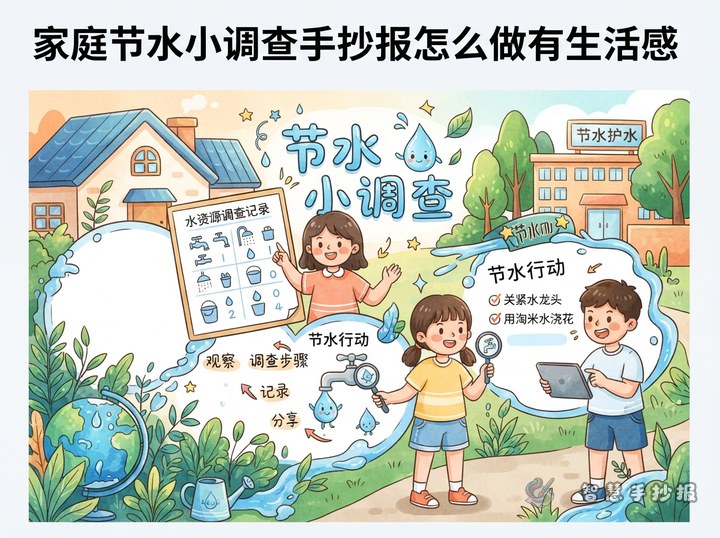
Small drops, valves, leaves, cups, and circular arrows work well in the corners. Keep text boxes similar in size, highlight important slogans with bold borders or darker lettering, and avoid filling the whole page with long paragraphs. After sketching in pencil, outline the water stream and title in blue, then add the remaining colors for a clean finish.
End with a promise that can be acted on
Add a section at the bottom called Three Things I Can Do Today. It can include turning off the faucet, shortening unnecessary water use, and reporting leaks quickly. This keeps the poster from stopping at an imaginary story and turns the idea of a day without water into an action that everyone can join.
To organize the title, sections, and rough layout more quickly, continue making the poster in the 智慧手抄报 WeChat mini-program, then adjust the colors, word count, and drawing style to fit your class requirements.