Why the dancing salt experiment makes a strong science newspaper topic
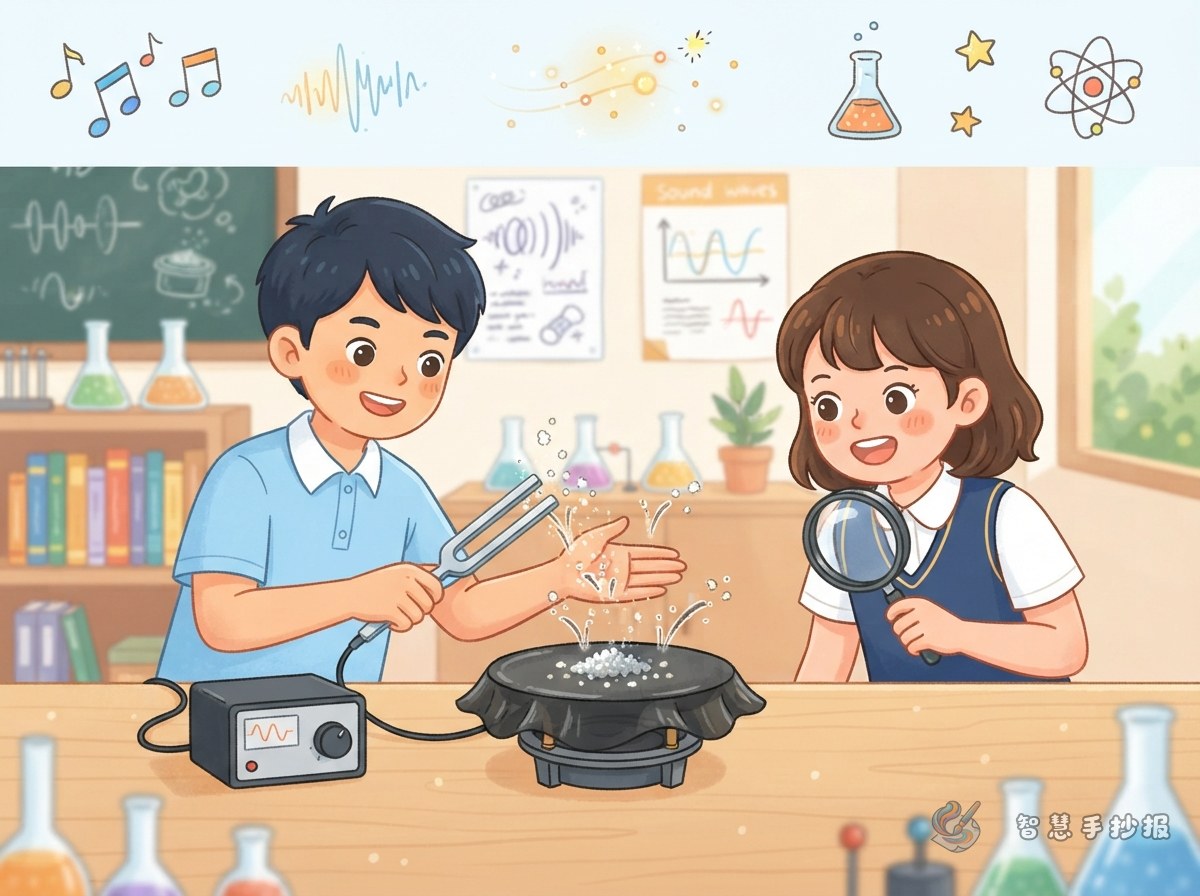
Sound is invisible, but vibration can be seen. With a bowl, plastic wrap, a rubber band, and a pinch of salt, kids can create a clear demonstration for a science handwritten newspaper. The materials are simple, and the result is easy to draw.
- The effect is obvious: salt grains jump when sound is made nearby.
- The setup is easy to sketch: bowl, stretched wrap, and tiny dots for salt.
- The explanation can grow from vibration to everyday examples.
Three questions to build the whole page around
Instead of copying a paragraph about sound, start with questions. They give the newspaper a clear direction.
- Can sound make salt grains move?
- Does the salt jump more when the sound is louder or closer?
- What does this show about how sound is made?
These questions lead naturally to a guess, an experiment, observations, and a conclusion.
Designing the observation and data section
The observation part is the heart of the page. A small table works well: list the condition on one side and the salt reaction on the other.
- Conditions: quiet room, gentle tap on the table, hard tap, speaking close to the bowl.
- Reactions: salt stays still, salt trembles slightly, salt jumps higher, salt bounces quickly.
- Findings: louder or closer sounds make the salt move more.
Add two simple salt position diagrams. Use dots for grains and dotted arrows to show movement direction. This makes the change visible even before the reader goes through all the text.
Explaining vibration and sound in kid-friendly words
Keep the science simple and personal. A three-step flow works well: what I saw, what I think, and what I learned.
- What I saw: the salt grains moved while sound was being made.
- What I think: sound may make the plastic wrap vibrate, and the salt grains bounce.
- What I learned: sound is made by vibration, and vibration can travel through the air to the plastic wrap.
Add one everyday example, such as feeling your throat vibrate when you speak or watching a drumhead move when it is hit.
Layout ideas: making the jumping visible on paper
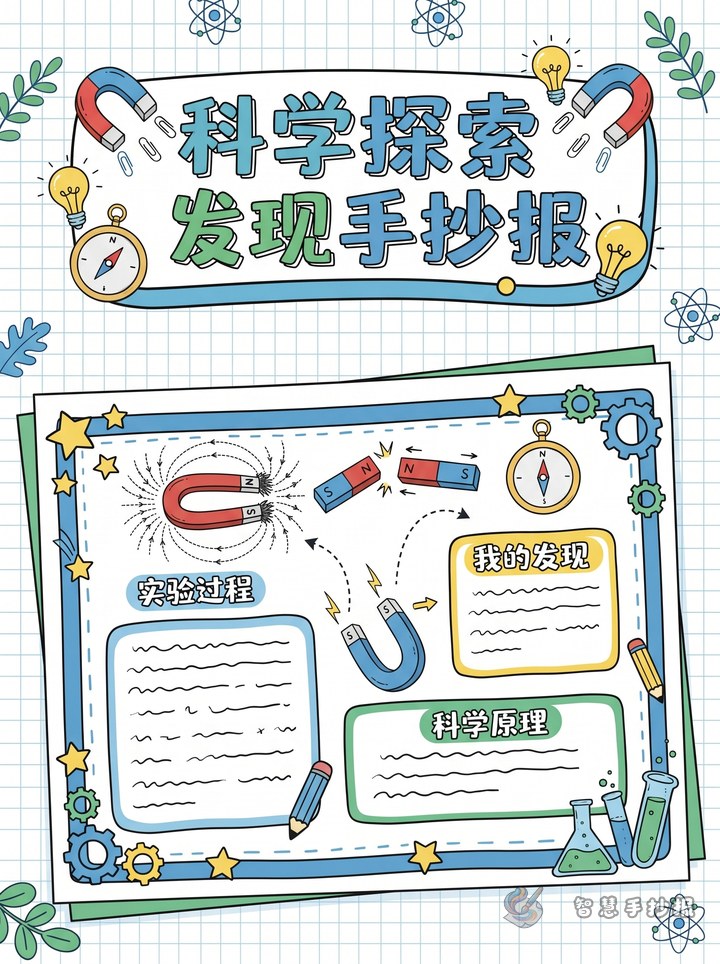
The word "dancing" gives the layout energy. Place the bowl and salt near the lower center, keep the title at the top, and split the sides between steps and observations.
- Write the title in uneven letter sizes to suggest a jumping rhythm.
- Use arrows, wavy lines, and small dots to show vibration direction.
- Limit the page to three colors: a light background, dark text, and one bright color for the explanation box.
- Save a small "My discovery" box for the lower right corner.
If you want a ready-made starting point, open the 智慧手抄报 mini program in WeChat, choose a science experiment template, and replace the sample text with your own records.
Extra details to round out the page
A short "What if" corner can make the newspaper feel more like real science.
- What happens if the plastic wrap is tighter or looser?
- Would rice, paper bits, or foam beads react the same way?
- How does the tapping sound change when you press your ear to the table?
The answers do not all need to be included. Asking good questions is already part of scientific exploration. End with a simple line: a small experiment can help us discover the secret of sound.