Start with One Clear Goal: Let Readers See What the Clouds Are Saying
The biggest mistake in a "reading the clouds" newspaper is copying a full definition of clouds onto the page. Instead, treat the sky as a big blackboard and the clouds as captions. Use a simple picture plus one short sentence to show what kind of weather may follow a certain kind of cloud. This keeps the poster playful and gives you plenty of room to draw.
Cloud Material You Can Put on the Page
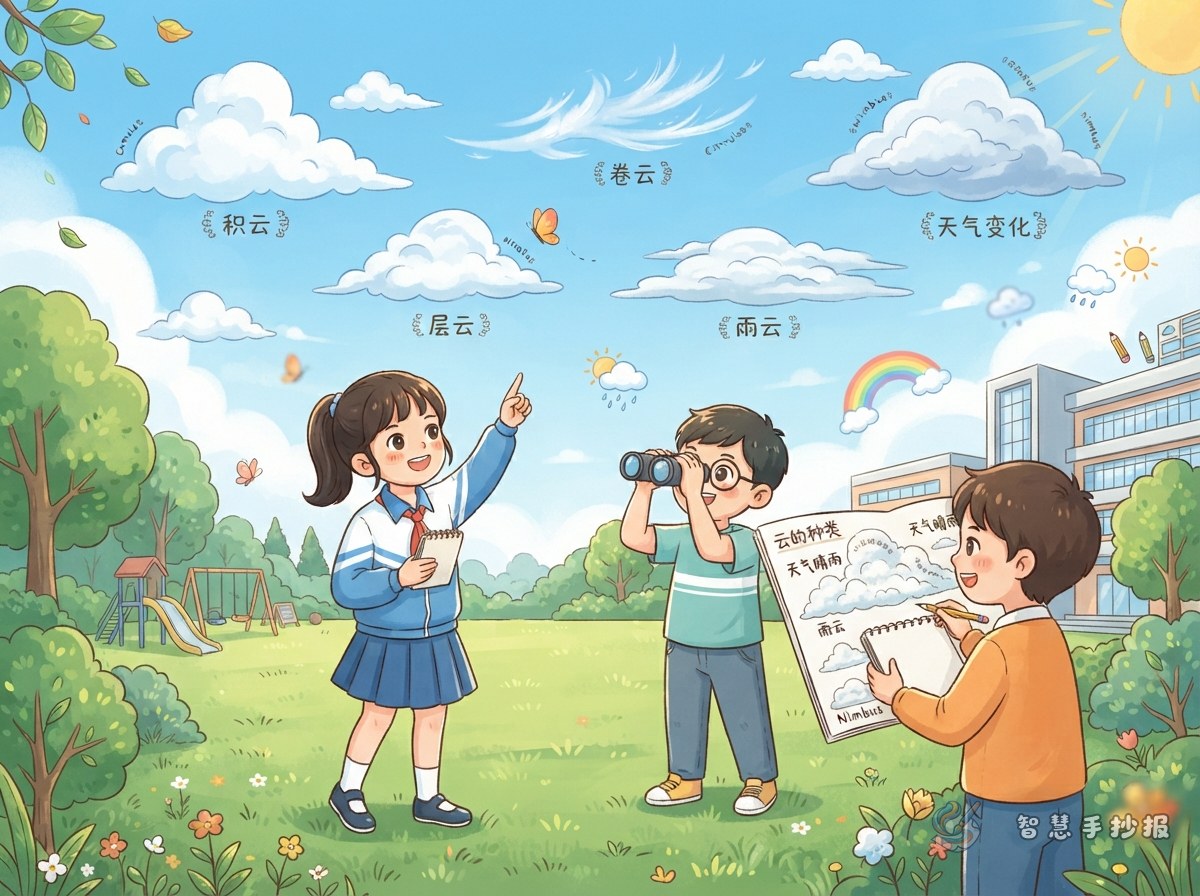
Three clouds that are easy to draw
- Cumulus: fluffy and round like cotton balls, with a fairly flat bottom, often seen on clear days. Build it with overlapping curved lines and add a light shadow.
- Stratus: a gray blanket stretched across the sky with soft edges. Long horizontal strokes are the easiest way to draw it, so it fits well along the lower part of the page.
- Cirrus: high, thin, and light, like feathers or threads blown apart by wind. A few long sweeping curves are enough, and it works nicely beside the title.
Simple cloud-to-weather clues
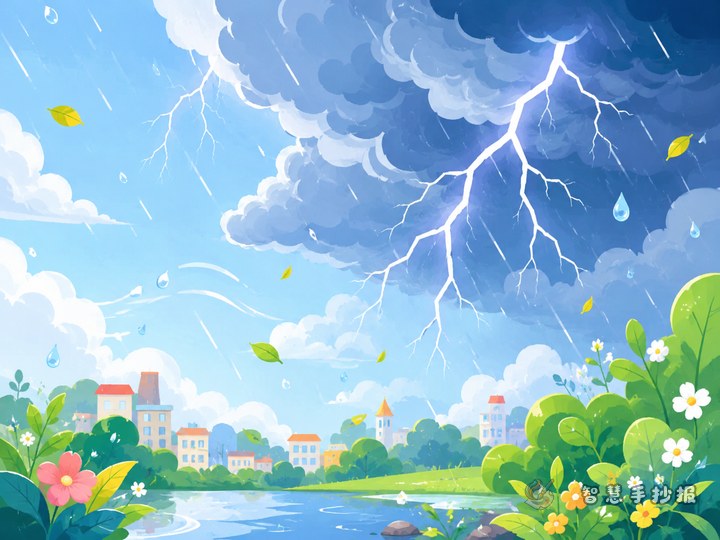
- Clouds that grow thick and dark often mean rain is on the way.
- Low, heavy clouds usually bring dull, stuffy weather that may turn gray or rainy.
- Small, scattered clouds under a bright sky usually mean comfortable weather.
You can turn this into two columns, "Clouds I See" and "Weather I Guess," with a drawing on the left and a short clue on the right. It reads like a small weather diary.
Planning Sections So the Page Does Not Feel Crowded
- Title area: Write "Reading the Clouds" and add one large cloud or a rainbow line, taking about a quarter of the top.
- Cloud gallery: Place three clouds in a row or column, each with two lines of explanation. This is the main body of the poster.
- Weather tips box: List short cloud-and-weather clues inside a small framed box.
- Observation corner: Save a small space for "Today's Sky" or "My Favorite Cloud" so the poster feels personal.
If the paper is small, keep the gallery and shorten the observation corner to one sentence. Not every section needs the same amount of space.
Color and Layout Tips That Make a Difference
- Use blue, white, and light gray as the main colors for a sky feeling, then add a yellow or orange sun for contrast.
- Fill clouds with white and outline them in light gray. Large areas of dark blue can make the page look heavy.
- Keep text boxes roughly aligned, and draw lines by hand so they feel natural rather than rigid.
- Make the title noticeably larger than the body text so the page looks clear from a distance.
A Short Checklist Before You Start Writing
Decide whether the paper will be horizontal or vertical, then lightly divide it into four areas with a pencil. Prepare blue, white, gray, and yellow pens. Write your three weather clues on scratch paper first to check the length before copying them onto the final page. When you finish, check for spelling mistakes and make sure each explanation matches the cloud beside it.
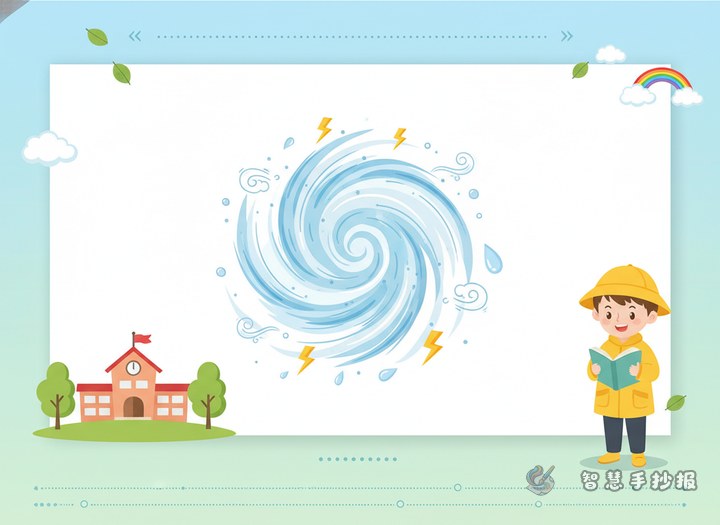
If you cannot think of a layout you like, open the WeChat mini program "Smart Handwritten Newspaper," choose a weather template, replace the text with your own, and add a few hand-drawn clouds to complete the page.