Begin with one sentence children can remember
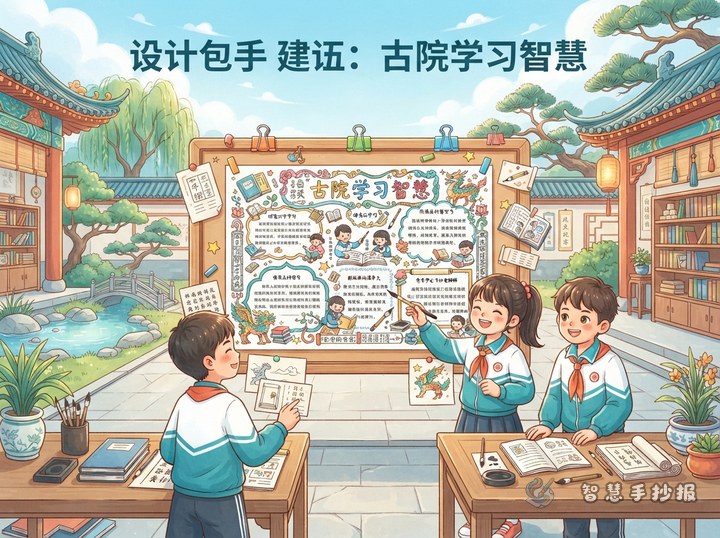
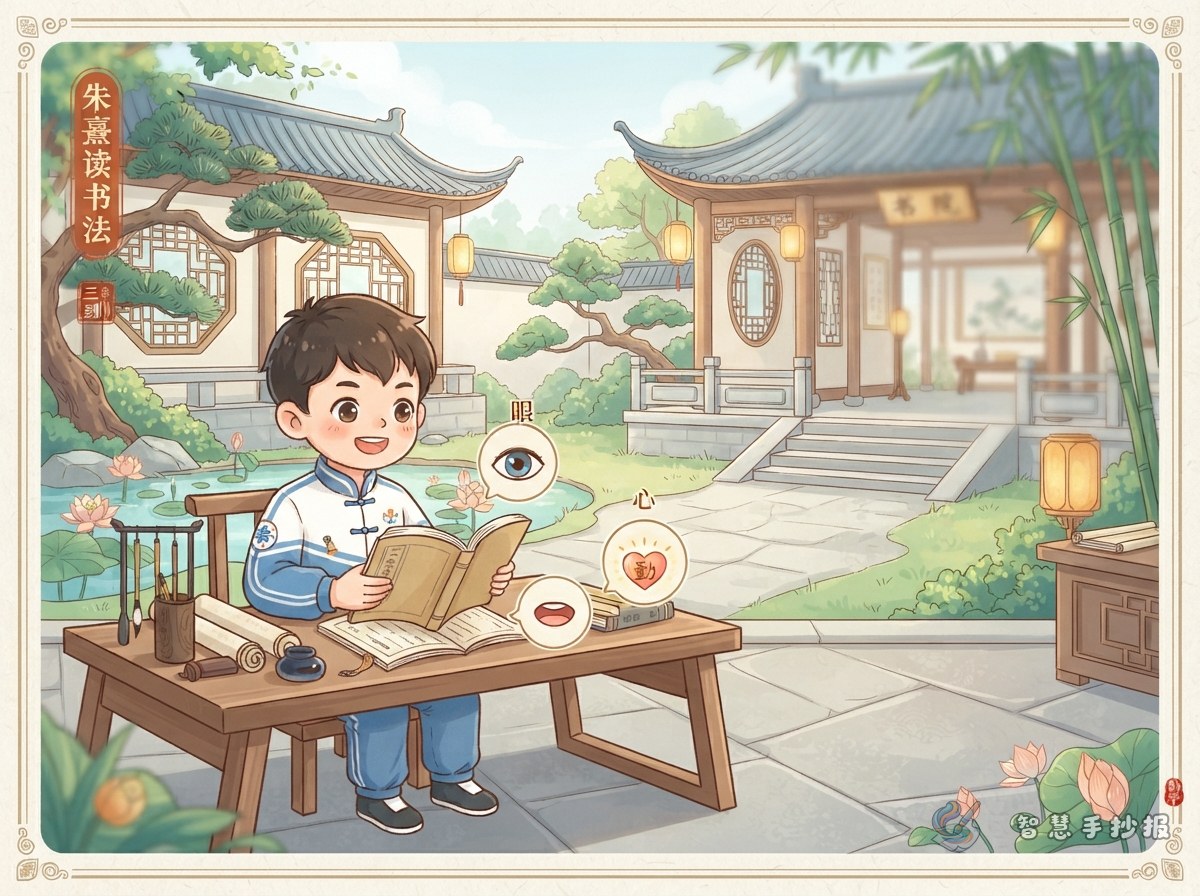
Zhu Xi's reading method may sound formal, but it can be reduced to a simple idea: read with your heart, your eyes and your voice, slowly and more than once. Write that sentence on a rough sheet first, then decide how to divide the page. Once the main idea is fixed, the columns, drawings and colours all become easier to arrange.
Make the three focuses your main column
The three focuses suit a handwritten newspaper because there are only three words to remember and to draw.
- Heart: think about the meaning while reading instead of looking around.
- Eyes: see every character clearly without skipping lines. A large eye or an open book works well as a small picture.
- Voice: read aloud so the sentences stay in memory. A small mouth or a poem being read is an easy decoration.
Place the three words in three boxes of the same size in a row, so the page looks tidy and a teacher can understand it immediately.
Add a small block of study sayings
Three words alone can look thin, so keep about a third of the page for a few short study sayings, one line each:
- Read step by step, starting with what is easier.
- Read good books closely and think about why they are written that way.
- Connect reading with your own behaviour and check whether you really do it.
- Use your time well and do not leave today's reading until tomorrow.
- Keep going in one direction and do not give up easily.
You do not need all five. Choose two or three that read smoothly, number them, and leave space around each line.
A simple layout: three boxes and a footer strip
- Top: the title, with a bamboo-slip border drawn as a long rectangle.
- Middle left: the three matching boxes for heart, eyes and voice.
- Middle right: a vertical column or a box for the study sayings.
- Bottom: a narrow strip for the pupil's own reading goal, such as finishing one book this week.
If the handwriting tends to be large, enlarge the three boxes and shorten everything else. Fewer words always look better than a crowded page.
Academy details that finish the picture
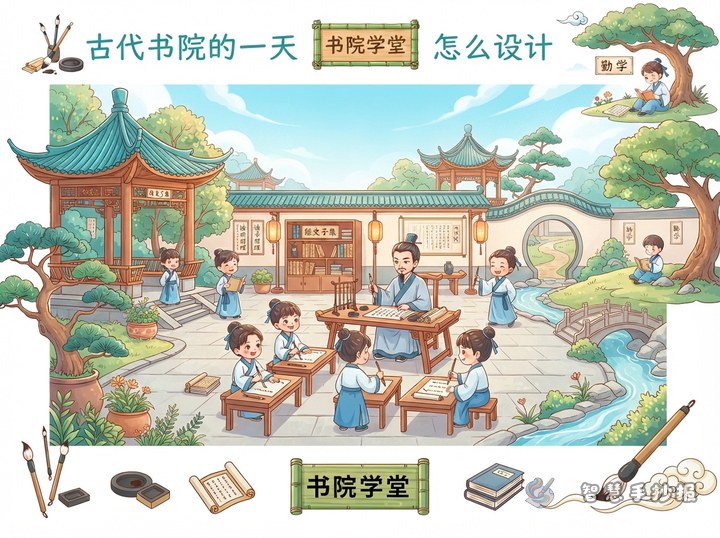
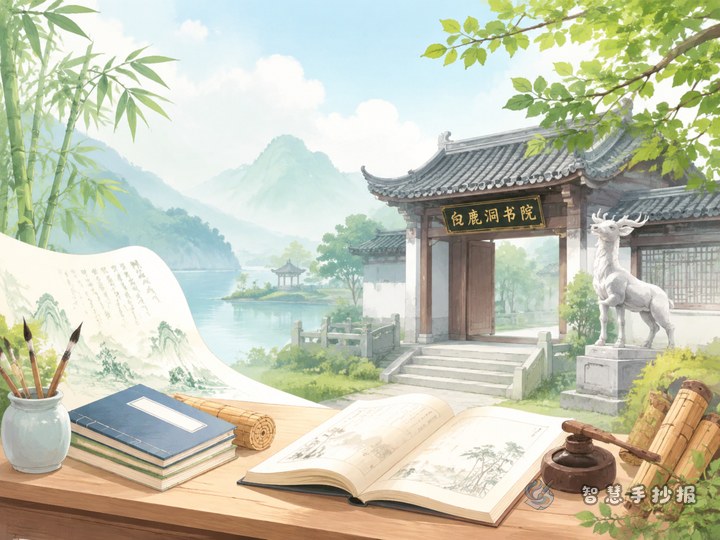
- A stack of books, an oil lamp, a writing brush and an ink stone on a desk.
- Distant hills or bamboo seen through a window frame, suggesting a quiet mountain setting.
- A rolled scroll, which can be drawn with one curve and a few straight lines.
Use cream, light brown and ink green as the main colours, then add a little vermilion for contrast. The page will look like an old book without becoming too dark.
Three quick checks before handing it in
- Is the title large enough to read from a distance?
- Are the three small boxes the same size, with straight borders?
- Is there a little empty space so the page can breathe?
After these checks the newspaper is basically finished. If you would like a different scholar, academy or layout, open the Wisdom Handwritten Newspaper mini program in WeChat, choose a page design, then print it or copy it by hand and add your own writing.