A Fresh Angle: Why Seating Order Belongs on an Etiquette Handwritten Newspaper
Many students fill an ancient etiquette page with bows and greetings only. Where people sat and how they addressed one another shows etiquette in a clearer way. A seating map plus a small dictionary of titles gives the page both pictures and useful words.
Which Seating Rules Are Easy to Explain
Separate three settings
Ancient seating rules change with the setting, so sorting them makes the page easier to read.
- Inside a room: The east side was often treated as the seat of honor, kept for elders or important guests.
- In the main hall: The south-facing position was commonly respected and given to a senior person or chief guest.
- At a banquet: The host and guest of honor had clear places, with the host seated where it was easy to greet everyone.
Use short direction words
Write short phrases such as “east for honor, south for respect, host and guest facing each other.” Add arrows or small boxes next to each phrase instead of copying long paragraphs.
Pair Traditional Titles with the Seating Plan
Next to the seating map, add a “title dictionary.” Divide it into four small groups and choose only three to five words for each group.
- Honorific titles: 令尊, 令堂, 尊驾, 贤弟, used for the other person or their relatives.
- Humble titles: 家父, 家母, 舍弟, 鄙人, used for oneself or one’s own family.
- Friends and peers: 仁兄, 贤弟, 兄台, good for a section about friendship.
- Elders and teachers: 先生, 夫子, 长者, paired with a note like “let elders sit first.”
Write the modern meaning in brackets after each word, for example “令尊 (your father),” so younger readers can follow it easily.
Layout Ideas That Keep the Page Clear
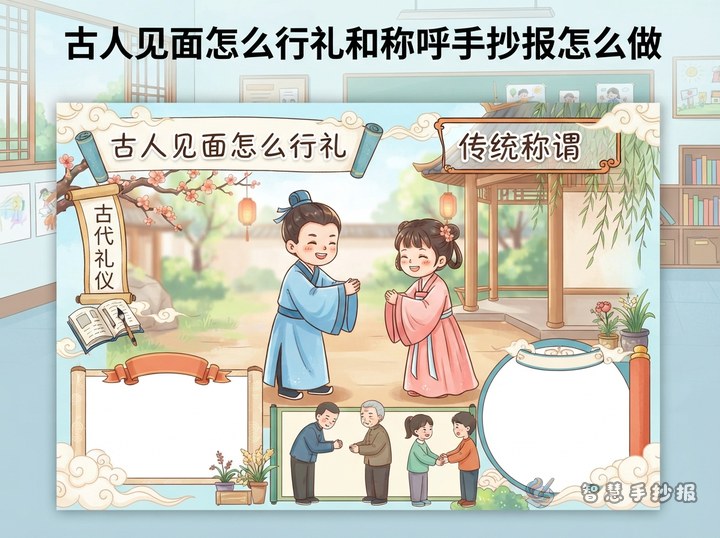
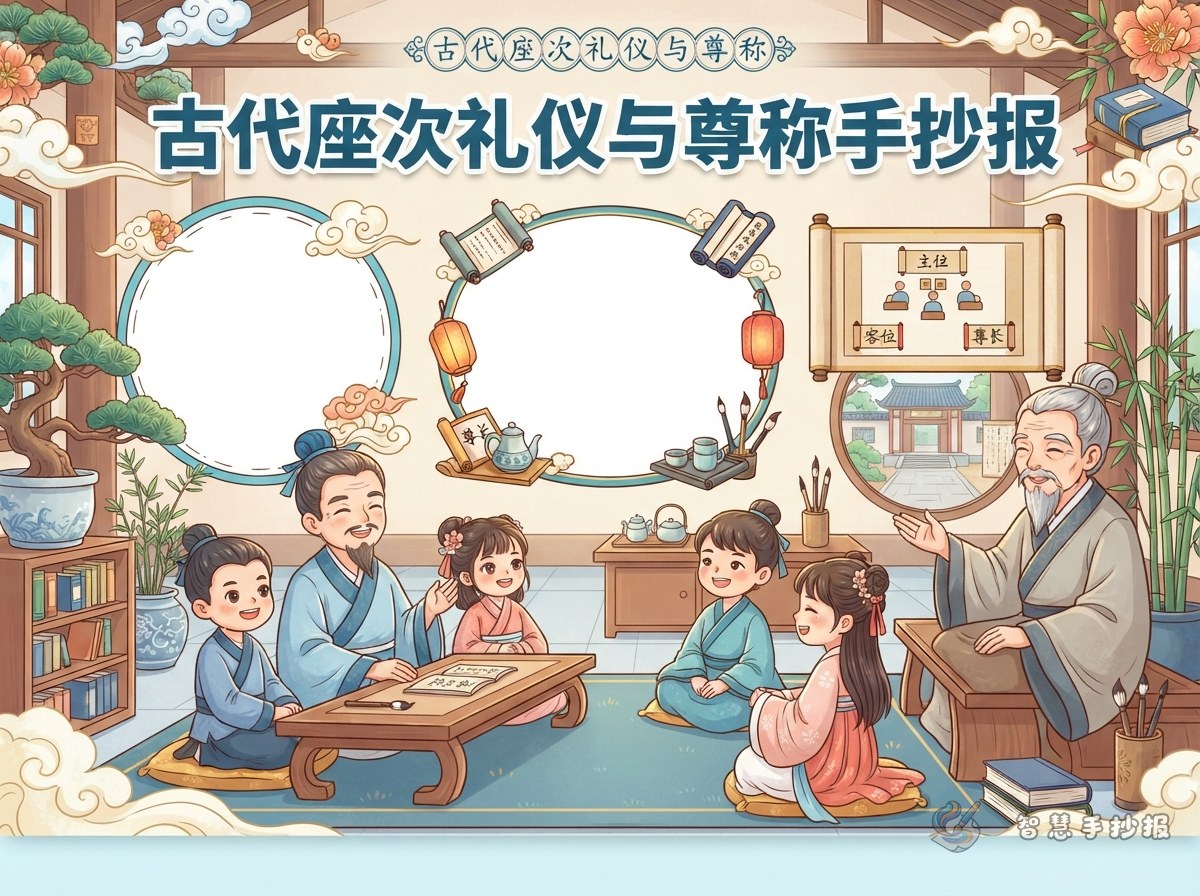
Divide the paper into three areas: a title at the top, a seating map in the middle, and a title dictionary with etiquette tips below.
- Visual center: Draw a room or a banquet table and use different colors for the seat of honor, host, and guest.
- Text columns: Put seating rules in one column and title groups in another; keep each column short.
- Mini quiz corner: Add two or three simple questions, such as “Which side should an elder take?”
Two main colors and one accent color are enough. Mark the seat of honor with the same color so the reader’s eye follows it naturally.
A Simple Step-by-Step Plan
- Lightly sketch the layout with a pencil, marking the title, seating map, and text boxes.
- Draw a square room or a round or long table, and label east, south, west, and north.
- Write short phrases such as “east for honor” beside the arrows instead of long paragraphs.
- Add the title dictionary and give each term a modern meaning.
- Go over the lines with colored pens, erase pencil marks, and check spelling and directions.
If you want to save time on drawing boxes, you can open the WeChat mini program “智慧手抄报,” choose an ancient etiquette template, and add your own seating map and title list.
Final Checks Before You Hand It In
- Does the title mention both “seating etiquette” and “traditional titles”?
- Are the directions on the seating map correct and easy to see?
- Are honorific and humble titles separated, with modern meanings included?
- Does the layout leave enough white space, or is the text too crowded?
A good handwritten newspaper does not need to fill every corner. The goal is to let readers understand at a glance where ancient people sat and how they were addressed.