Choose a Clear Focus: Respect Between Teachers and Students
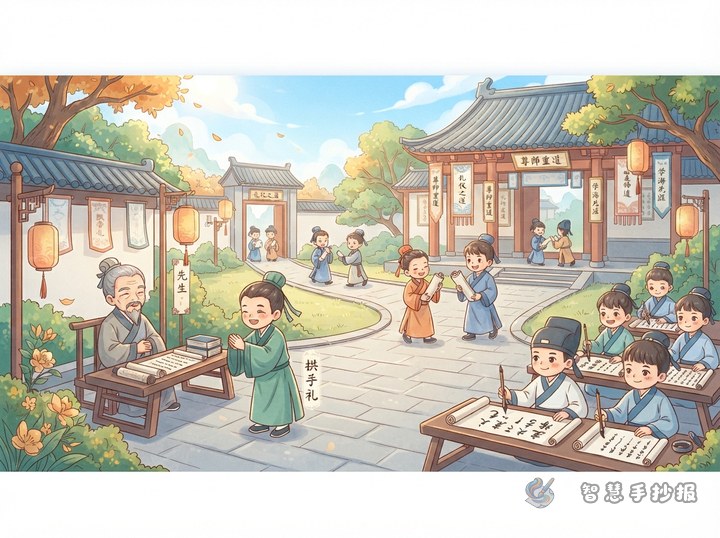
Ancient etiquette is a wide topic, so a handwritten newspaper will look better if it focuses on one clear idea. A theme about teacher-student etiquette and forms of address in ancient China is easy to understand and meaningful for school projects.
- Main idea: Ancient people valued respect for teachers, and polite forms of address showed respect for knowledge and character.
- Best for: Upper primary students can combine short explanations, stories, and simple illustrations.
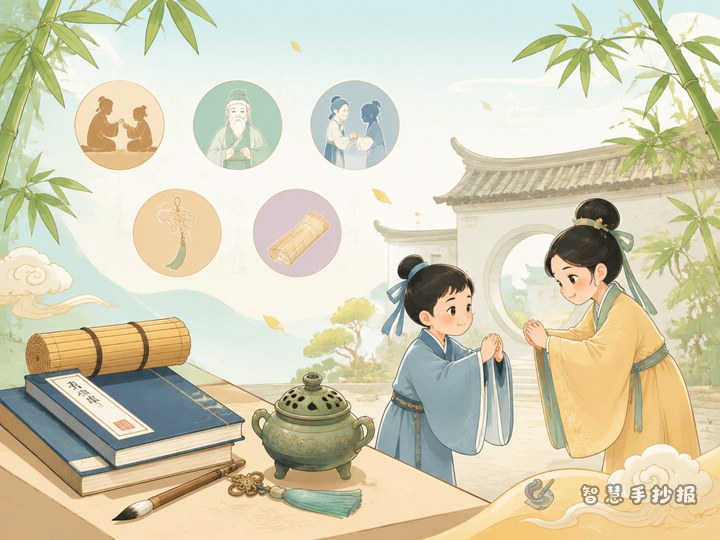
- Visual style: Scrolls, bamboo slips, brushes, ink stones, classrooms, and bowing gestures all fit the topic well.
Useful Forms of Address to Put on the Page
This section should be simple and accurate. Pick common words and explain each one in one sentence so the page does not look like a dictionary copy.
Words Used for Teachers
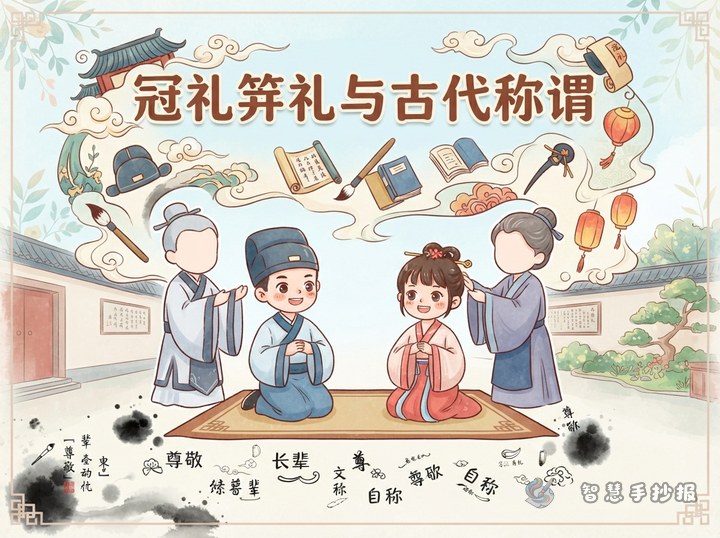
- Xiansheng: A respectful term for a learned or virtuous person, often used for a teacher.
- Fuzi: A respectful title for a teacher or scholar, such as Confucius being called Kong Fuzi.
- Shizhang: A term that can refer to teachers or elders who guide and educate us.
- Shifu: Often used for someone who teaches a skill or craft, showing respect for the person who passes on knowledge.
Words Related to Students
- Dizi: A student or disciple who learns from a teacher.
- Mensheng: A student who studies under a particular teacher.
- Xuezi: A learner or student, suitable for decorative title cards on the page.
Short Stories and Sentences for the Writing Area
A handwritten newspaper becomes more interesting when it includes a short story. Keep the story brief and focus on the lesson behind it.
- Standing in the snow at Cheng’s gate: This story shows sincere learning and deep respect for teachers.
- Confucius and his students: Their relationship reminds us that learning includes both knowledge and moral character.
- Respect for one’s teacher: Traditional sayings about teachers can be rewritten in simple words, such as “Remember the guidance you receive.”
Short lines you can copy:
- Respecting teachers means keeping gratitude and politeness in our hearts.
- Forms of address reveal manners and cultural understanding.
- Greet teachers politely and listen carefully in class.
- Learning etiquette helps traditional culture enter everyday school life.
Layout Idea: Make It Look Like an Ancient Study Hall
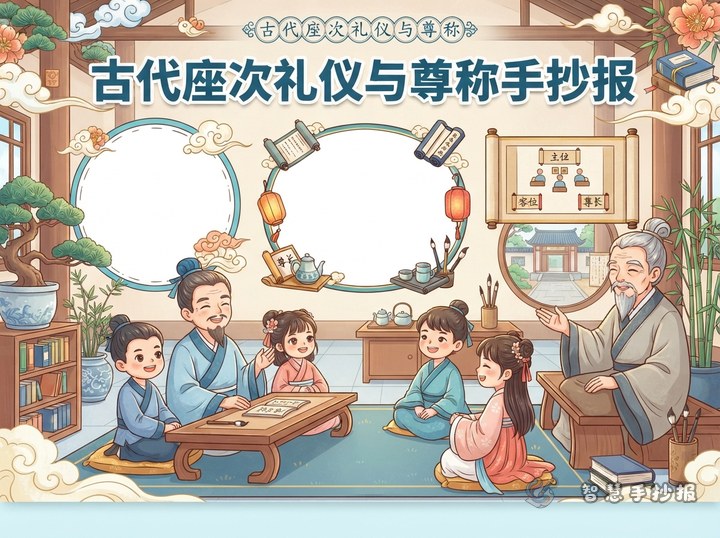
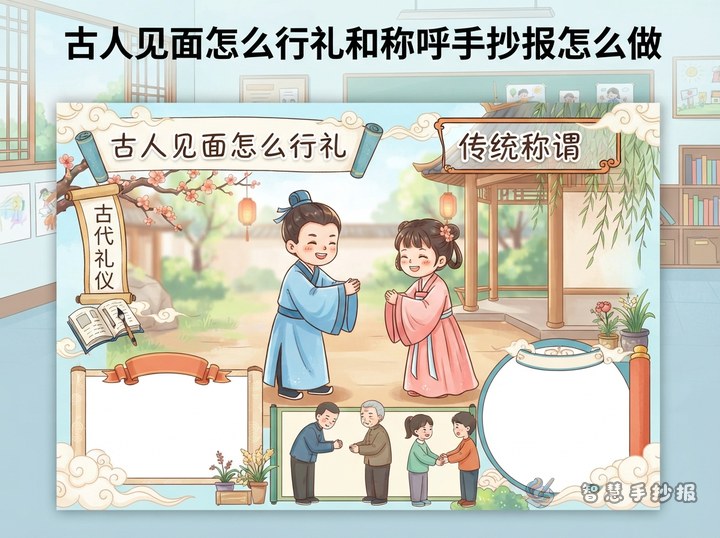
This theme works well with a clean classical design. Put the title in the center on an open scroll, and draw a small ancient classroom or study hall behind it. Then divide the page into several neat sections.
- Left side: Add a mini dictionary of teacher titles, such as Xiansheng, Fuzi, and Shizhang.
- Right side: Add student-related words with small icons like books, bamboo slips, or brushes.
- Bottom area: Include a short respect-for-teachers story and a modern classroom etiquette box.
- Border: Use bamboo leaves, clouds, scroll patterns, and soft colors such as beige, light brown, and green.
Connect Ancient Etiquette with Today’s School Life
End the page with a “Then and Now” section. For example, ancient students showed respect through formal greetings, while today we can greet teachers warmly. Ancient learners listened with attention, and today students can do the same in class.
If you want a clearer layout, first list your section titles on paper. Then open the Zhihui Shouchaobao WeChat mini program to find layout inspiration, arrange your text, borders, and illustrations, and complete a neat classical-style handwritten newspaper.