Start with the idea of “Meeting with Courtesy”
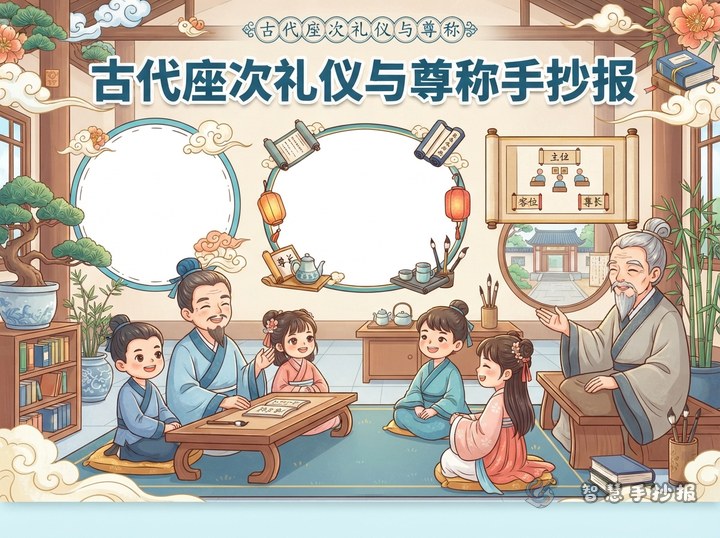
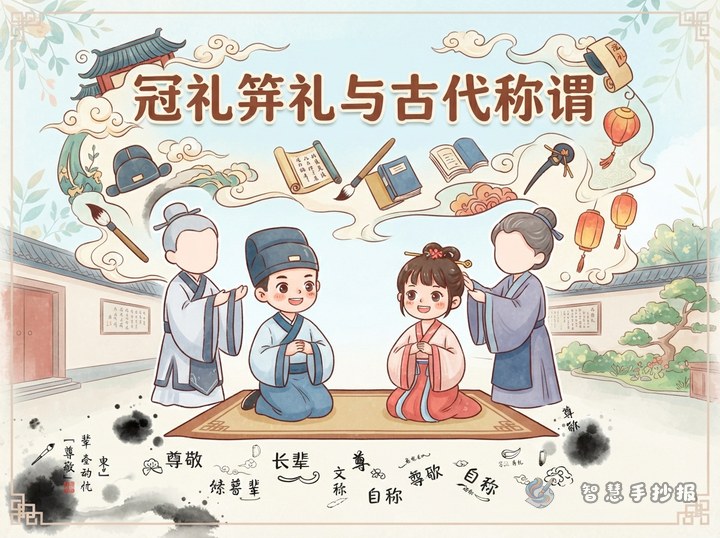
Ancient etiquette and traditional forms of address can feel broad, so a handwritten newspaper should focus on one clear scene: how people greeted each other and how they addressed one another in ancient times. This angle is easy to understand and also easy to draw.
You may use titles such as “Meeting with Courtesy,” “A Bow and a Respectful Name,” or “How Ancient People Greeted Others.” A simple subtitle can show that the page is about ancient etiquette and traditional forms of address.
Short text materials for the page
Hand salute and bow
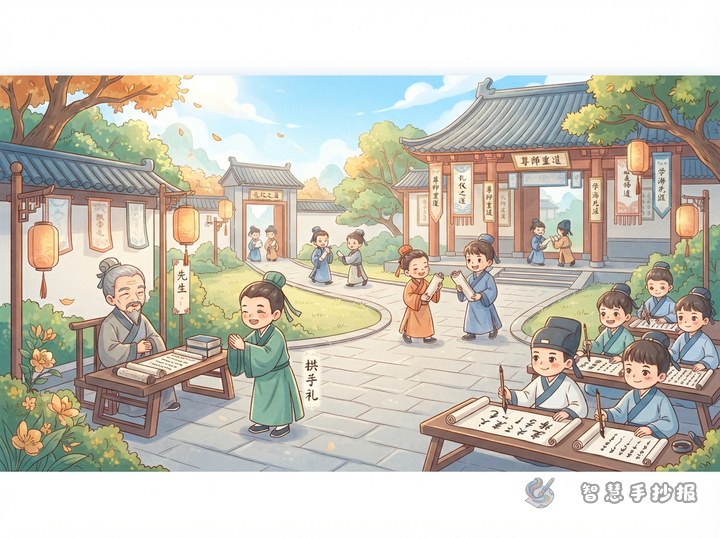
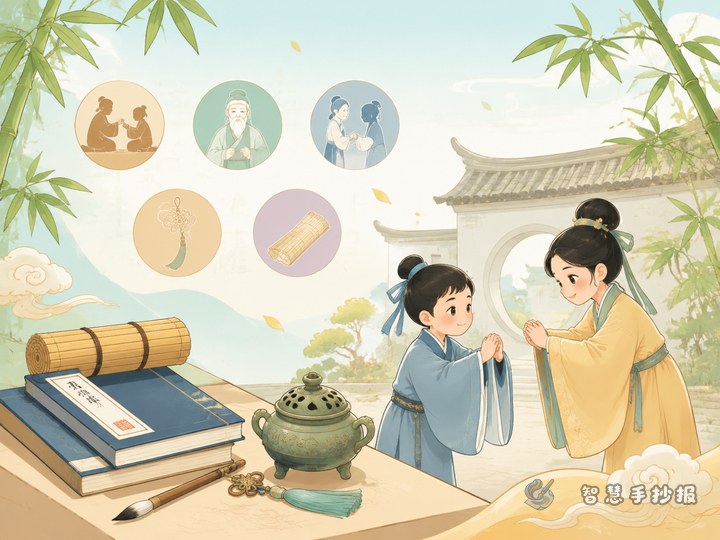
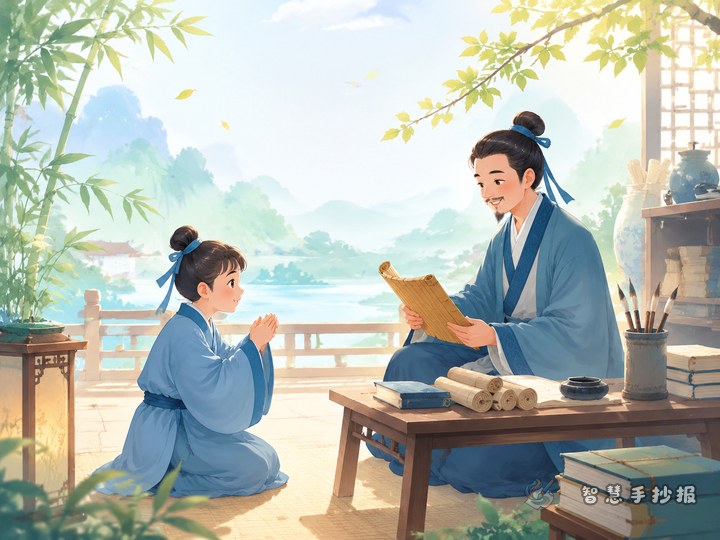
The hand salute was a common greeting in ancient China. People placed their hands together in front of the chest to show respect, thanks, or friendly greetings. A bow was more formal and was often used when meeting elders, teachers, or guests.
Respectful and modest address
Ancient people paid attention to polite speech. They used respectful terms for others, such as “sir,” “teacher,” or “honored guest.” When talking about themselves, they often used modest terms to show humility. This helps students understand that language can express respect.
Different names for different relationships
Forms of address changed according to age, identity, and relationship. A teacher could be called “sir” or “master,” while an elder might be addressed as uncle or aunt. These names were not just labels; they showed manners and social relationships.
Turn the layout into a small greeting scene
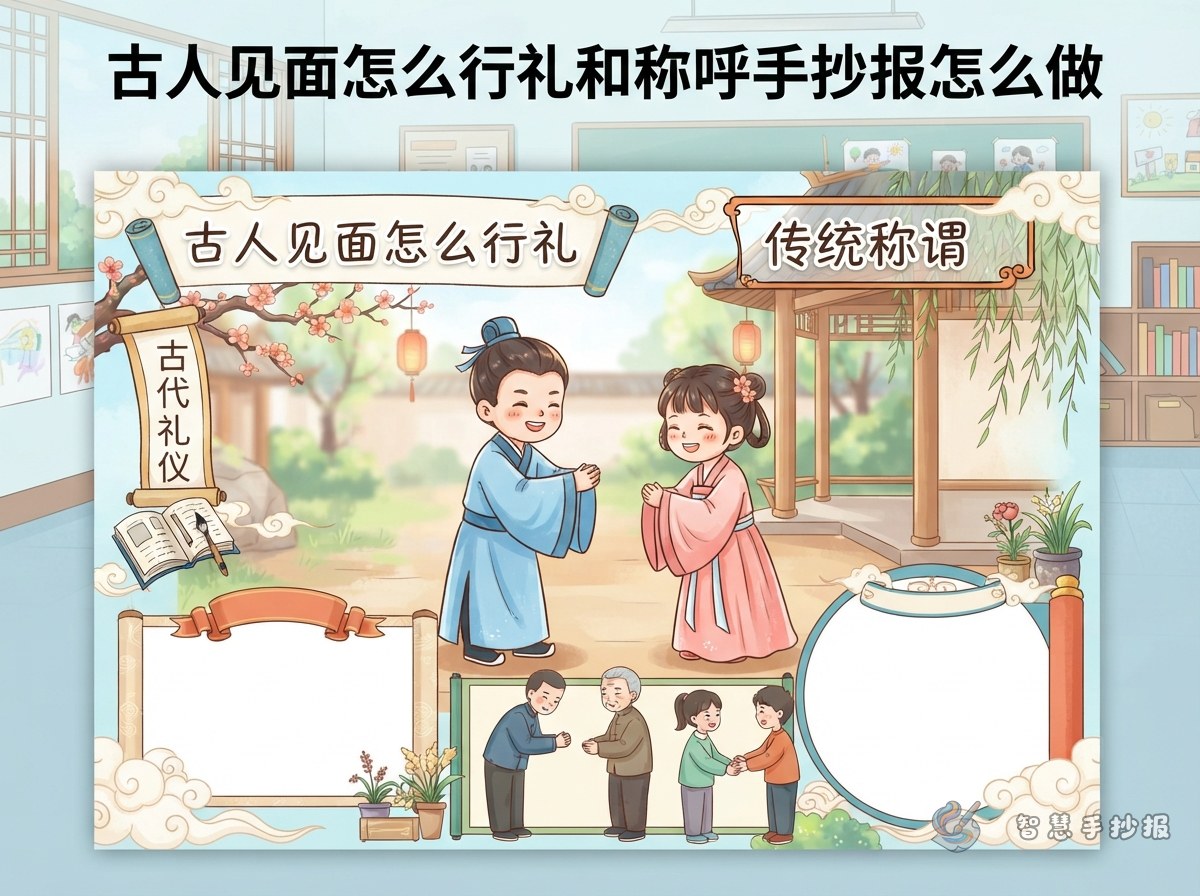
- Etiquette actions: Draw two people in ancient clothing greeting each other, and label the actions such as hand salute, bow, and greeting.
- Address comparison: Use a small table or scroll to compare respectful words for others and modest words for oneself.
- Dialogue bubbles: Add short lines such as “Greetings, teacher” or “I pay my respects” to make the page lively.
- Modern lesson: Write a short note about respect, humility, and polite behavior in daily life.
Visual ideas: scrolls, screens, and gentle colors
A good layout is to place the greeting scene in the center and put knowledge cards around it. One side can explain greeting gestures, the other side can list traditional forms of address, and the bottom can show what these customs teach us today.
Useful decorations include scrolls, bamboo slips, clouds, window patterns, folding screens, and seal-shaped frames. Soft beige, light brown, red, and green can create a fresh ancient-style look suitable for primary school handwritten newspapers.
Avoid making the page too difficult
- Do not list too many rare words: Choose common terms and explain each one in a simple sentence.
- Do not make it look like a textbook page: Use actions, dialogue, and small illustrations to make the topic vivid.
- Keep the main message clear: Focus on respect, humility, and good manners.
If you want to organize the layout more quickly, you can use the Zhihui Handwritten Newspaper WeChat mini program to continue designing columns and page ideas around ancient etiquette, traditional address, and ancient-style characters.