Set one main idea before you write any title
Many students get stuck on the title because they plan the drawings first and the message last. A smoother order is to decide in one sentence what the poster should remind people to do, then pick words from that sentence for the title. If the idea is eat a varied lunch and you will focus better in the afternoon, the title can become Varied Lunch, Brighter Afternoon.
That sentence also shapes the columns, because each column answers part of it: what counts as varied, how much is just right, and how to keep up energy. The more specific the title, the easier the columns are to write.
- Keep only one focus: not nutrition, saving food and queueing all at once.
- Include an action word: eat, choose, mix, drink, taste.
- Read the title aloud to a classmate. If they understand it, it works.
Three title patterns you can copy and adjust
If you do not want to invent a title on the spot, start with one of these patterns and change a few words.
- Action plus benefit: A Well-Balanced Lunch Keeps Me Awake in Class; One More Bite of Vegetables, One More Spark of Energy.
- Question style: Is Your Lunch Balanced Today?; What Does a Good Lunch Look Like?
- Slogan style: Eat Well, Grow Strong; No Shortcuts at Lunchtime.
You can split a longer title into two lines: the key words in large letters on the first line, a short explanation in smaller letters below. That keeps a slightly longer title from crowding the page.
Column headings and short text you can use directly
The biggest risk with column headings is uneven length. Keep them all to the same short format so they read like a chant.
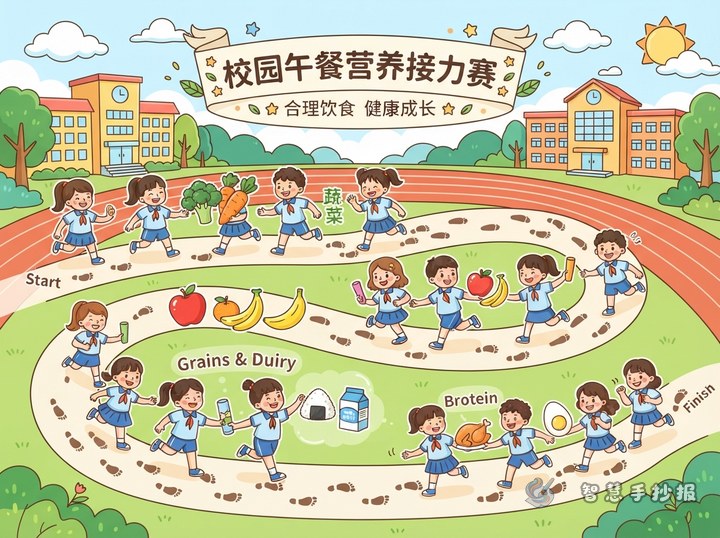
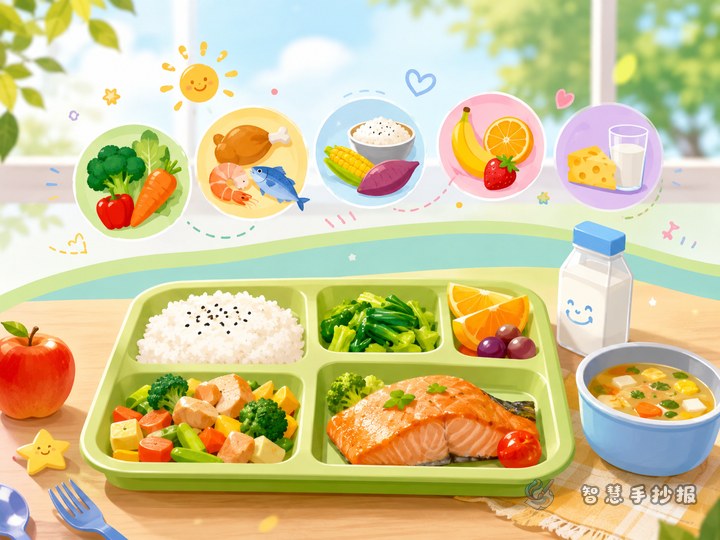
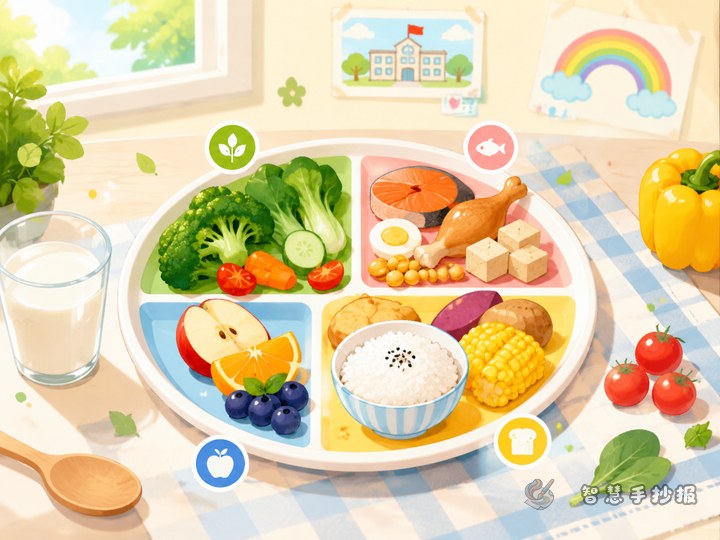
- Staple Power: rice, noodles, steamed buns, corn and sweet potato give the body energy and form the base of lunch.
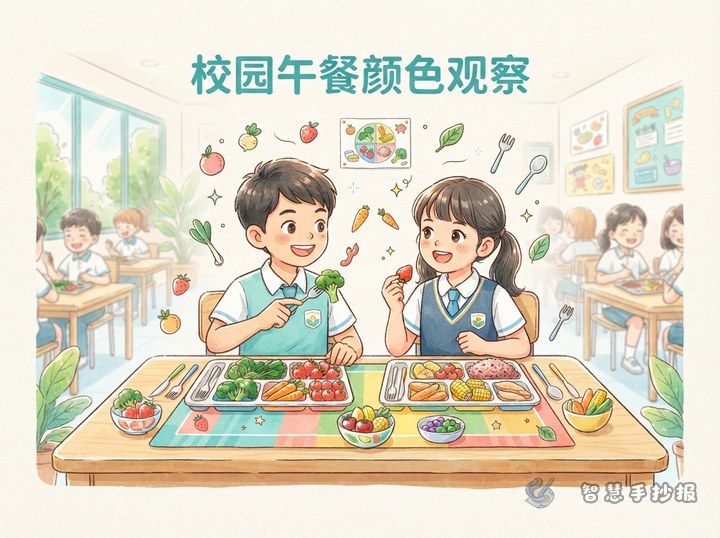
- Vegetable Team: leafy greens, carrots, tomatoes and mushrooms. More colors are better, so do not pick just one.
- Protein in Moderation: fish, shrimp, lean meat, eggs and tofu help us grow, but they do not need to pile up.
- Fruit Break: apples, oranges and bananas fit nicely between meals and feel lighter than snacks.
- Drink Enough Water: plain water is the best choice, and sweet drinks are for occasional treats.
- Finish Your Plate: take only what you can eat. Leaving food behind is not a skill; finishing it is.
Two or three short sentences under each column are plenty. Short lines make the poster feel open and easy to read.
Layout: give the title room to breathe
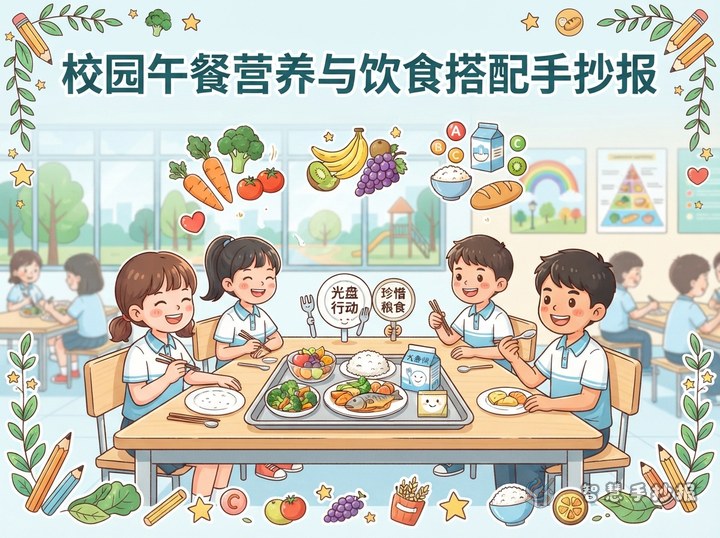
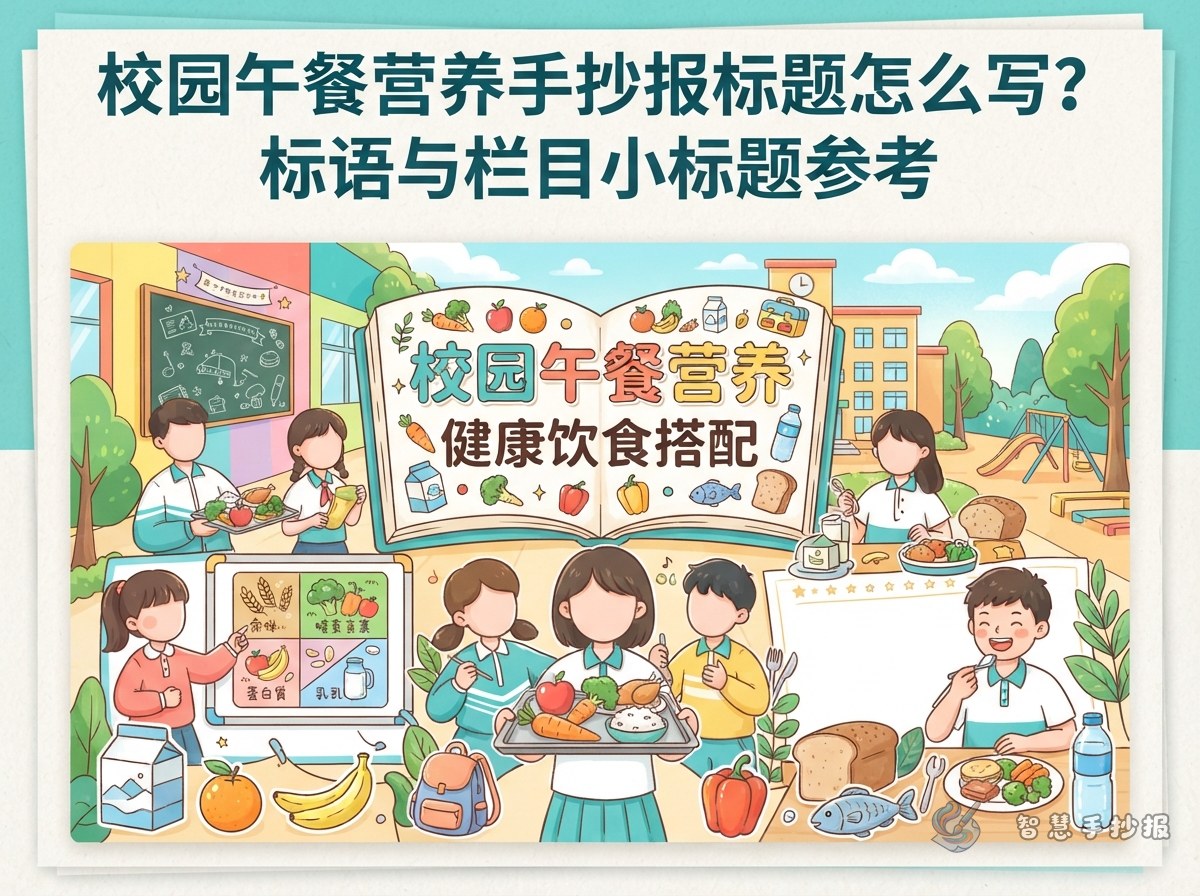
Divide the paper into a title area, column areas and illustration areas before you start writing. A common approach is to give the title the top third, arrange columns in two or three blocks, and place drawings in the gaps between them.
- Leave about a finger's width of blank space around the title instead of writing to the edge.
- Separate main columns with borders, color blocks or curved lines rather than a row of identical boxes.
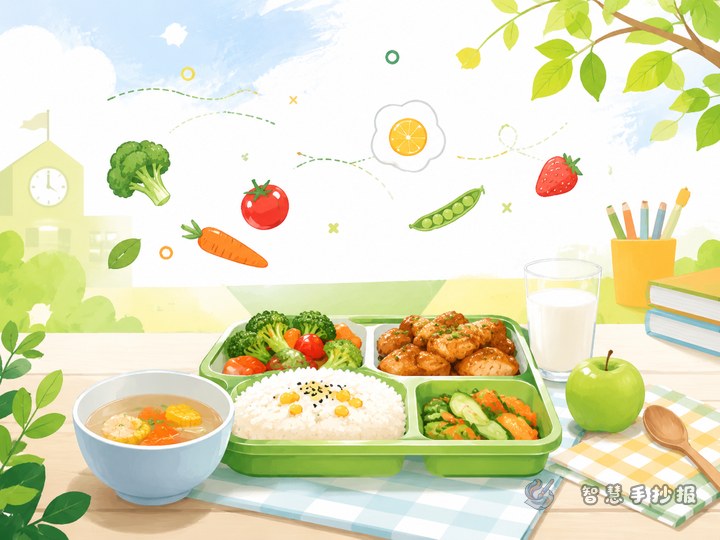
- Choose illustrations that match the theme: lunch box, tray, vegetables, fruit, water cup, soup bowl.
- Blank space between text blocks looks better than a page packed to the corners.
Color, lettering and two easy-to-miss details
A nutrition theme suits fresh colors. Green, orange, pale yellow and light blue work well together. Use one darker shade to emphasize the main title and keep the rest soft, with three or four colors in total for a more unified look.
For lettering, the main title can use decorative letters, column headings should share one consistent style, and the body text just needs neat handwriting. Two details are often forgotten: keep all column headings at the same height so the page looks aligned, and leave a small corner for your name or class before you run out of space.
Turn your draft into a finished poster
Sketch the title, the order of columns and the illustration spots on scrap paper first, check that nothing overlaps, then copy it onto the final sheet. If you want an easier layout, open the WeChat mini program Smart Handwritten Newspaper, choose a template related to school lunch and nutrition, drop in the slogans, column headings and short texts from this guide, adjust the sections and print it to trace. It is usually faster than erasing and rewriting your way to a clean poster.