Build the Poster Around a Color Hunt
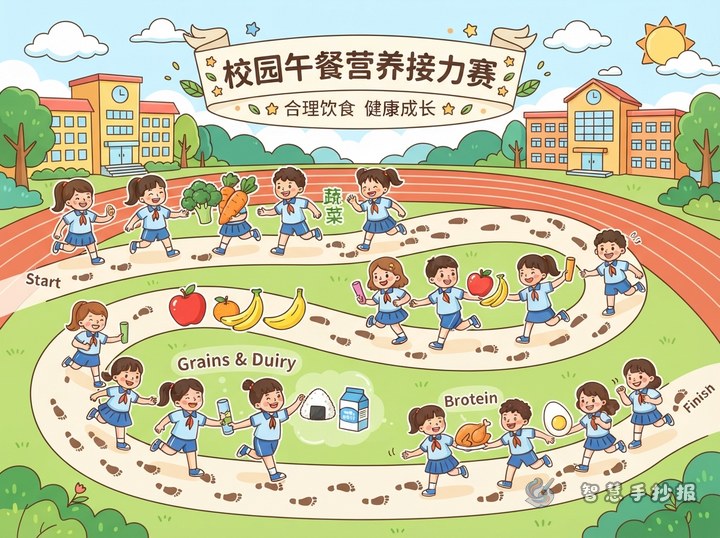
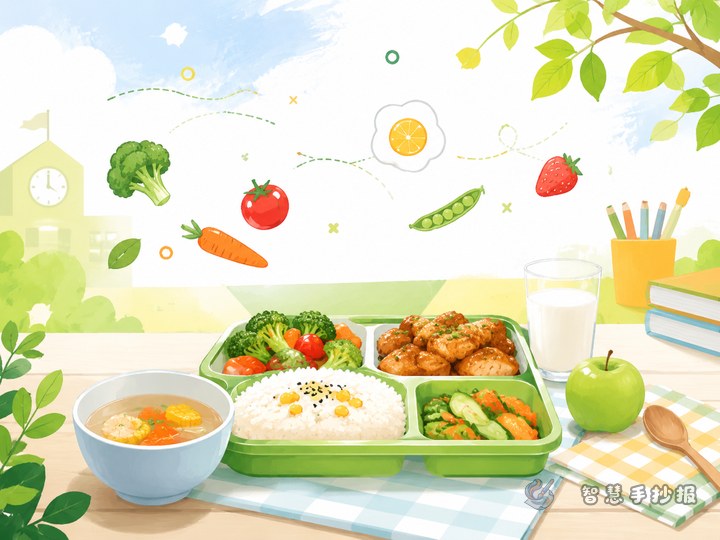
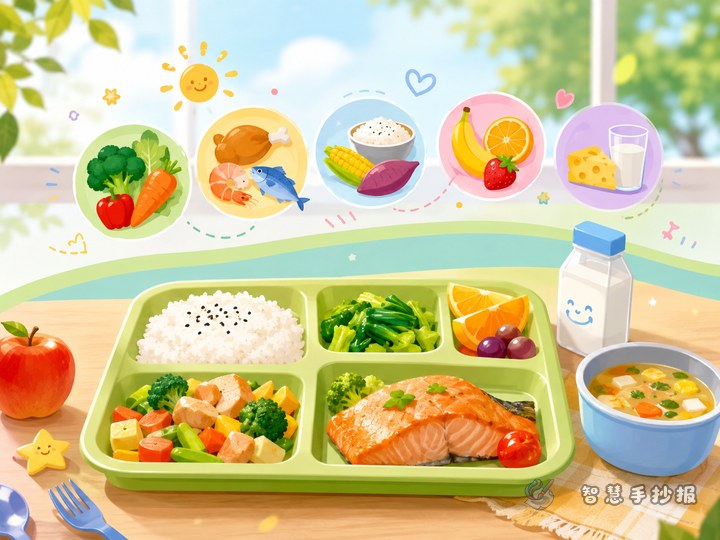
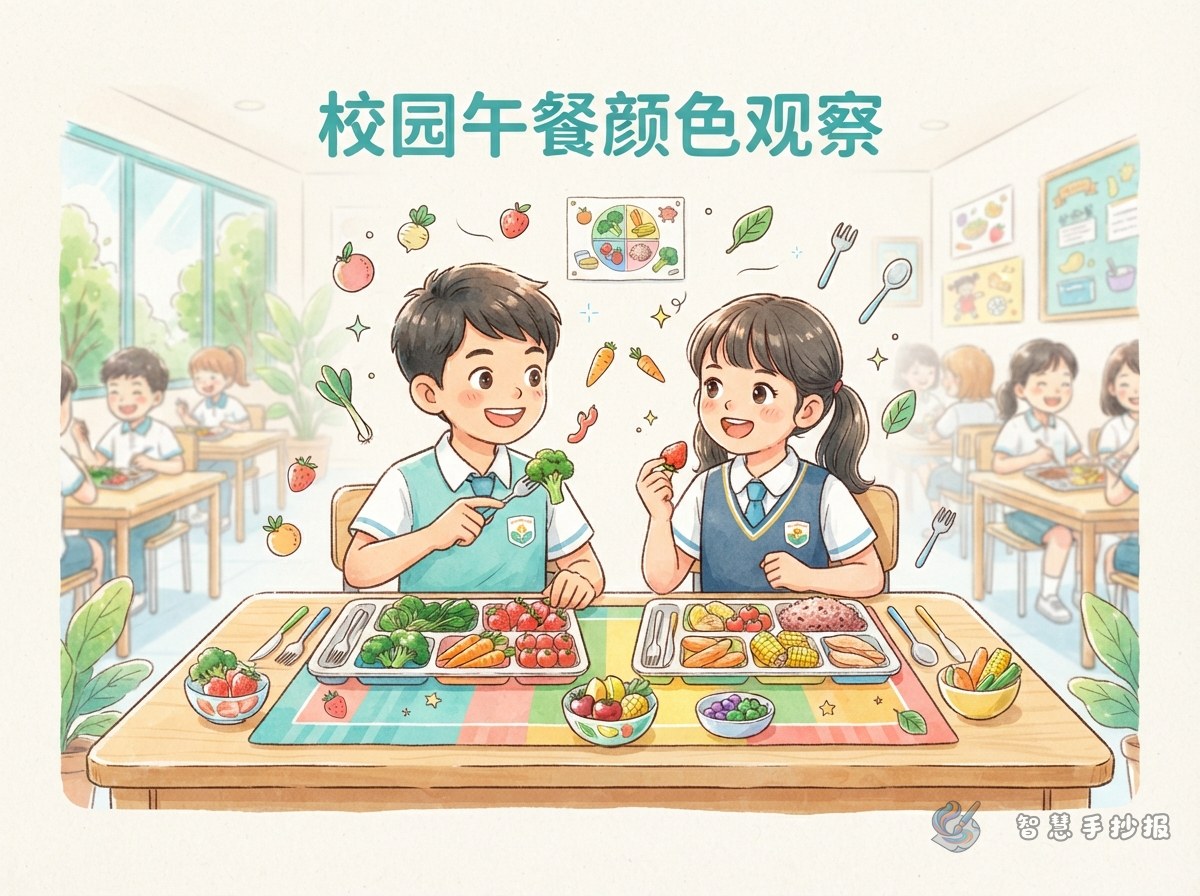
Use the question “How many colors can I find in today’s school lunch?” as the main idea. Observe the staple food, vegetables, protein foods, and fruit, then record them with small colored blocks. A colorful meal can encourage students to notice variety, but color alone does not determine nutritional value. A balanced lunch still depends on including suitable food groups in sensible portions.
Turn Lunch Observations into Four Sections
Lunch Color Log
Draw dots in red, orange, yellow, green, purple, and white. Next to each dot, add a real food from the day’s lunch, such as tomato, carrot, corn, leafy greens, purple cabbage, or tofu. There is no need to invent foods just to complete every color.
Balanced Meal Checklist
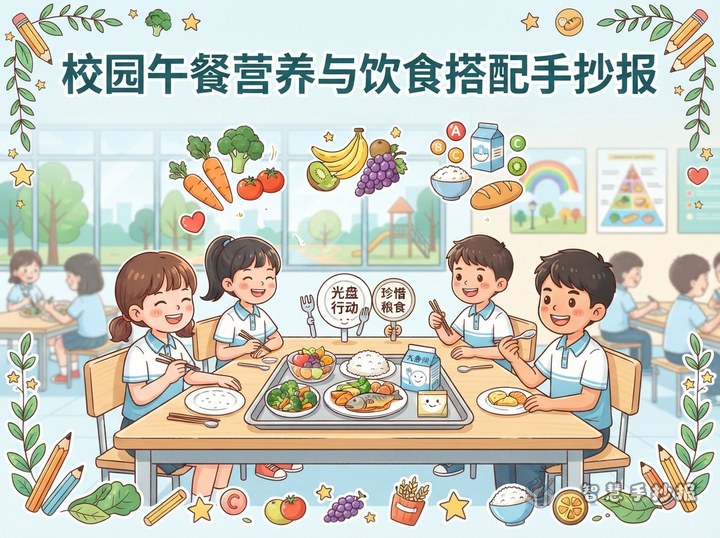
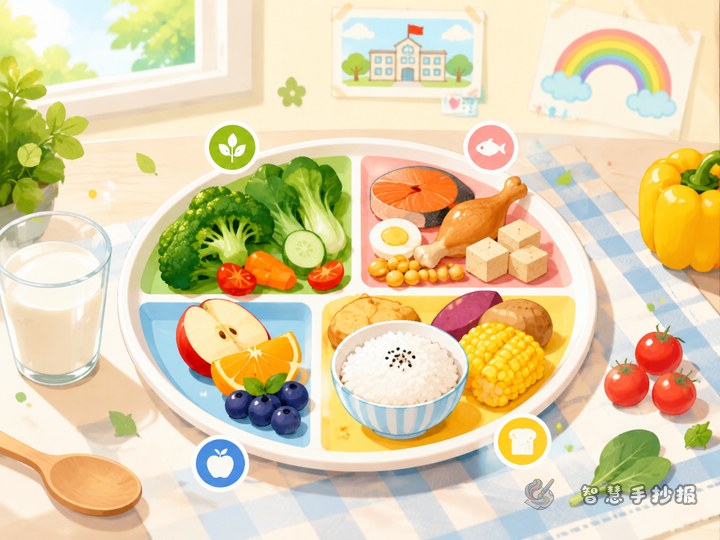
- Staple food: Rice, noodles, bread, or grains provide energy for learning and activity.
- Vegetables: Include different kinds and notice their range of colors.
- Protein foods: Choose appropriate portions of meat, eggs, dairy, beans, or soy products.
- Water and fruit: Follow school arrangements and individual needs.
What I Noticed Today
Add one honest observation, such as “Lunch included two vegetables,” “I tasted an unfamiliar dish,” or “I took only what I could finish.” Short, personal notes work better than long paragraphs on a primary school poster.
Ready-to-Use Writing Material
Topic introduction: A school lunch should do more than fill us up. It should also include a reasonable variety of foods. Looking for different food colors makes lunch observation visual and enjoyable.
Nutrition reminder: A color does not represent one fixed health benefit. The poster should connect colorful variety with a balanced combination of staples, vegetables, and protein foods.
Action message: Read the menu, take an appropriate portion, try different foods, and value every school lunch.
Arrange the Page Like a Rainbow Trail
- Place a bold title about the school lunch color hunt at the top.
- Draw a curved color trail from the upper left to connect the log, checklist, and observation sections.
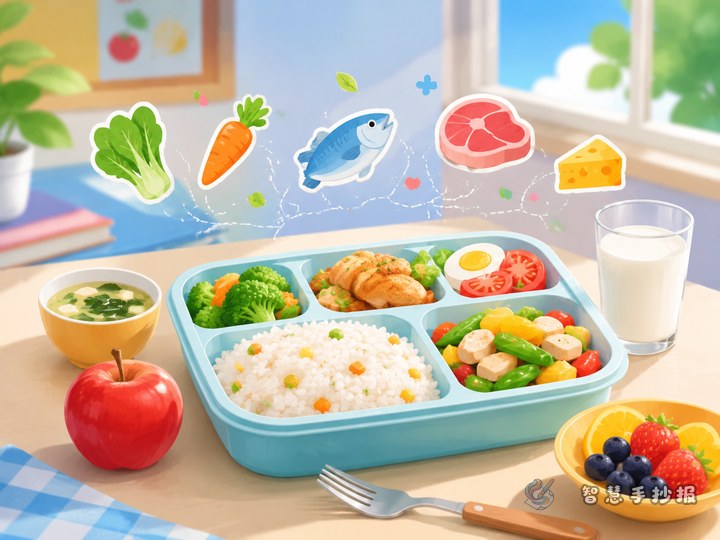
- Use a lunch box or cafeteria serving window as the central illustration without overcrowding it with food drawings.
- Put the nutrition reminder and action message at the bottom in separate bordered areas.
Light green, warm orange, and cream can form the main palette, with small touches of purple or red. Leave enough open space around the text and create a clear size difference between the title, illustrations, and body copy.
Check the Message Before Finishing
List the real menu before drawing and select three or four key sections. After finishing, check that the poster communicates food variety, balanced choices, and appropriate portions. Avoid suggesting that more of one food is always better. Students and parents can continue refining the title, sections, and layout in the Smart Handwritten Poster WeChat Mini Program.