Turn an Academy into a Learning Route
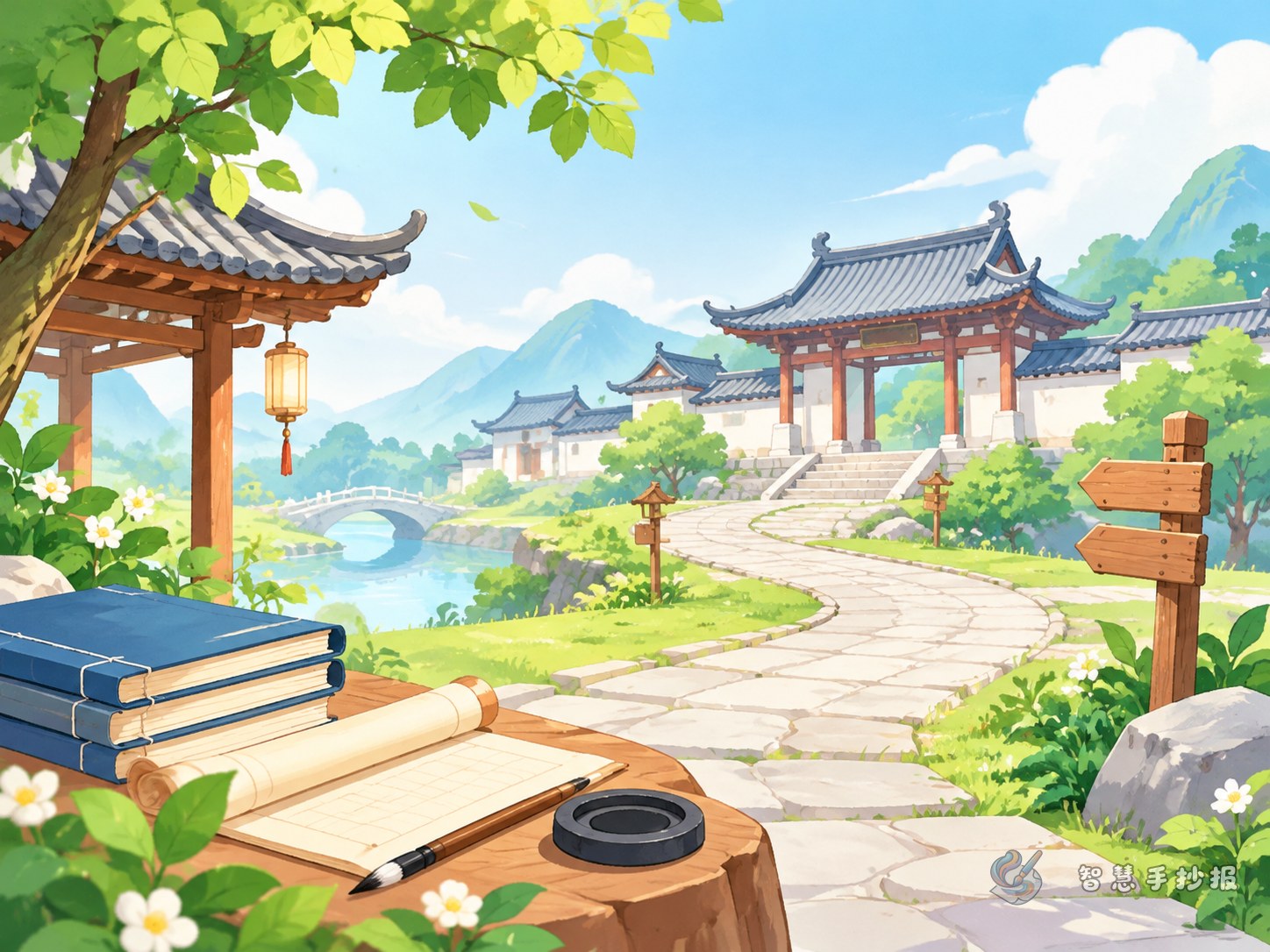
Try a fresh approach for this handwritten newspaper: instead of introducing one famous academy, draw the route a student might follow through an ancient academy. Use the entrance gate, lecture hall, library, study room, and courtyard as five stops. Place the title “A Journey Through an Ancient Academy” on a signboard so the page feels like a cultural map.
Draw a winding path through the center and add a small section at each stop. At the gate, write “Prepare the mind”; at the lecture hall, “Listen and think”; at the library, “Read with care”; at the study room, “Build good habits”; and in the courtyard, “Learn through discussion.” This layout shows that learning includes reading, thinking, questions, and cooperation.
Five Stops and Their Writing Ideas
The Entrance Gate: Why Do We Read?
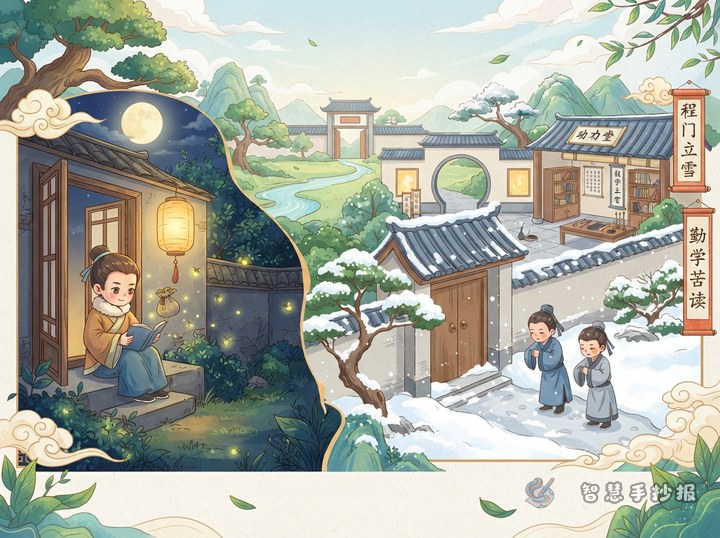
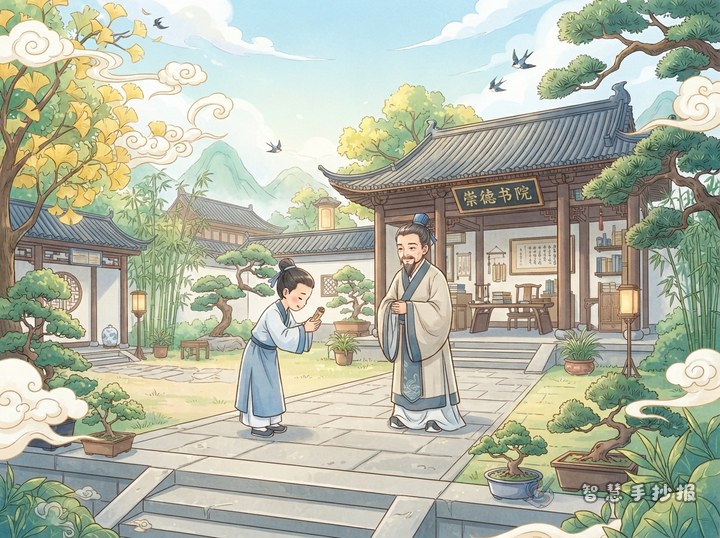
Write that ancient students did not study only to memorize texts or prepare for examinations. They also hoped to understand principles and develop good character. A short line could say: “Reading broadens our view and reminds us to become disciplined and responsible.”
The Lecture Hall: Learning Through Conversation
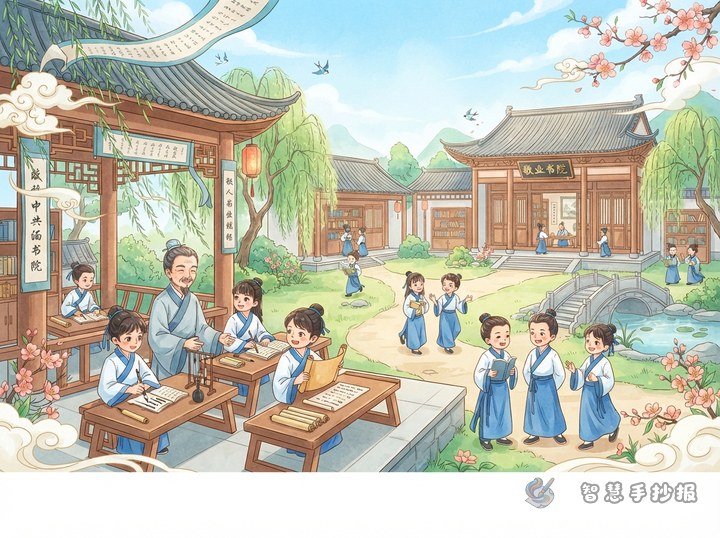
The lecture hall was a place for teaching and discussion. Teachers explained classic texts, while students listened, asked questions, and shared ideas. A useful mini-title is “Hear one lesson, ask one question,” which highlights active learning.
The Library: Make Reading a Habit
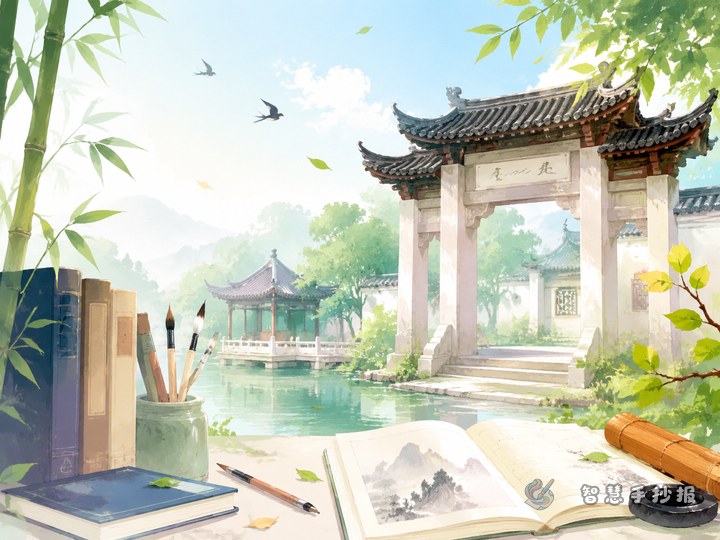
Use shelves, scrolls, and a simple reading record as the main library illustration. Add this sentence: “After finishing a book, pause and think about what it has taught you.” It connects ancient reading habits with modern reading practice.
The Study Room: Improve Little by Little
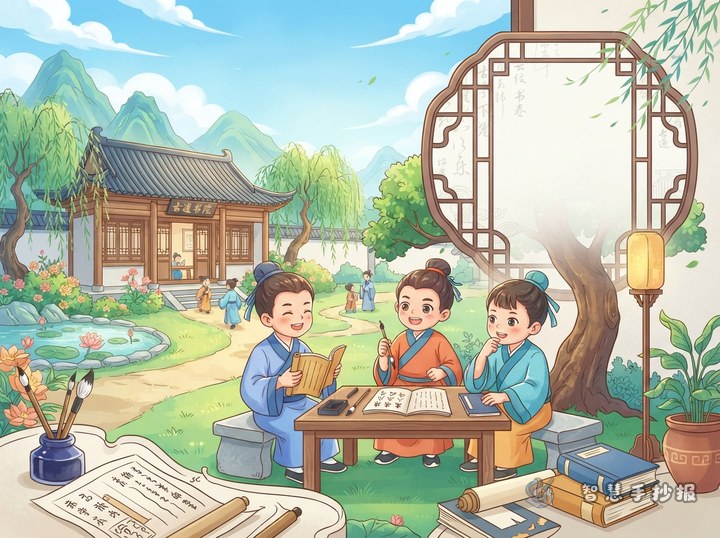
The study room represents quiet and consistent effort. You can add a three-step reading method for children: read once for the main idea, mark unfamiliar parts, and retell the lesson in your own words. Keep the section short and practical.
The Courtyard: Learn with Classmates
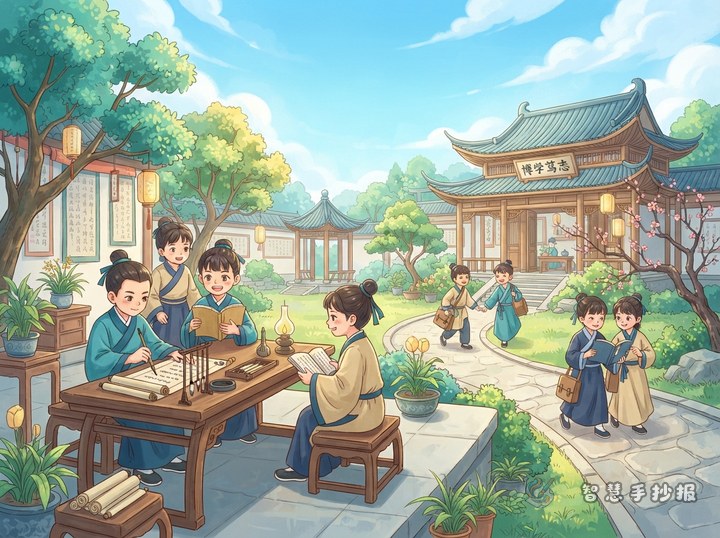
An academy was not only a place for solitary reading. Students also exchanged ideas with one another. Create a small box called “My Learning Partners” and mention asking questions, sharing reading notes, and checking mistakes together.
Design the Page Like an Illustrated Map
Use a horizontal or vertical route layout. Put the title in a plaque at the top and distribute the five stops on both sides of the path. Choose a limited palette such as cream, light brown, dark green, and red. Window patterns, bamboo leaves, scrolls, and inkstones can decorate the border without making it too busy.
- Main drawing: Use simple lines for roof eaves, steps, bookshelves, and children reading.
- Text cards: Keep each stop to three or five sentences so the page stays easy to read.
- Key words: Present “read, think, ask, and practice” as four seal-like markers along the route.
- Empty space: Leave room at each turn for a small drawing or a personal learning note.
Bring Ancient Learning into Today
End the handwritten newspaper with a section called “The Academy Spirit Today.” Turn the old learning values into simple actions: read for ten minutes each day, ask when something is unclear, discuss different ideas with classmates, and check homework carefully. A closing line could be: “The academy path is ancient, but reading carefully, thinking independently, and helping one another still matter today.”
After preparing the text and sketch, open the WeChat mini program “Zhihui Handwritten Newspaper” to continue arranging the page and combining the sections.