Turn the topic into the journey of one leaf
This hand-copied poster can follow a single leaf and show how sunlight, water, carbon dioxide, oxygen, and plant food are connected. A good main title is How a Leaf Turns Sunlight into Life Energy, which sounds scientific but is still easy for children to understand.
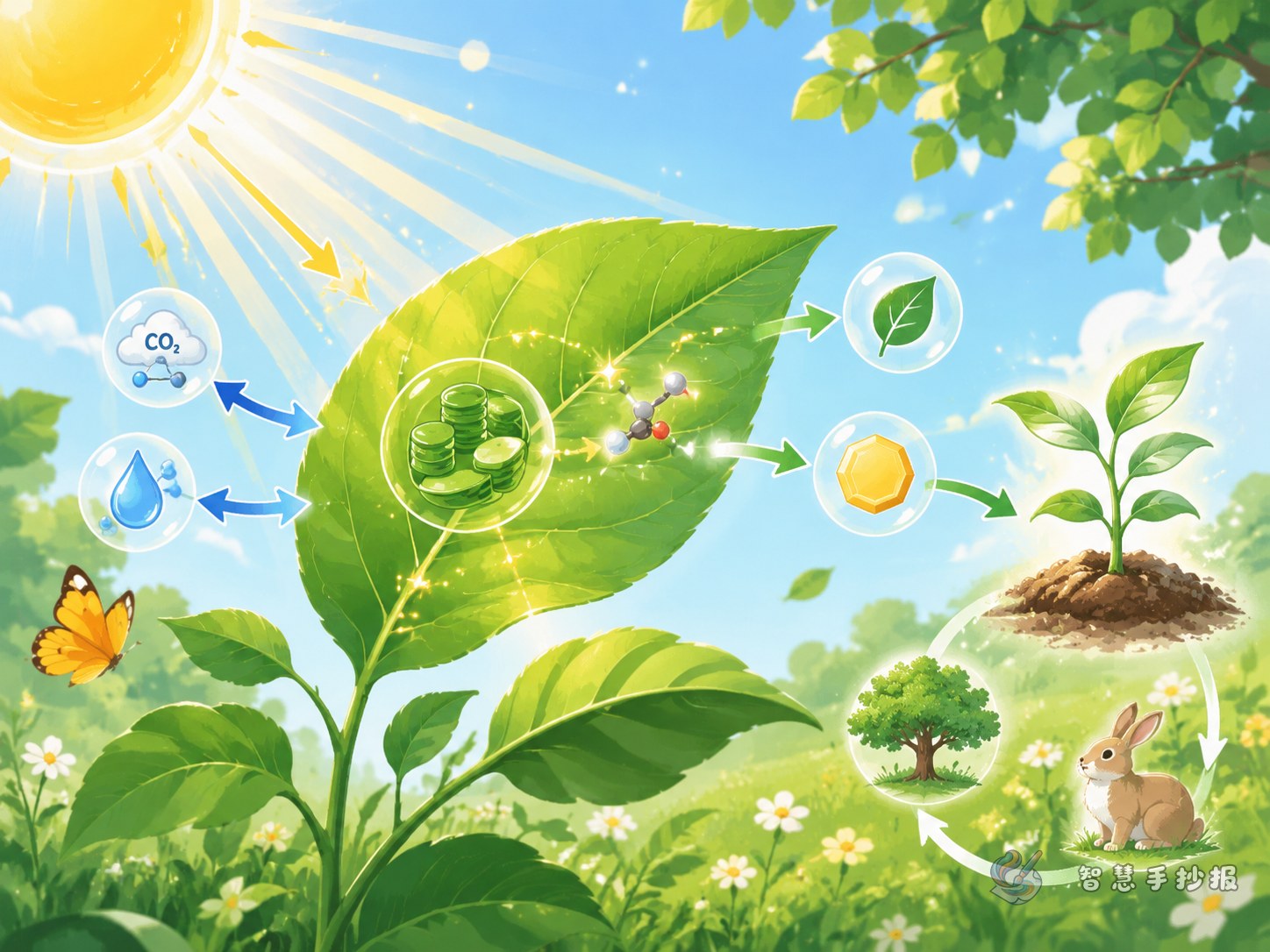
For the opening note, write a short sentence: A plant may look quiet under the sun, but the chloroplasts inside its leaves are busy. They use sunlight, water, and carbon dioxide to make food for the plant and release oxygen into the air.
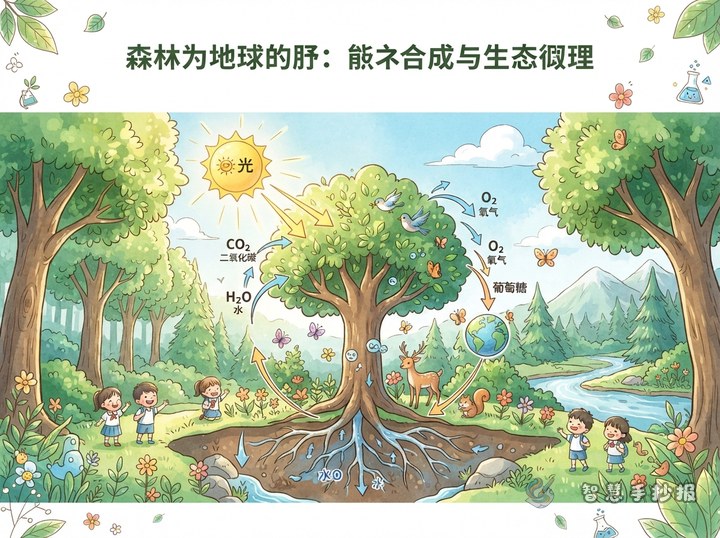
Draw the main picture with arrows and a cycle
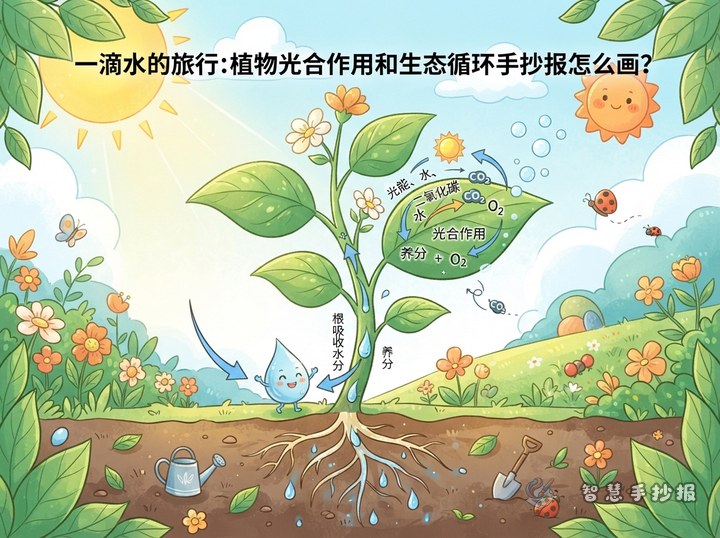
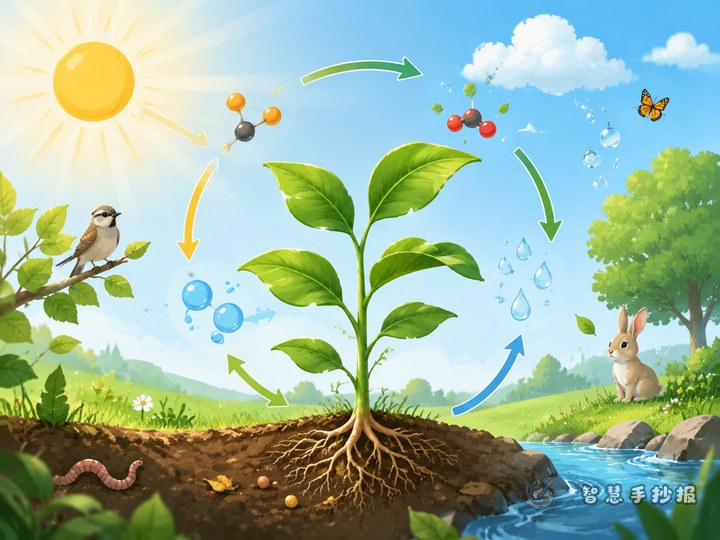
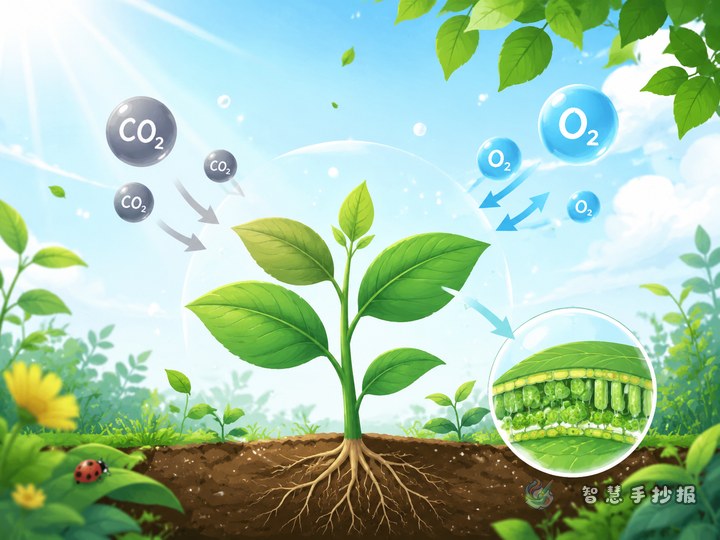
Place a large green leaf in the center of the page. Draw the sun above it, carbon dioxide entering from one side, water moving up from the roots, and oxygen leaving from the other side. Around it, add a circular arrow linking grass, insects, birds, fallen leaves, soil organisms, and nutrients.
- Sunlight arrow: Point it from the sun to the leaf and label it as the energy source.
- Water arrow: Show water moving from the soil and roots to the leaf.
- Air arrows: Carbon dioxide enters the leaf, while oxygen is released.
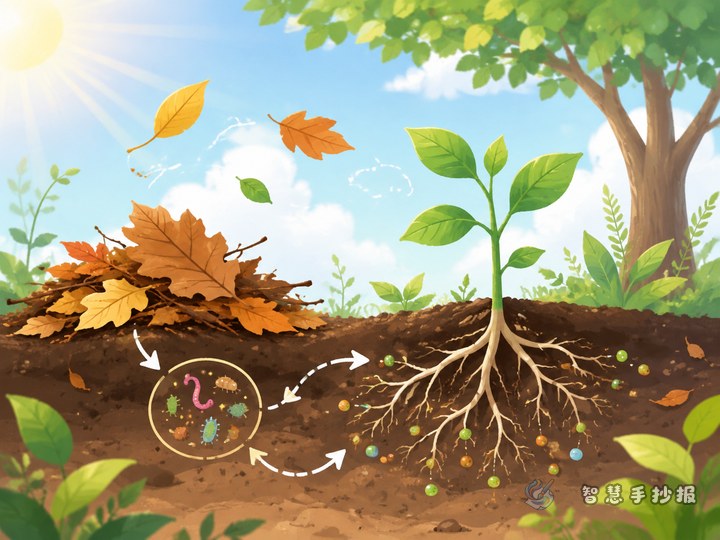
- Cycle arrow: Fallen leaves return to the soil and become nutrients for new plant growth.
Short writing materials for the poster
Photosynthesis fact
Photosynthesis is the process in which green plants use sunlight to turn water and carbon dioxide into food inside chloroplasts. During this process, oxygen is released into the air.
Ecological cycle fact
Materials in nature keep cycling. Plants make food, animals get energy, and fallen leaves or dead organisms are broken down and returned to the soil. These nutrients help plants grow again.
Plant protection tip
Planting a tree, protecting grass, and saving water all help protect the small natural factories of photosynthesis. Healthy plants make our school and home environment fresher and greener.
Make the sections feel like a story
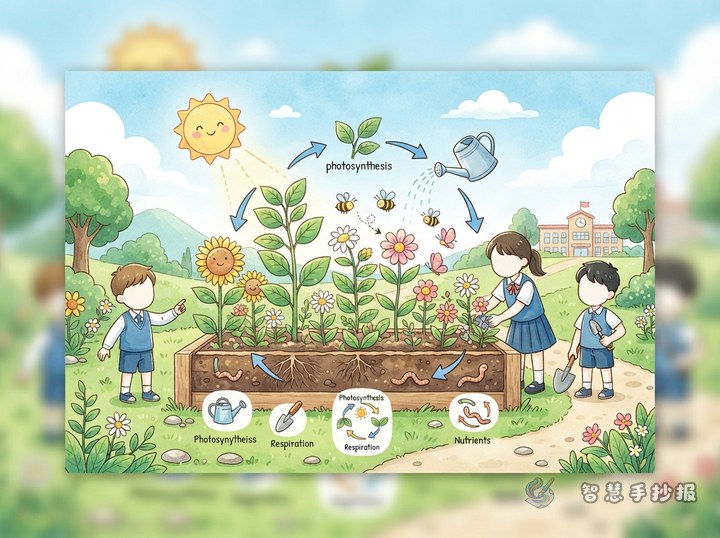
Instead of only writing definitions, you can design the poster as “A Day in the Life of a Leaf.” In the morning, the leaf meets sunlight. At noon, photosynthesis is busy. In the evening, the plant continues to breathe. In autumn, fallen leaves return to the soil.
- Section one: Sunlight reaches the leaf and introduces what photosynthesis needs.
- Section two: Chloroplasts start working and produce food and oxygen.
- Section three: Energy moves to animals through a simple food chain.
- Section four: Fallen leaves become nutrients with the help of decomposers.
Color and layout ideas
Use green, light blue, yellow, and brown as the main colors. Green stands for plants, blue for air and water, yellow for sunlight, and brown for soil. You can decorate the border with vines, leaves, water drops, and small suns.
If you want more layout ideas, open the 智慧手抄报 WeChat mini program and search for topics such as plant photosynthesis or ecological cycle. Then add your own drawings and classroom requirements to finish the poster.