Begin with a “blood journey map”
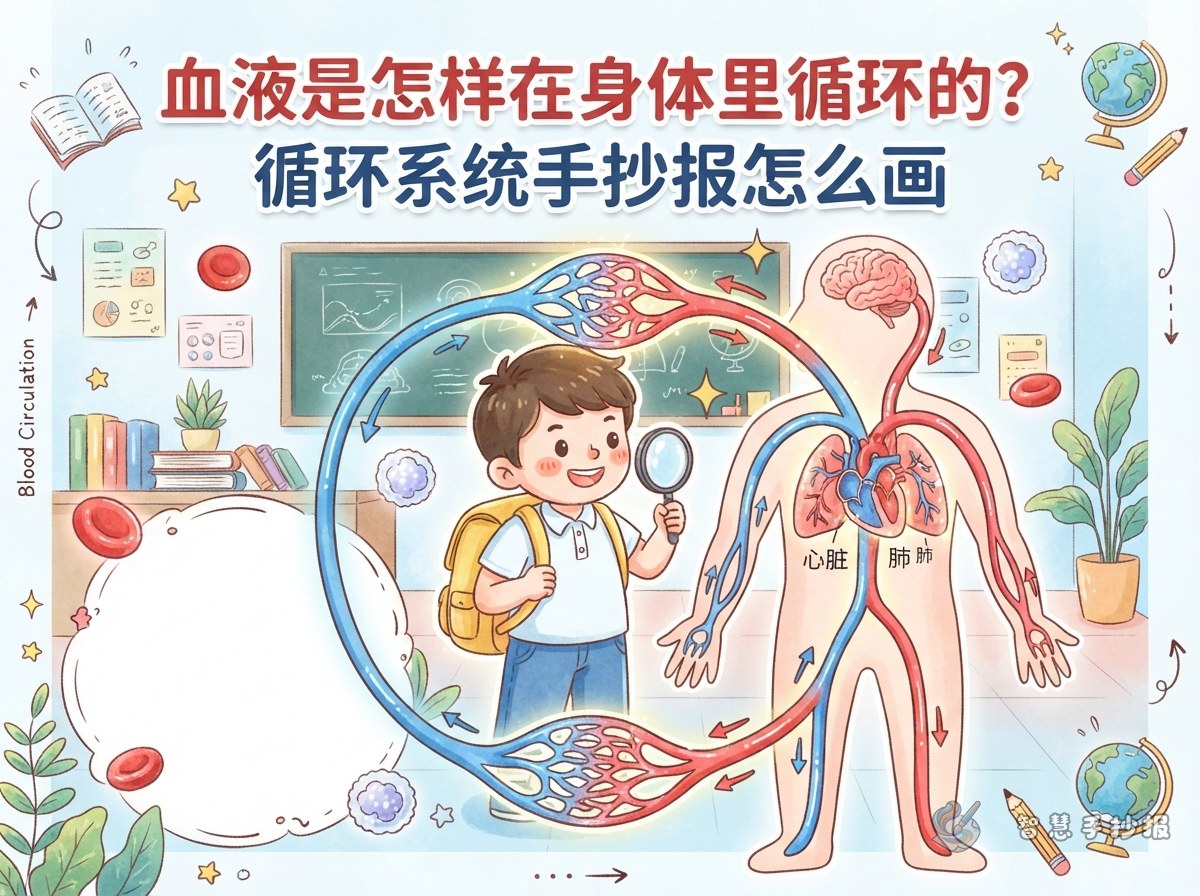
Design the handwritten newspaper as a journey through the body. Draw a simple heart in the center and connect it to red and blue blood-vessel routes. Red can represent blood carrying more oxygen, while blue can represent blood returning for gas exchange in the lungs. Add arrows so readers can follow the circulation at a glance.
A simple route to show
- The heart sends blood into the blood vessels.
- The blood reaches body cells and delivers oxygen and nutrients.
- It carries carbon dioxide and other waste products back toward the heart.
- The heart sends it to the lungs, where gas exchange takes place before the cycle begins again.
Turn the facts into three small cards
Instead of filling the page with long explanations, place three short information cards beside the route map. This keeps the page neat and makes the science easier for children to read.
- Heart card: The heart works like a pump, pushing blood forward through regular beats.
- Blood-vessel card: Blood vessels are the pathways for blood. Arteries, veins, and capillaries have different jobs.
- Blood card: Blood transports oxygen and nutrients, carries away some waste, and helps protect the body.
A useful closing sentence is: “The circulatory system connects every part of the body and supports life.” It can be placed in a highlighted box at the bottom.
Use a contrast panel to explain the route
Create a red-and-blue comparison panel in one corner. Label the red side “going to the body” and the blue side “returning to the heart,” then connect them with arrows. A visual comparison is often clearer than a list of definitions.
- Going to the body: Delivers oxygen and nutrients to different parts of the body.
- Returning to the heart: Brings back carbon dioxide and other substances that need to be processed.
- Passing through the lungs: Exchanges gases and prepares the blood for another circulation.
For younger students, explain arteries and veins with the simple ideas “leaving the heart” and “returning to the heart” rather than adding too many technical terms.
Make the page look like a body traffic map
Try a vertical or horizontal route layout. Put the title at the top, the heart and circulation arrows in the center, “jobs of the blood” on the left, and “ways to care for the circulatory system” on the right. Use red and blue as the main colors, with black or dark blue for text so the page remains easy to read.
A useful health corner
- Exercise regularly and keep the body active.
- Rest on time and develop a regular daily routine.
- Eat a balanced diet with vegetables and fruit.
- If you feel unwell, tell a parent and seek appropriate professional advice.
Small details that make the page clearer
The heart does not need to look like a complicated medical diagram. A simple outline with arrows and labels is enough. Possible titles include “The Amazing Journey of Blood” and “Exploring the Circulatory System.” Sketch the route in pencil first, then add color and outlines. Finally, check the arrow directions, text size, and empty spaces.
To finish a neat layout more easily, follow these sections first and then enter the WeChat mini-program to continue arranging text areas and decorations with 智慧手抄报. This can help turn the circulation topic into a clear and attractive handwritten newspaper.