Begin with a Story You Can Draw
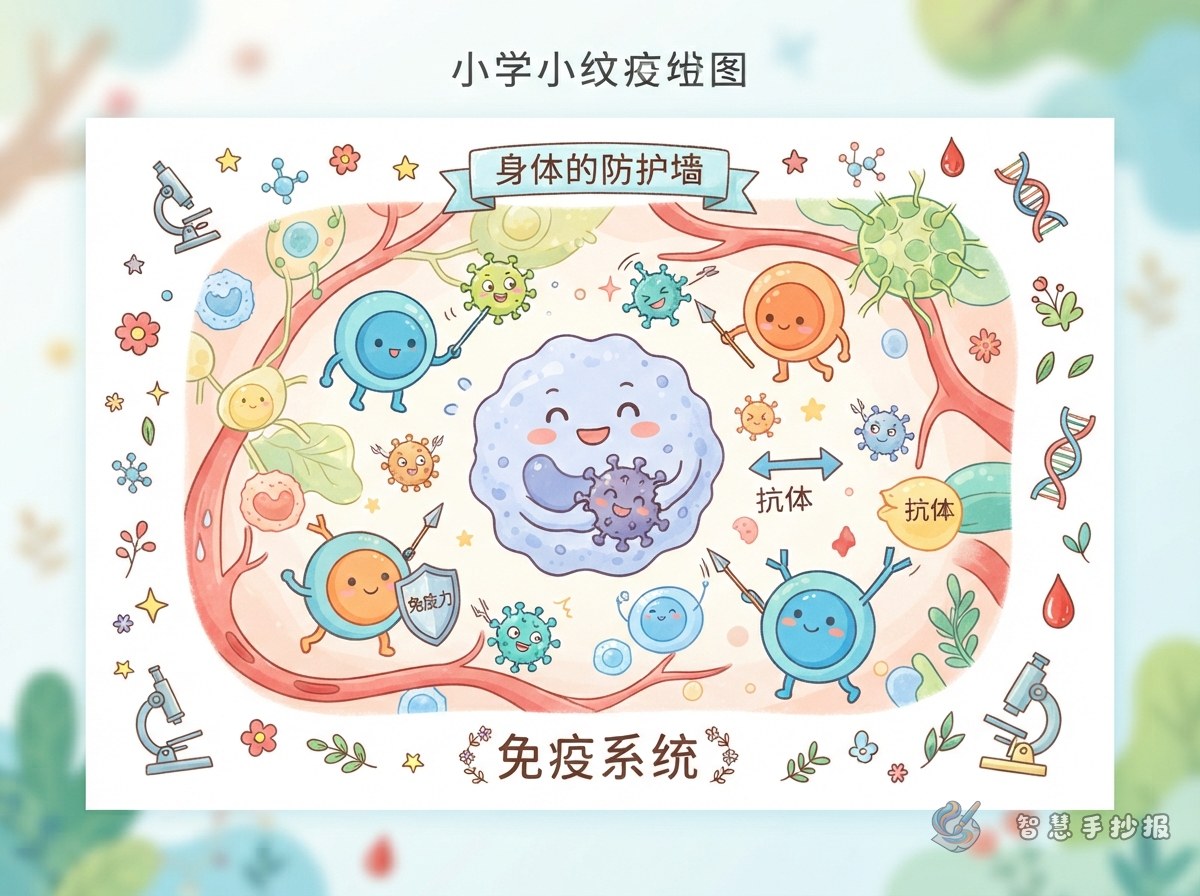
This poster does not need to begin with difficult scientific terms. Imagine the human body as a fortress that needs protection, while the immune system becomes its walls, patrol team, and recognition system. A title such as “What Is the Body’s Defense Wall?” or “The Body’s Healthy Guardians” makes the topic easy to understand at a glance.
Place a shield in the center and write “Immune System” inside it. Around the shield, add small symbols for the skin, white blood cells, and antibodies. This central picture can connect all the information on the page.
Turn Immune Science into Three Guardians
Guardian One: The Skin Barrier
Use a wall or raincoat to represent the skin. A short sentence could say, “The skin covers the outside of the body and helps block many harmful substances.” Draw a body outline, a shield, or a small castle gate beside this section.
Guardian Two: The White Blood Cell Patrol
White blood cells are perfect for a friendly cartoon character. Write, “White blood cells patrol the body and help defend it when something unusual is found.” Draw them as little guards holding flags and surrounding spiky bacteria.
Guardian Three: The Antibody Recognition Card
Keep the antibody explanation simple by focusing on recognition and defense. You could write, “Antibodies act like special recognition cards that help the body identify certain invaders.” A magnifying glass, puzzle piece, or key can make the idea easier to picture.
Add a Healthy-Habit Supply Station
To connect the science topic with everyday life, create a small section called “Fuel the Body’s Defenses.” Short lines are easy to read and copy:
- Wash your hands and keep good personal hygiene.
- Eat a varied and balanced diet.
- Rest on time and get enough sleep.
- Exercise moderately to stay active.
- Tell a parent or teacher when you feel unwell.
Decorate this section with a faucet, lunch box, moon, sports shoes, and hearts. These images make the science message feel closer to school life.
Build a Defense Route Across the Page
A radial layout works well: place the shield in the center, the skin barrier in the upper left, the white blood cell patrol in the upper right, antibody recognition in the lower right, and healthy habits in the lower left. Connect the sections with arrows or colored dotted lines to show the route: block entry, notice something unusual, help defend, and stay healthy.
Blue, green, and orange make a fresh main palette. Purple or red can highlight the bacteria, but decorations should never cover the writing. Use bold lettering for the title, keep each paragraph short, and leave some open space so the poster feels clean.
Check the Poster Before You Finish
Before finishing, check three things: Is the main idea easy to see? Are the skin, white blood cells, and antibodies explained separately? Are the healthy habits connected to body protection? If you want to organize the sections, colors, and layout more quickly, continue making the poster in the WeChat mini program “智慧手抄报,” then adjust the result to match your grade level and drawing style.