Turn the Poster into an Escape Route
Instead of presenting disconnected safety tips, design the page as a route leading from danger to safety. Mark four clear stops: refuse, call out, move toward people, and find trusted help. This structure makes the message easy for younger students to follow.
Place the title across the top and connect each section with bold arrows. Small drawings of a shield, alarm symbol, staffed shop, service desk, or police badge can support the theme without crowding the writing.
Use a Clear Voice to Attract Attention
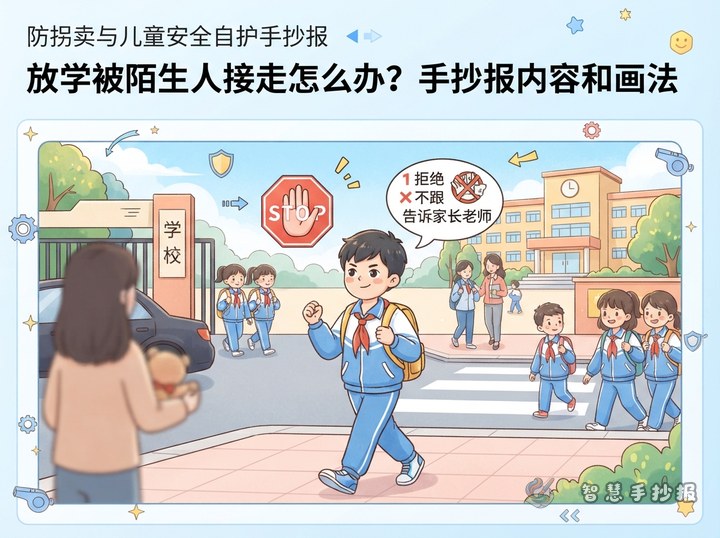
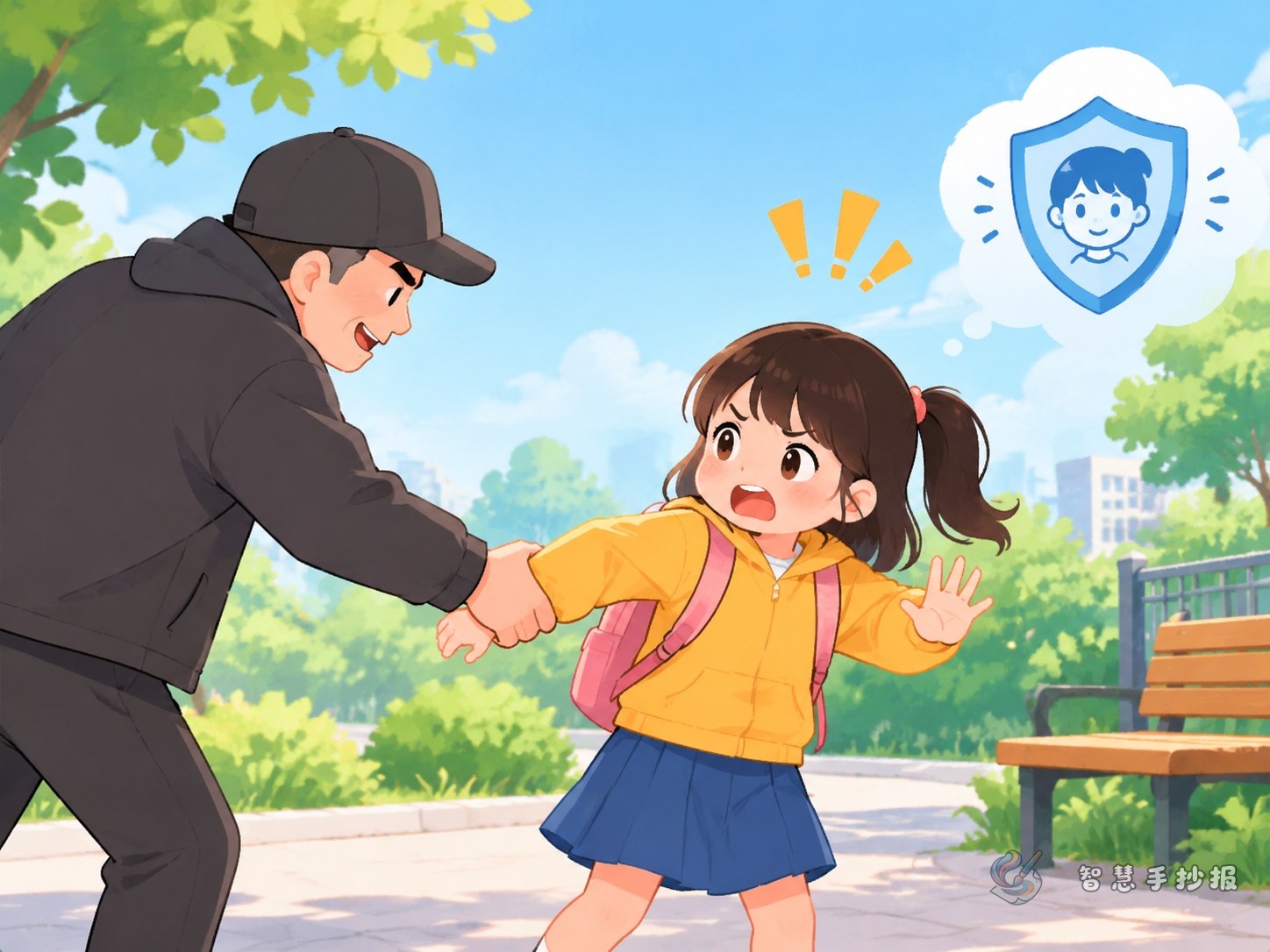
If someone suddenly grabs a child's arm, backpack, or clothing, staying silent can make the situation harder for others to notice. Add a “Speak Up” section with short sentences that clearly describe the danger.
- I do not know this person. Please call the police!
- Let go of me. I need help!
- Please help me. This person is grabbing me!
- Move toward a bright, busy place instead of following the stranger.
Speech bubbles in different sizes can highlight three ideas: identify the stranger, explain the danger, and ask someone to call for help.
Show Where Children Can Find Help
After getting away, a child should not hide in an isolated place or wander alone. Safer choices include approaching a police officer, security guard, teacher, staffed service desk, or a family with children. A convenience store, hospital, or bank with employees present may also provide a safer place to request assistance.
Short Safety Notes for the Page
- Create distance and do not return to argue.
- Tell the helper clearly that the person is a stranger.
- Ask staff to contact family or the police.
- Stay at the safe location until trusted help arrives.
Add a Quick Decision Challenge
Create three small scenes and ask readers whether each response is safe. Examples include remaining quiet because of embarrassment, running into an empty alley, and asking service-desk staff to contact a parent. Mark each choice and add one sentence explaining why it is safe or unsafe.
Main rule: Create attention, move toward people and responsible adults, and never let fear or embarrassment prevent you from asking for help.
Finish with a Memorable Safety Chant
Use a short closing chant such as: “Say no, shout clear, move where people are near; find safe help and contact home.” Write it in large letters at the bottom so it becomes the final visual focus.
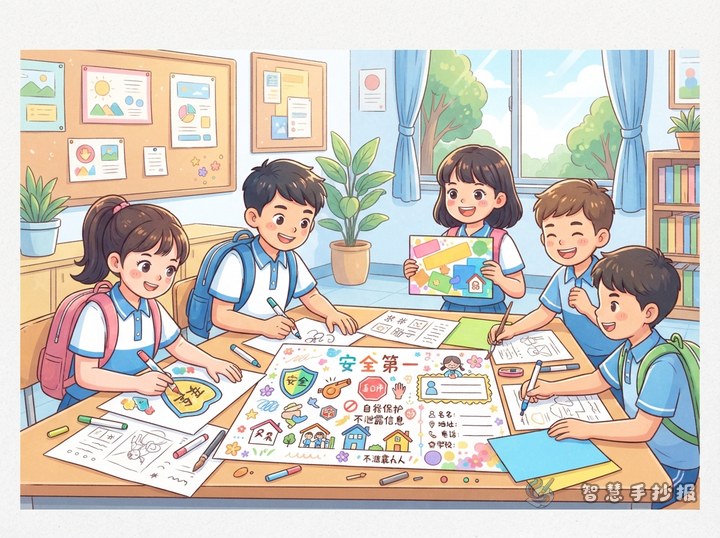
After preparing the text and sketch, users can continue in the 智慧手抄报 WeChat Mini Program to choose a layout, arrange sections, and refine the colors for a clear classroom-ready safety poster.